When the summer heat hits and dry spells linger, a full rain barrel is an absolute treasure for any gardener. Harvesting your own precipitation is a fantastic strategy to conserve precious drinking water while offering your plants exactly what they crave. Most botanicals actually thrive much better on soft, natural rain rather than the hard, calcium-rich water from your tap.
However, setting up a catchment system isn’t always foolproof. Without careful planning, you might run into frustrating and potentially expensive issues. Let’s walk through the most frequent stumbling blocks and how you can easily bypass them to create an efficient watering setup.
Mistake #1: Choosing an undersized rain barrel
One of the most widespread blunders in water harvesting is picking a container that simply cannot handle the volume. Many homeowners vastly underestimate just how much runoff a standard roof generates during a sudden downpour. If your storage is too small, it will reach capacity almost instantly, leading to uncontrolled overflows.
This excess moisture can flood your yard and, in the worst-case scenario, threaten the structural integrity of your home’s foundation. To put things into perspective, a roof area measuring 60 square meters can easily fill a 300-liter barrel during an average rainfall event.
Mistake #2: Installing an inadequate overflow
Another major vulnerability in DIY catchment setups is the overflow mechanism. When a storm hits hard, a tiny drainage spout won’t be able to channel the surging liquid away fast enough. The end result is exactly the same as having a tiny tank: water inevitably spills right over the top edge.
To guarantee smooth operation, always ensure that your overflow pipe features at least the same diameter as the main inlet tube coming down from your gutter. This prevents bottlenecks when the skies truly open up.
Mistake #3: Failing to redirect the runoff
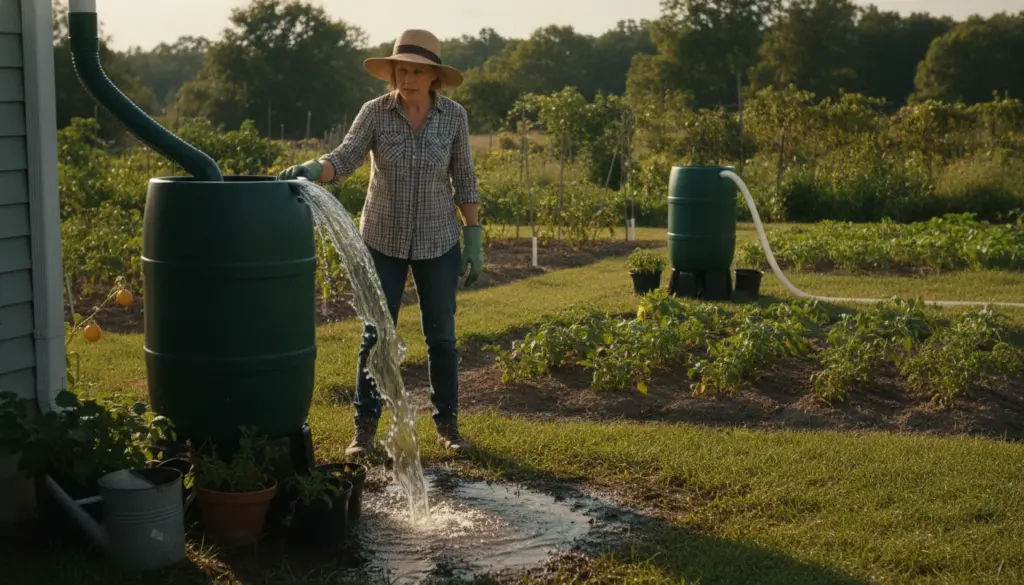
What actually happens when your container hits maximum capacity? A remarkably common error is allowing the overflow spout to simply dump liquid right next to the barrel’s base.
Instead of letting puddles form against your walls, you need to actively guide that surplus moisture away. Route it into a purposefully built gravel bed, a dedicated soakaway, or a planted rain garden. Taking this preventative step stops the surrounding soil from turning to mush and protects your landscaping from long-term waterlogging.
Mistake #4: Leaving the barrel uncovered
An exposed water tank acts as a magnet for falling debris, blowing dust, and thirsty pests. Uncovered supplies quickly turn murky, develop foul odors, and become massive breeding grounds for algae blooms and mosquito larvae.
Securing a tightly fitting barrel cover is a straightforward fix that instantly protects your water quality. If you want to go a step further in maintaining a pristine supply, utilizing mesh filter inserts and specialized mosquito prevention tabs will keep your harvested rain crystal clear and bug-free.
How far will a full rain barrel actually go?
When estimating your garden’s thirst during the peak of summer, a solid rule of thumb is allocating about 10 liters of water per square meter to achieve deep, root-level hydration. While exact needs fluctuate based on what you are growing, this baseline helps with seasonal planning.
If you have a standard 200-liter drum filled to the brim, you possess enough reserves to thoroughly soak roughly 20 square meters of vegetable patches or flower beds just once. It becomes obvious that expansive gardens will drain multiple barrels rather swiftly during a drought, making automated irrigation systems an appealing upgrade for larger properties.
Quick Guide: Matching Capacity to Garden Size
- 200 Liters: Perfect for potted patio plants, balcony containers, and small flower beds.
- 300 to 500 Liters: Ideal for mid-sized yards and active vegetable patches.
- 500+ Liters: Necessary for large properties with extensive landscaping needs.
Mistake #5: Overlooking local regulations
Setting up a basic, above-ground barrel is rarely an issue for the average homeowner. However, landscaping ambitions can sometimes outgrow simple solutions.
If you are drafting plans to bury a massive underground cistern or install commercial-grade water tanks, you must check in with your local building authority first. Depending on your region, these larger earth-moving projects often require official permits before construction can legally begin.