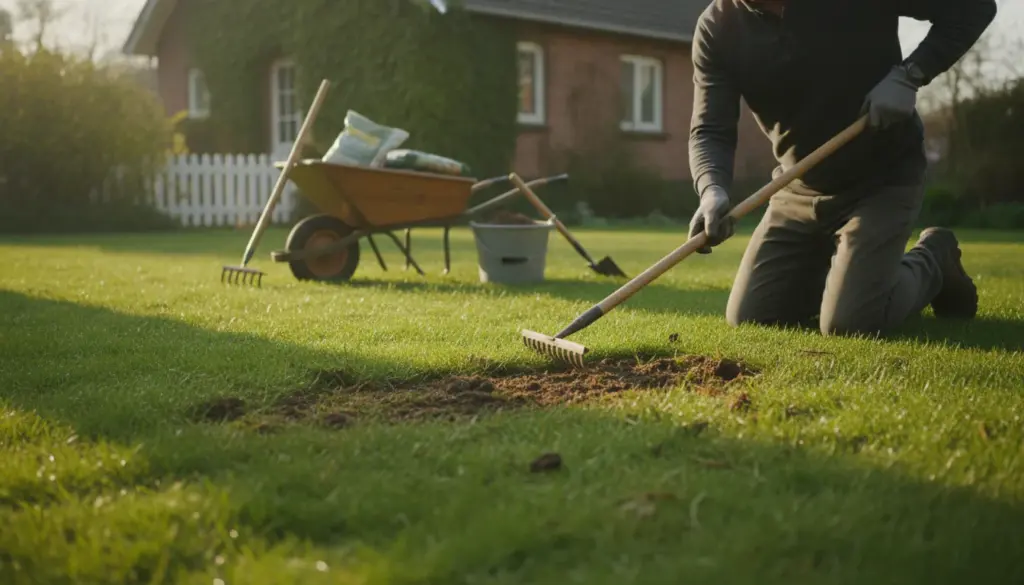
You can easily sidestep that familiar seasonal disappointment by adopting a straightforward garden ritual used by generations of turf enthusiasts. Preparing your soil early, rather than waiting for invasive growth to completely take over, fundamentally transforms the health of your turf.
Why moss easily outcompetes your grass in spring
After a wet winter, the ground typically remains soggy and highly compacted for extended periods. Heavy rain, snow, and freezing temperatures press the top layer tightly together, severely limiting water drainage. This creates the exact environment where invasive groundcover thrives.
Moss actively prefers:
- Cold, persistently damp earth
- Low-light conditions, particularly under tree canopies or beside fences
- Acidic soils lacking sufficient calcium
- Flattened, dense ground experiencing heavy foot traffic
Grass immediately falls behind under these conditions. Turf roots become starved for oxygen, grow far too shallowly, and struggle to recover once the weather eventually shifts. In sharp contrast, moss quickly establishes a dense, spongy mat that simply suffocates your grass.
Cutting your lawn too aggressively offers no help, either. Many homeowners scalp their yards almost bare, believing this creates a cleaner look. In reality, this significantly weakens individual grass plants. Maintaining a cutting height of around 5 to 6 centimeters provides your turf with essential vigor and minimizes the space available for undesirable growth. Consistently keeping your blades at this height year-round dramatically reduces the chances of an invasion compared to a closely shaved yard.
The classic trick: iron sulfate followed by river sand
Passed down through gardening families for generations, this traditional technique requires two distinct steps completed near the end of winter. The core strategy relies on combining iron sulfate and river sand. This dual-action approach directly weakens the current growth while simultaneously altering the soil structure to block future attacks.
Step 1: Dehydrating moss with iron sulfate
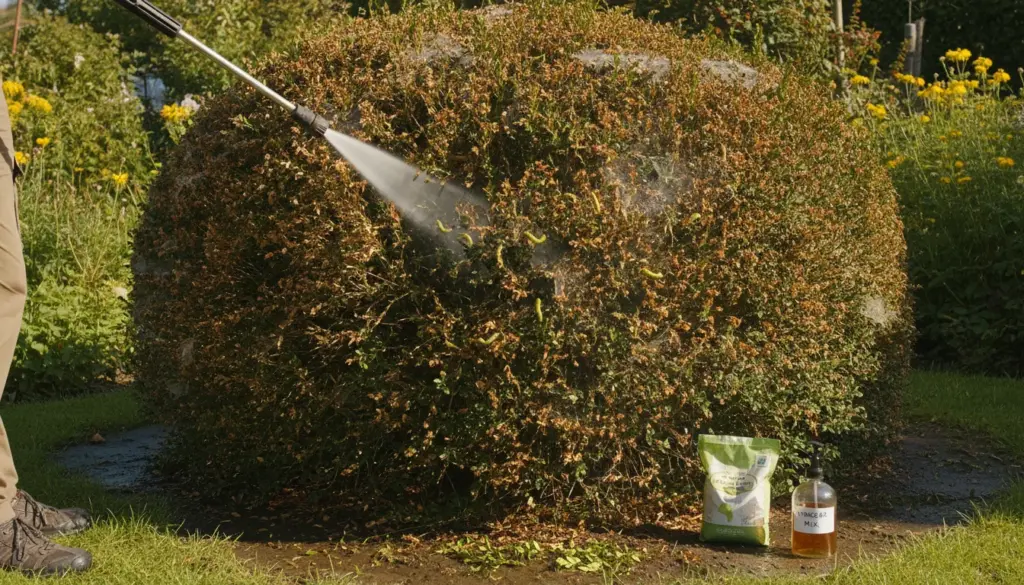
Iron sulfate remains a trusted tool for seasoned lawn care specialists. You simply dissolve the powder into water and apply it using a watering can or pressure sprayer on a dry, overcast day. Once the solution or granules hit the unwanted patches, the invasive growth quickly turns dark and shrivels up within just a few days.
Crucial application tips:
- Apply during late winter or early spring while temperatures stay cool
- Select a dry, cloudy day to prevent the treatment from evaporating too rapidly
- Avoid walking across the freshly treated yard as much as possible
- Immediately rinse nearby concrete or patio tiles to prevent stubborn rust stains
Beyond drying out the moss, iron sulfate delivers a fantastic secondary benefit by stimulating chlorophyll production in your turf. Consequently, your lawn develops a rich, deep green color and often feels noticeably sturdier.
After a few days, those treated patches will transform into a black or dark brown color. Grab a sturdy rake and gently pull the dead material straight out of the sod. This action instantly introduces vital airflow back to the grass roots. A targeted application late in the season actually preempts the problem, which is much easier than fighting a widespread takeover later.
Step 2: Spreading river sand to enhance drainage
While many gardeners pack away their tools after raking, the true power of this traditional remedy lies in the second step: applying a thin layer of river sand across the entire yard.
Always source clean, sharp river sand, ideally blending it with a small amount of volcanic rock dust or stone meal. Adding roughly 10 to 15 percent of this mineral powder to your sand works perfectly. You then spread a highly localized layer measuring just 2 to 3 millimeters thick across the surface.
Though it sounds minimal, the resulting impact is substantial:
- Surface water drains significantly faster, preventing the top layer from turning boggy
- The overall soil structure opens up, directly stimulating deeper root development
- Moss struggles to establish a foothold in this newly modified environment
Lightly sweep this mixture into the turf using a stiff broom or the flat back of a rake, ensuring it settles deep between the individual grass blades. After a couple of heavy rain showers, the sand virtually disappears from sight, yet the structural improvements remain effective for months.
Keeping your lawn permanently moss-free
The real maintenance work begins immediately after this late-winter ritual. If you slip back into poor gardening habits, the spongy patches will inevitably return.
Adjust your mowing frequency and height
Targeting a blade height between 5 and 6 centimeters serves as the ideal benchmark for most domestic lawns. Grass allowed to grow slightly longer naturally develops deeper root systems and forms a tighter canopy, leaving minimal real estate for weeds.
Practical mowing guidelines:
- Never trim off more than one-third of the total grass length during a single session
- Opt for frequent, higher cuts rather than rare, aggressive scalping
- Always maintain razor-sharp mower blades to prevent tearing and fraying the grass tips
Scarifying and aerating for optimal soil health
Verticutting your yard once or twice annually effectively pulls thatch and decaying plant matter straight out of the topsoil. This practice powerfully reopens the ground, with early spring and autumn serving as the optimal timing windows. Following up with a hollow tine aerator further alleviates compaction, which is especially critical in areas that see heavy foot traffic.
As soon as oxygen reaches those root zones, grass recovery accelerates rapidly. Because moss absolutely thrives in dense, poorly ventilated earth, these basic physical maintenance tasks give your turf a massive structural advantage.
Nutrition, pH balancing, and targeted spot treatments
Vibrant turf requires consistent nutrition, though massive doses of fertilizer are unnecessary. Applying a moderate amount of organic fertilizer in the spring, followed perhaps by a lighter application in summer, keeps the plants exceptionally strong.
Some turf experts also scatter tiny amounts of untreated wood ash over spots prone to rapid acidification. Wood ash offers a mild liming effect and delivers useful minerals, though it must be used sparingly to avoid accidental over-fertilization.
For highly stubborn, isolated patches, standard baking soda can act as a quick localized deterrent. A very thin dusting over a damp trouble spot visibly slows moss growth. While this certainly doesn’t replace a proper iron sulfate treatment, it serves as a handy trick for minor problem areas.
When to call in landscaping professionals
No two lawns react exactly the same way to treatments. In heavily shaded gardens or properties sitting on extremely waterlogged clay, moss constantly fights to return regardless of your careful maintenance. Under these challenging circumstances, consulting a soil specialist to properly measure your pH levels and organic matter content proves invaluable.
These precise diagnostics allow for highly targeted solutions, such as applying specialized lime, introducing supplementary sand, or even partially reseeding with specialized shade-tolerant grass varieties. Occasionally, installing physical drainage solutions like gravel trenches or underground perforated pipes along fence lines becomes necessary.
Long-term strategies for a resilient yard
For maximum protection, consider repeating this iron sulfate and river sand combination as summer winds down or early autumn begins. This proactive measure suppresses unwanted growth long before the damp winter weather sets in.
Adopting a few supplementary habits makes your turf even more robust over time:
- Place decorative stepping stones along heavy transit routes to significantly reduce soil compaction
- Allow the grass to grow slightly longer during periods of extreme heat and drought
- Deliver deep, occasional watering rather than offering brief, daily sprinkles
Once you implement this comprehensive approach, you will quickly notice your spring yard looking drastically less spongy. The strategic blend of chemical deterrence, physical soil improvement, and relaxed mowing habits forces the grass to work harder, resulting in a noticeably fresher landscape.
Armed with a bucket of iron sulfate, a few bags of quality river sand, and a little patience, you can easily elevate a standard lawn to a professional standard. You don’t need highly expensive machinery or complex schedules—just a well-timed push to steer your soil’s ecosystem in the right direction.