When temperatures soar, a simple garden water source can be a lifesaver for local wildlife. However, placing it incorrectly might actually keep your feathered visitors away. During the hottest months, wild birds face a daily battle for survival as natural puddles evaporate and the earth hardens. Providing the right hydration and nutrition can make a massive difference for these backyard inhabitants.
Garden Birdbaths: Finding the Right Spot and Maintaining Hygiene
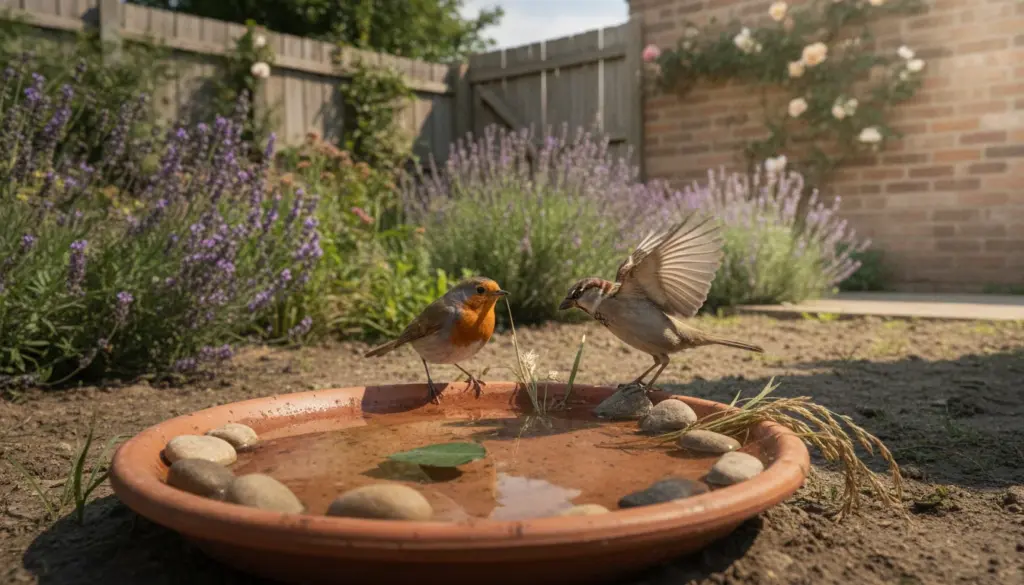
You do not need fancy equipment; a basic shallow clay dish or a repurposed flowerpot saucer works perfectly. For the ideal bathing experience, keep the water depth between two and a half and ten centimeters. This specific measurement allows small birds to comfortably wash their feathers and cool their bodies without danger.
Location matters even more than the container itself. Our backyard friends are highly vulnerable and easily distracted while splashing around, making them prime targets for stalking cats. To ensure they feel secure, always position the water station close to shrubs or trees. This provides a crucial escape route for blackbirds and robins if predators suddenly approach.
Strict cleanliness is non-negotiable for wildlife health. Refresh the water every single day and scrub the basin thoroughly using a stiff brush and boiling water. A highly effective sanitation trick involves using two identical dishes in rotation: while one provides fresh drinking water, the other sits empty in the direct sunlight for natural disinfection.
Setting up these miniature garden ponds creates an excellent opportunity for wildlife observation. You will quickly notice species like chaffinches and great tits dropping by for a quick sip. Meanwhile, social birds like starlings and house sparrows often arrive in lively flocks for extended splashing sessions.
Summer Bird Feeding: Doing It Safely
Parched, rock-hard summer soil makes it nearly impossible for parent birds to dig up earthworms. Supplying appropriate meals helps sustain them through the incredibly exhausting breeding season. Focusing on protein-rich and high-energy options is the best strategy:
- Dried insects
- Small, fat-rich seeds
Pay close attention to the size of the provisions you offer. Whole peanuts and large nuts pose a severe choking hazard to newly hatched chicks. Furthermore, human food remnants like bread or salted snacks are strictly off-limits, as they can cause severe health complications for wild birds.
To prevent the spread of avian diseases, closed feeding columns are generally much safer than traditional open houses or flat trays. These vertical dispensers stop droppings from contaminating the seed supply. Remember to sanitize these feeding stations frequently and only distribute small portions that will be consumed rapidly before they have a chance to spoil.