When the sun beats down during the warmer months, a backyard water station can quickly become a literal lifesaver for local wildlife. However, simply setting out a bowl isn’t enough—incorrect placement might actually keep your feathered visitors away entirely.
As temperatures soar, daily survival turns into a massive challenge for our flying friends. Natural puddles evaporate, and the sun-baked earth makes foraging incredibly difficult. By setting up a proper drinking station and offering the right snacks, you can effectively support these animals through the toughest heatwaves.
Choosing the Perfect Spot and Maintaining Hygiene
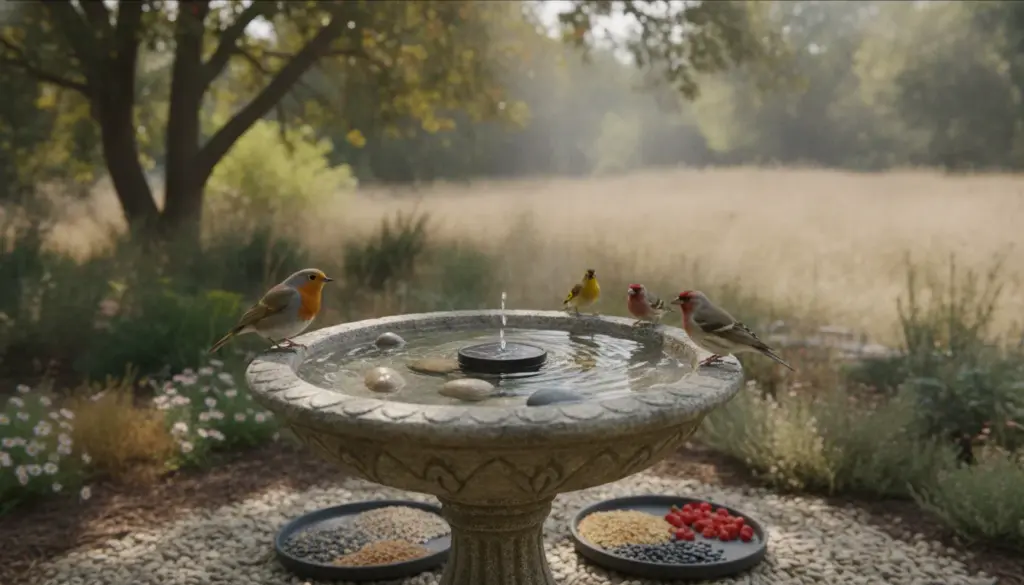
You don’t need fancy equipment to create an inviting watering hole. A simple, shallow vessel, such as a sturdy clay dish or a repurposed flower pot saucer, works wonders. If you want to encourage splashing as well as sipping, aim for a water depth of 2.5 to 10 centimeters. This shallow profile allows your garden guests to comfortably wash their feathers and cool off without struggling.
Yet, the most spectacular basin won’t see any action if it’s placed poorly. Avian visitors will completely ignore a water source if they feel vulnerable. Splashing around requires a lot of attention, making distracted bathers an easy target for stealthy neighborhood felines.
To provide peace of mind, position your setup relatively close to dense shrubs or tree branches. This ensures that creatures like robins and blackbirds have a quick escape route if danger approaches. Cleanliness is equally crucial to prevent the spread of harmful bacteria.
You must replace the water daily and scrub the basin thoroughly using a stiff brush and boiling hot water. An expert trick is to rotate between two different bowls. While one is in use, leave the freshly cleaned second bowl baking in the direct sunlight for a natural disinfection process.
A Perfect Opportunity for Backyard Birding
Whether it’s a simple dish or a dedicated mini-pond, these refreshing rest stops are rapidly discovered by local flocks. They provide an incredible window into nature right outside your home.
Water features offer fantastic observation opportunities. You might catch a glimpse of great tits and chaffinches dropping by for a rapid sip, while highly social species like house sparrows and starlings often gather in noisy, joyful groups for a thorough soak.
Feeding Summer Birds the Right Way
Bone-dry soil doesn’t just eliminate water; it also drives essential prey like earthworms deep underground. Providing high-quality nutrition during the physically demanding breeding season is a fantastic way to lend a helping hand. Focus on offering protein-packed treats:
- Dried insects for a quick, natural energy boost
- Tiny, fat-rich seeds that are easy to digest
Pay very close attention to the size of the morsels you provide. Whole peanuts or chunky nuts pose a severe choking hazard for helpless nestlings. Furthermore, human scraps like salty snacks or leftover bread should never be placed on the menu, as they are incredibly dangerous to avian digestive systems.
Finally, think about how you serve the feast. Enclosed feeding silos are vastly superior to open platforms or traditional wooden houses, primarily because they stop droppings from contaminating the seed supply. Always keep your dispensers impeccably clean, and only put out small portions that the flock can finish rapidly before spoilage sets in.