From Common Kitchen Scraps to Lush Greenery
Whenever you squeeze fresh citrus, a tiny hidden gem usually washes right down the drain. However, rescuing this common kitchen waste could completely transform your indoor space. Instead of tossing them away, those seemingly useless seeds can sprout into an elegant, highly fragrant houseplant that will spark conversations for months.
With just a little bit of prep, a basic lemon pip becomes a thriving living display on your windowsill, even if you live in a cooler, northern climate.
A Rewarding Alternative to Throwaway Culture
Cultivating a citrus tree from scratch might sound like a complex task reserved for dedicated greenhouse owners. In reality, this rewarding project is perfectly suited for a compact apartment with a single sunny window. You do not need an outdoor garden, expensive grow lights, or advanced botanical skills—just a healthy dose of patience and curiosity.
Nurturing a tiny pip into a robust plant serves as a quiet pushback against a disposable lifestyle. Watching something tangible slowly emerge from an item deemed worthless is deeply satisfying, which explains why these propagation projects are so widely shared online.
- You actively reduce kitchen food waste by repurposing seeds.
- You gain fresh indoor greenery without spending a dime at the garden center.
- Children learn firsthand about the fascinating lifecycle of plants.
- You establish a calming daily ritual of watering and observing new growth.
Selecting the Right Lemon: Success Begins at the Store
Not every seed is destined to sprout roots. Your preparation actually starts in the produce aisle, as the fruit’s overall quality determines whether you get a thriving seedling or just a pot of wet dirt.
Why Organic Citrus is the Safer Bet
For this botanical experiment, picking up an organic lemon is your absolute best strategy. Conventionally grown fruits are frequently treated or harvested prematurely, which can negatively impact seed development. While this doesn’t change the flavor, it heavily affects germination rates.
Organic lemons typically offer:
- Plumper, fully mature seeds that are ready to sprout.
- A significantly higher chance of containing viable plant embryos.
- Fewer post-harvest treatments that might artificially inhibit the sprouting process.
Starting your journey with a high-quality, ripe organic lemon drastically improves your odds of cultivating a vigorous, healthy plant.
How to Spot a Viable Seed
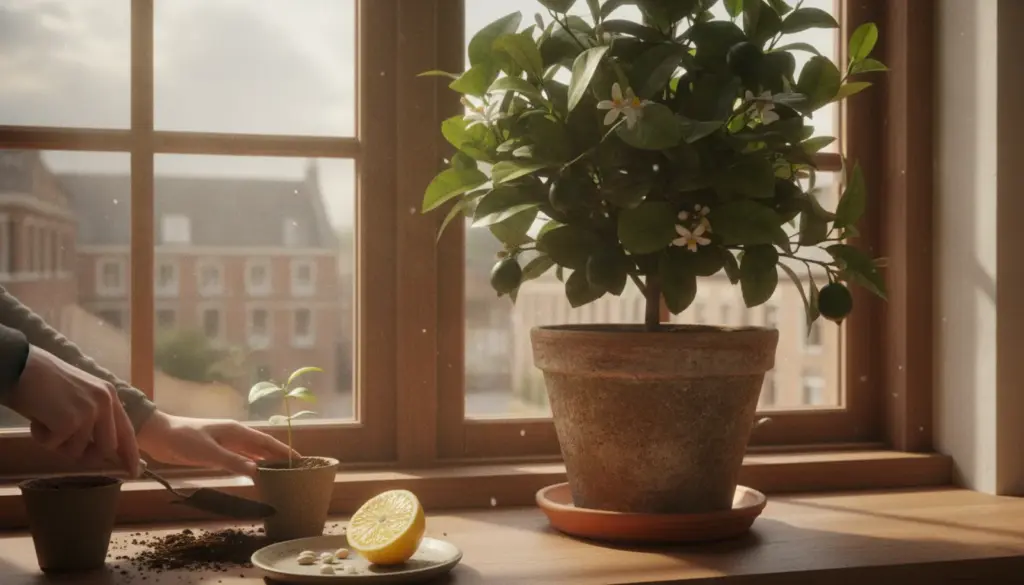
Once you slice the fruit open, spread all the seeds out on a small plate and inspect them closely.
- Select the largest, most rounded seeds you can find in the bunch.
- Avoid any flat, dented, or physically damaged specimens.
- Check the texture: a premium seed feels firm and smooth, without any visible cracks.
Always prepare multiple seeds at once. Even with flawless technique, a few will naturally fail to germinate. By planting five to eight pips simultaneously, you almost guarantee that at least one will mature into a thriving miniature tree.
The Vital Secret: Peeling the Outer Shell
The real secret to success has nothing to do with premium potting soil or specialty fertilizers. It all comes down to a thin, often overlooked layer: the tough outer seed coat. While this shell protects the core in nature, it drastically slows down water absorption indoors.
Step-by-Step Seed Preparation
After extracting your chosen seeds, take a moment to carefully peel away that protective barrier. Removing this tough outer layer allows moisture to reach the core immediately, often speeding up germination by several weeks.
Underneath that pale husk, you will uncover a darker, smoother inner seed. This is the true living plant material. By exposing it, you give the tiny embryo a massive head start. Just be sure to work gently, as squeezing too aggressively can permanently damage the fragile core.
Two Highly Effective Germination Methods
Once your seeds are peeled and prepped, you can choose between two reliable sprouting routes.
With the paper towel method, you simply wrap the naked seeds in a piece of damp kitchen paper, seal them inside a plastic bag, and stash them in a warm, dark cabinet. After a week or two, a tiny white taproot will typically emerge. At this point, you can carefully transfer the sprout into the soil with the root pointing downward.
Alternatively, direct sowing involves planting the seed straight into light potting soil, about one centimeter deep. The key is keeping the earth slightly moist, but never soaking wet. This method offers a fun element of surprise, as you simply wait for a vibrant green shoot to miraculously poke through the surface.
Transitioning From Fragile Seedling to Robust Tree
The moment those first green leaves unfurl, your kitchen experiment graduates into a legitimate houseplant. While the ongoing care is not overly complicated, it does require a consistent routine.
The Ideal Pot and Soil Mix
Wait until your sprout has a well-defined root and visible leaves before moving it to a permanent container. A small 8 to 10-centimeter pot equipped with drainage holes is absolutely perfect. Stagnant water pooling at the bottom is a quick death sentence for young citrus.
Opt for a specialized citrus blend, or simply mix standard potting earth with a handful of perlite or coarse sand. The growing medium must remain airy so the root system can breathe properly and excess moisture can drain away quickly.
Light, Hydration, and Temperature Needs
Lemon plants are notorious sun lovers. Position your pot as close to a bright, south-facing window as possible. During darker winter months, setting up a basic LED grow light can easily compensate for the lack of natural sunshine, especially in dimmer apartments.
Watering requires a mindful touch. Insert your index finger about two centimeters deep into the soil. If it feels completely dry, go ahead and water it. If it still feels slightly damp, hold off for another day. It is always better to let the soil run slightly dry rather than keeping it constantly bogged down.
Standard room temperatures between 18 and 22 degrees Celsius work beautifully. During the warmer summer months, you can even treat your plant to some outdoor patio time, just remember to bring it back indoors once the nighttime air turns chilly.
What to Realistically Expect From Your Homegrown Citrus
Many plant enthusiasts immediately envision harvesting their own fresh lemons for summer cocktails. However, the reality of growing a tree inside a standard home is slightly different. The true reward lies not in an abundant fruit harvest, but in the lush atmosphere it brings to your living room.
A Fragrant, Eye-Catching Centerpiece
A thriving lemon plant boasts glossy, deep green foliage. If you gently rub a leaf between your fingers, it instantly releases a bright, zesty aroma. This uplifting scent comes from essential oils trapped in the leaf tissue, which are the exact same compounds found in the fruit’s rind.
In a way, your new plant acts as a completely natural diffuser. Just a slight brush of the leaves fills the surrounding space with a crisp citrus perfume. The miniature tree adds a sophisticated Mediterranean flair to your decor. When the weather outside is gray and dreary, this vibrant foliage provides a striking, cheerful contrast indoors.
Will it Actually Produce Lemons?
Growing citrus from a seed is a long game. Even in professional agricultural settings, a seedling often requires seven to fifteen years before bearing fruit. That timeline is strictly under flawless conditions with intense sunshine, expert pruning, and perfect pollination.
In a standard indoor environment, your plant will likely stick to producing beautiful foliage and occasionally delicate white blossoms. Even if a rare lemon does manage to grow, it might taste completely different or be much smaller than the original store-bought fruit. Because the plant is a genetic individual, it will never be an exact clone of the parent lemon.
Navigating Winter Care and Common Pests
Managing the Darker Months
As daylight dwindles in winter, the plant’s growth naturally slows down. It consumes far less water and evaporation drops significantly. If you continue watering at a summer pace, you heavily risk suffocating the roots. Scaling back the hydration and keeping the pot away from cold drafts is a much safer strategy.
A cooler, brightly lit space—such as an unheated guest room—is often much healthier than a bone-dry living room blasting with central heat. If you suddenly notice a massive amount of yellowing and dropping leaves, instantly reevaluate your watering schedule and light exposure.
Spotting Spider Mites and Scale Insects
Citrus plants despise extremely dry indoor air. When you combine this with intense winter heating, pests love to move in. Watch out for these warning signs:
- Tiny, delicate webs stretching between the leaves (a classic spider mite symptom).
- Hard, brown bumps firmly stuck to the stems or leaf veins (indicating scale insects).
- Dull, lifeless foliage coupled with surprisingly stunted growth.
Regularly inspecting your plant’s foliage pays off. For minor infestations, gently wiping the leaves down with a mild solution of water and soft green soap works wonders. Alternatively, organic neem oil sprays are highly effective and readily available at most garden centers.
Taking Your Indoor Gardening to the Next Level
A Hands-On Science Project for Children
For families, sprouting a kitchen scrap is an incredibly affordable and engaging biology lesson. Kids can track the weekly progress, measure the stem’s height, and sketch the evolving leaves. Keeping a dedicated “growth journal” with dates and photos gives abstract concepts like germination and root development a fun, tangible visual.
Expanding Your Seed Collection
Once you experience the thrill of a sprouting citrus seed, you might be tempted to experiment with avocado pits, dates, or even bell pepper seeds. While not every kitchen scrap will yield a majestic houseplant, many adapt surprisingly well to container life. Your windowsill can quickly transform into a fascinating, edible-inspired indoor arboretum.
To keep this diverse collection healthy, maintaining proper ambient humidity is key. Simply placing a shallow tray filled with water and pebbles beneath your pots, or grouping several plants closely together, naturally traps moisture around the foliage. This easy trick fortifies your miniature ecosystem, keeping your homegrown greenery resilient year-round.