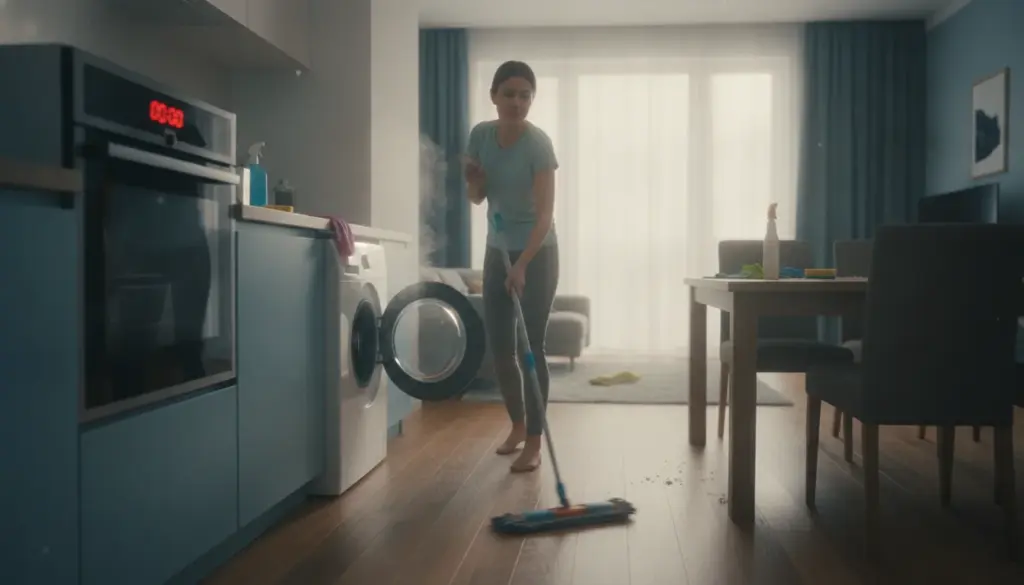
The Illusion of the Perfect 15-Minute Sweep
The washing machine chimes, the oven timer rings, and your smartphone buzzes with yet another work email. You quickly wipe down the kitchen counter, give the dining table a fast swipe, and run a dust mop across the floor. You feel a sudden sense of accomplishment. The living room has a fresh scent, the surfaces look tidy, and you confidently believe your space is presentable for unexpected guests.
However, as you finally relax on the sofa, a lingering doubt creeps in. Are we actually achieving true hygiene, or merely creating a comforting illusion? By skipping hard-to-reach areas, we might unwittingly be offering germs the perfect breeding ground. This unspoken question hovers in the room, almost as invisible as microscopic dust catching the afternoon sunlight.
Trading True Hygiene for Modern Speed
We operate in an era where speed dictates everything. We rely on ten-minute meals, sprint through office tasks, and tackle household chores in brief, frantic bursts. While this sounds highly efficient, nobody truly wants to spend their entire Saturday scrubbing floors when schedules are already packed. Rapid wiping is heavily marketed as a lifestyle hack, but it completely ignores what gets left behind.
Hidden grime quietly accumulates behind faucets, underneath mattresses, and deep inside bathroom grout. This is precisely where the stark contrast between visible tidiness and actual microscopic life becomes undeniable. We all know that startling moment when you swipe a rag over a light switch and uncover a thick, gray layer of grime. Since we touch these switches constantly, missing them during rushed chores just pushes a growing hygiene issue down the road.
The Danger of the Single-Cloth Strategy
Consider a typical weekday evening tidy-up. Most individuals start by wiping the kitchen island, move to the coffee table, and perhaps finish by quickly going over the toilet seat. The massive flaw in this routine is relying on a single multipurpose spray and one solitary microfiber cloth for the entire journey. That identical rag travels straight from food prep zones right into the living room, and sometimes even further.
European hygiene studies confirm that kitchens and bathrooms harbor some of the highest concentrations of household bacteria. Yet, we dedicate our limited time to obvious crumbs and smudges because our brains naturally crave immediate, visual rewards. A polished mirror or a fragrant room triggers a deep sense of satisfaction. Meanwhile, invisible pathogens thrive because we prioritize speed over the essential contact time required to actually neutralize them.
Achieving Faster Results Without Buying More Products
Speeding up your chore list does not have to mean sacrificing sanitation. You can implement highly efficient techniques that conserve your energy without requiring a cabinet full of expensive chemicals. The most fundamental rule of professional-level sanitation is working from the cleanest areas to the dirtiest, and always moving from top to bottom. Start your routine by sanitizing door handles and switches, proceed to tabletops, and leave the floors for last.
Furthermore, establish strict zones throughout your residence. Designating specific cloths for the kitchen, the bathroom, and general living spaces drastically reduces cross-contamination. Allow your cleaning solutions a moment to do their heavy lifting. Spritz a surface, tackle a different corner, and then return to wipe it away. This simple pause maximizes microbial breakdown without needing any additional tools.
Common Pitfalls in Quick Routines
Simply rushing through tasks often stems from pure exhaustion. Grabbing a random baby wipe to quickly clean a bathroom sink or a toilet seat might feel productive in the moment. However, these gentle wipes are designed for sensitive human skin, not for breaking down resilient biofilm on ceramic tiles or plastic surfaces.
Another frequent mistake involves applying moisture too early. Wiping a dusty shelf with a wet rag often turns loose particles into a sticky, stubborn sludge. This wet mixture, combined with everyday skin cells, creates a luxurious feast for microbes. A smarter approach involves dry-dusting first, followed by targeted wet cleaning only on actual grease spots or spills. Adopting a few strategic habits will transform your living environment without cluttering your cupboards:
- Implement a strict color-coding system for your rags (for instance, red for restrooms, blue for food areas, and yellow for general dusting).
- Let surface sprays sit on faucets and toilet seats for at least one full minute before wiping.
- Make it a priority to sanitize high-touch points like door handles weekly, rather than just when they look visibly dirty.
- Always ventilate rooms adequately after damp mopping, as trapped indoor moisture encourages rapid microbial growth.
- Ensure you wash microfiber cloths at 60°C (140°F) rather than throwing them into a cold, mixed laundry cycle.
Where Saved Time Turns Into a Health Risk
Overlooking concealed filth goes beyond just being slightly unhygienic; it can actively impact your physical well-being. Take the rubber gasket inside your front-loading washing machine, for example. This area traps moisture, lint, and body oils, creating premium real estate for mold. While the exterior gets polished regularly, the interior seal often sits undisturbed until black spots appear and your freshly washed clothes smell musty.
A similar false sense of security surrounds kitchen sinks, wooden cutting boards, and daily dish sponges. Despite smelling strongly of lemon detergent, dishcloths frequently harbor more pathogens than a bathroom toilet. Microorganisms absolutely flourish in a warm, damp textile climate. By cutting corners here, you are inadvertently exposing your family to prolonged, unseen risks.
This concealed grime can subtly undermine your immune system over time. Occasional respiratory troubles, mild pet allergies, or unexplained skin irritations in children can often be traced back to neglected household areas. True home hygiene isn’t about maintaining a sterile laboratory environment; it’s about making deliberate choices regarding where you can safely cut corners and where you must absolutely put in the effort.
Building a Smarter, Sustainable Home Routine
Try looking under one piece of furniture or behind the kitchen trash can once a month. Realizing what collects in the shadows will permanently shift your perspective on “quick tidying.” Let brief, daily wipe-downs serve as your baseline maintenance, but support them with occasional, focused deep-cleaning sessions. This prevents time-saving hacks from turning into a long-term hygiene disaster.
Household management is notoriously invisible labor. You might meticulously separate your colored rags, but if a family member enthusiastically uses the bathroom sponge to wipe the kitchen counter, your careful efforts are completely wasted. Have an open, honest conversation with your entire household about what “clean enough” actually means.
Discuss which shortcuts are acceptable and which ones compromise your shared health. This creates a balanced, realistic approach that embraces the chaos of daily life while maintaining a truly healthy living space. Yes, there will always be a little dust visible when the afternoon sun hits just right, and perhaps that is exactly perfectly human.
Frequently Asked Questions
- Do I need to spend hours scrubbing to achieve real hygiene?
Not necessarily. Effectiveness relies heavily on intelligent sequencing, respecting product contact times, and maintaining strict cloth zones rather than just clocking hours. - Are harsh chemical disinfectants mandatory for a standard home?
In most cases, no. Thoroughly wiping surfaces with standard soapy water and a mild cleaner, combined with proper daily ventilation, provides ample protection for a typical family. - What is the ideal frequency for sanitizing light switches and doorknobs?
Aiming for once a week offers an excellent baseline. However, increase this frequency significantly if someone is battling a cold or if you have toddlers exploring the house. - Is relying on a single microfiber rag for the whole house really that bad?
Absolutely. Using just one cloth actively transports dangerous pathogens from your restroom directly onto your food prep surfaces. Utilizing separate towels is a crucial safety measure. - Can I ditch cleaners completely and just use plain water?
Water works beautifully for light dust removal. Yet, breaking down heavy kitchen grease, tough bathroom biofilm, or toilet grime requires a mild surfactant to truly lift the mess away safely.