While a few wild plants in your yard might seem harmless, certain aggressive intruders can quickly turn a lush, green carpet into an unruly field. If left unchecked, these fast-growing invaders will relentlessly choke out your carefully cultivated grass.
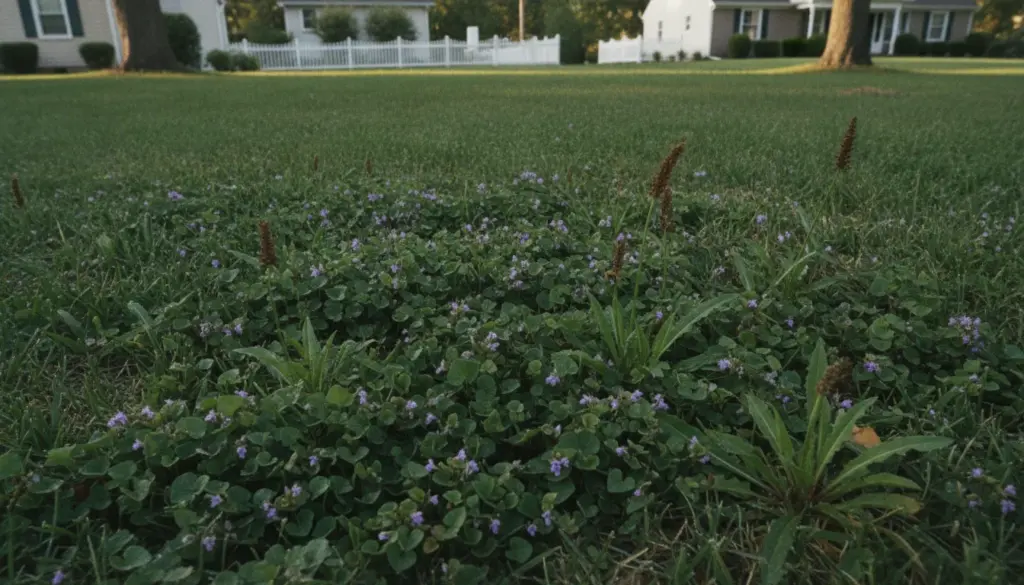
Ground Ivy (Glechoma hederacea)
Though its tiny blossoms might look surprisingly delicate, ground ivy is incredibly invasive. Once this creeping perennial establishes itself, it rapidly overtakes the turf, leaving your outdoor space looking more like a wild meadow than a manicured lawn.
Ribwort Plantain (Plantago lanceolata)
Just like its broadleaf cousin, the ribwort plantain aggressively competes with ordinary turfgrass for space and nutrients. To keep this persistent plant under control, make a habit of maintaining a regular mowing height of around four centimeters.
Creeping Buttercup (Ranunculus repens)
If your goal is a natural wildflower meadow, the vibrant yellow blooms of the creeping buttercup might be a welcome sight. However, for a uniform turf, you will need to manually dig out its extensive runner system to stop it from taking over.
Barren Brome (Bromus sterilis)
It might have a certain rustic charm, but barren brome is a problematic wild grass that matures and drops seeds faster than you might expect. The only truly effective way to eradicate this rapid spreader is through meticulous, manual extraction.
Barnyardgrass (Echinochloa crus-galli)
Stubborn millet varieties, particularly barnyardgrass, absolutely do not belong in a well-kept yard. Because they forcefully crowd out desirable blades, your best defense against these invaders is a consistent and robust lawn care routine to prevent them from taking root entirely.
Couch Grass (Elymus repens)
Classified as a wild sweet grass, couch grass is infamous for its creeping rhizomes. These aggressive underground runners allow the weed to weave through your turf, quickly smothering out the cultivated grass varieties.
Broad-Leaved Dock (Rumex obtusifolius)
Often considered a major nuisance, the broad-leaved dock actually serves as an indicator plant, signaling that your soil is highly rich in nitrogen. While it naturally aerates the ground, its incredibly deep and widespread root system makes it notoriously difficult to pull out completely.
Field Horsetail (Equisetum arvense)
Spotting field horsetail or its spore-bearing shoots in your yard is usually a sign of trouble. If this prehistoric-looking plant appears, applying lime to the affected area is frequently a highly successful method to discourage its growth.
White Clover (Trifolium repens)
White clover expands across the ground by sending out persistent, creeping runners. Whether you appreciate this bee-friendly addition or view it as an eyesore is entirely up to you, but there is no denying its remarkably rapid growth rate.
Creeping Woodsorrel (Oxalis corniculata)
With its delicate foliage and tiny blossoms, creeping woodsorrel easily masquerades as a harmless plant. Do not be fooled, though—this highly resilient weed can multiply and colonize large patches of ground in the blink of an eye.
Dandelion (Taraxacum)
The iconic dandelion boasts massive taproots that can plunge up to two meters deep, making their removal an exhausting physical chore. Since a single seed head can launch around 300 new seeds into the wind, immediate action is crucial the moment they appear.
Effective Long-Term Management Strategies
Achieving a pristine, vibrant green carpet requires constant vigilance and an excellent maintenance routine. Deep-rooted perennials, often called taproot weeds, demand immediate removal before they have a chance to multiply and anchor themselves permanently into your landscape.
Furthermore, wild grass varieties can overtake a space much faster than anticipated. Once these grassy intruders produce seeds, they scatter widely across the property. Never assume the winter freeze has solved the problem, as these resilient seeds simply lay dormant, ready to trigger a brand-new infestation as soon as the spring thaw arrives.