Understanding Your Backyard Gastropods
As soon as the soil grows damp, they begin to emerge from their hidden crevices. However, not every creeping visitor on your lawn is a threat to your carefully tended greenery. By understanding gastropod behavior, you will quickly discover that while certain voracious pests can decimate vegetable patches overnight, others serve as highly effective, natural pest controllers.
Differentiating between destructive invaders and helpful allies is the key to maintaining a thriving landscape. Let us explore exactly which creatures you should protect and which ones pose a genuine threat to your harvest.
The Most Destructive Garden Invaders
If you notice your crops vanishing rapidly, the Spanish slug is often the primary culprit. Known for an absolutely insatiable appetite and incredibly rapid reproduction rates, this species can overwhelm a garden in no time. They display a fierce preference for marigolds, valerian, and white dittany, while also eagerly destroying pumpkin and melon vines.
Another incredibly common menace is the netted field slug. While their diet is surprisingly varied—consisting of algae, carrion, animal droppings, and fungi—they possess a devastating weakness for tender, newly sprouted seedlings.
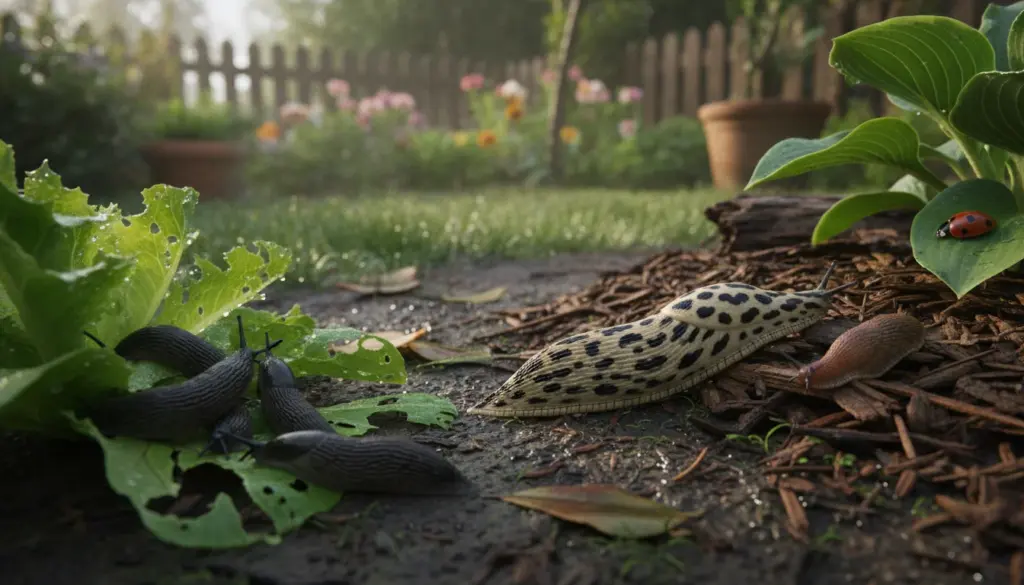
You must also watch out for the garden slug, a pest that remains active throughout every single season. Usually presenting with a blackish, dark blue, or slightly brownish hue, these gastropods are intensely drawn to chlorophyll. The fresher and greener the vegetation, the more they want it, making your crisp lettuce beds their absolute favorite dining spot.
The Natural Guardians You Should Protect
Before you attempt to eradicate every slimy creature from your property, take a closer look at the leopard slug. Sporting a highly distinctive, striped and spotted pattern, this remarkable ally is far from a pest. It rarely touches healthy vegetation, opting instead to hunt down and consume the eggs of destructive naked slugs.
Similarly, the classic Roman snail deserves a warm welcome in your vegetable beds. While historically viewed as a culinary delicacy by humans, they also serve as a crucial food source for ants, birds of prey, and small mammals. Due to their ecological importance, they are even strictly protected under nature conservation laws in areas like Germany.
For the avid gardener, Roman snails are incredibly valuable. They act as an efficient cleanup crew by exclusively eating decaying plant material. More importantly, just like the leopard slug, they actively seek out and devour the egg clutches of harmful slug species, providing fantastic natural protection for your plants.