More Than Just a Friendly Handshake
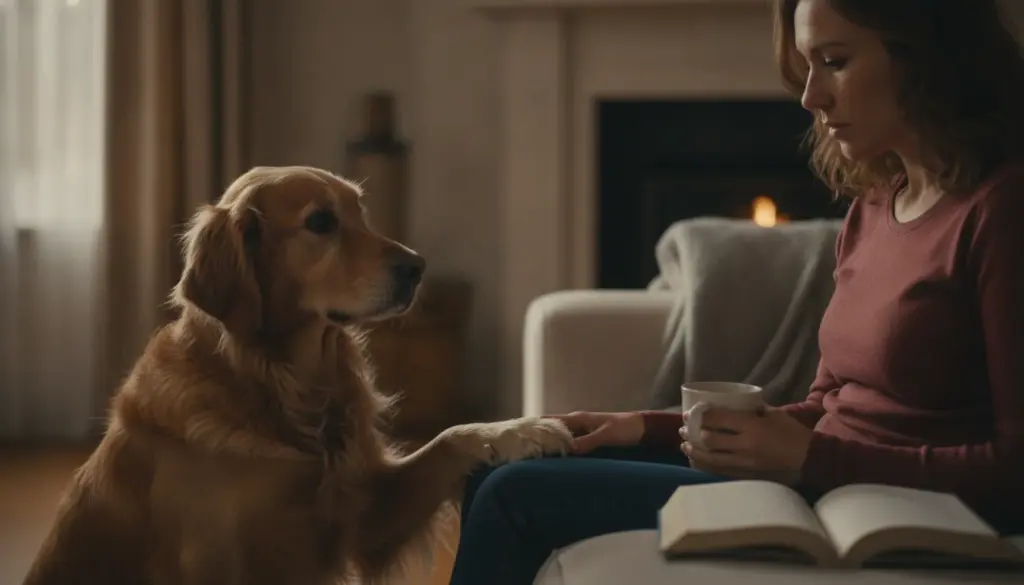
Picture yourself relaxing on the couch with a warm cup of tea while a movie plays in the background. Your canine companion wanders over, locks eyes with you, and softly rests their paw on your leg. Naturally, you smile, take their foot in your hand, and offer a cheerful greeting. We tend to view this physical gesture as a cute trick or a friendly handshake that we have heavily reinforced with treats and belly rubs.
Yet, this simple point of contact carries profound meaning beyond a basic greeting. Depending on the situation, it can act as an urgent plea, a silent inquiry, or a subtle cry for help. Once you learn to recognize the underlying message, you will never view this behavior the same way again.
What Your Pet is Actually Communicating
I remember the moment a canine behaviorist completely changed my perspective on this daily habit. My own pet was resting beside me, ears pinned back slightly, gently tapping my knee every few minutes. Assuming it was an invitation to play, I was surprised when the professional gently corrected me. They explained that my pet was actually seeking comfort and reassurance, rather than a game of fetch.
Suddenly, the subtle visual clues made perfect sense. The stiff body posture, the repetitive lip licking, and the intense stare were all signs of underlying stress. That raised foot was not an invitation for a high five; it was a quiet admission of discomfort.
Teaching a puppy to shake hands is often one of the earliest milestones in their training journey. It is an adorable party trick that easily earns praise and affection from houseguests. Because we consistently reward this action, our pets quickly realize that offering a foot is a highly effective way to capture human attention.
Consider what occurs when your furry friend feels anxious, under-stimulated, or temporarily disconnected from you. They immediately rely on the one strategy guaranteed to work. While you assume they are just saying hello, they might actually be pulling a metaphorical emergency cord.
The Science Behind Canine Micro-Signals
From a behavioral science perspective, a resting limb is merely a single fragment of a complex communication puzzle. Canines express themselves through an array of micro-signals, including tail height, ear placement, breathing patterns, and even subtle shifts in body weight. Adding a paw to the mix acts like a bold underline on a written sentence.
When a dog deliberately touches you, it is a purposeful action designed to influence your behavior. They might want you to look at them, create distance, offer soothing words, or simply continue whatever you were already doing. To uncover the true message, you must evaluate the gesture alongside their overall body language and the immediate environment.
How to Accurately Decode the Gesture
Decoding this tactile behavior requires you to mentally pause the exact moment it happens. Take a quick inventory of your surroundings, your current activity, and your pet’s upper body posture. Notice whether their tail is wagging loosely or tucked away, and observe if their facial muscles appear soft or strained.
Many professional trainers recommend asking yourself one foundational question: Is the animal requesting closer contact or asking for personal space?
A pet leaning into your leg with relaxed eyes and a loose jaw is typically expressing affection and a desire for closeness. Conversely, a stiff posture accompanied by averted eyes and a quick tap of the hand usually indicates discomfort and a silent plea for support.
Breaking Through the Digital Bubble
Most pet owners have experienced the scenario of staring at a smartphone, only to feel a claw scratching more insistently against their arm. When you finally glance up, slightly annoyed, you are met with a wide, intense stare. You might offer a distracted nod or blindly toss a toy across the room, but the scratching persists.
In this scenario, your companion has figured out that breaking through your digital distraction requires escalating their approach. A gentle touch went unnoticed, prompting them to apply more pressure. If this physical contact is paired with soft whining, restless pacing, or bringing random items, it rarely signifies a desire to play. Instead, it points to unfulfilled basic needs, such as a missed afternoon walk, an empty water bowl, or hours of frustrating mental boredom.
Understanding Displacement and Appeasement
Animal behaviorists frequently categorize these actions as displacement behaviors or appeasement signals. When faced with internal conflict or insecurity, canines will often perform familiar, heavily rewarded tricks to diffuse emotional tension. Offering a foot perfectly fits this description.
Occasionally, your furry friend initiates this touch because they are unsure of how else to handle a difficult situation.
They might be attempting to placate you after a loud scolding or trying to self-soothe during terrifying events like thunderstorms and fireworks. The surrounding context dictates everything. A trembling animal pressing against your leg during loud noises is absolutely not asking for a game. They are desperately using you as an emotional anchor.
Changing Your Reaction to Meet Their Needs
To respond appropriately, professionals suggest implementing a brief observational pause. The next time you feel a tap on your knee, resist the urge to immediately react. Silently count to three and use those brief seconds to scan their posture from head to tail.
Evaluate their breathing rate, check for unnecessary panting, and observe whether their muscles feel tense or relaxed. This tiny delay allows you to tailor your response to their actual needs. Sometimes, the correct answer is tossing your digital device aside and offering five minutes of undivided attention. Other times, it means gently guiding your companion to a quiet corner and sitting peacefully with a comforting hand on their chest.
Assuming every physical nudge is an invitation for treats and tricks is a remarkably common mistake. Unfortunately, forcing an already anxious animal to perform commands can cause unnecessary mental overload. Imagine reaching out for comfort during a panic attack, only to have someone demand you perform a dance routine. It is both exhausting and deeply confusing for the animal.
Practical Steps for Better Communication
Realistically, modern life makes it difficult to deeply analyze every single interaction with our pets. Rather than striving for absolute perfection, focus on making minor, consistent adjustments to your daily routine. Try adding one extra sniffing walk per week or replacing repetitive trick training with a few minutes of calm engagement.
Canine behaviorist Laura Janssen explains that owners frequently misinterpret repetitive tapping as pushy or demanding behavior. In reality, the animal has merely figured out that this specific action is the most reliable way to secure human engagement. By actively rewarding calm resting behaviors and relaxed eye contact, the paw tap will slowly transition from a desperate emergency flare into just another conversational tool.
- Evaluate the entire body: Remember that eyes, ears, tails, and breathing rates provide vital context for that single physical gesture.
- Adjust your initial response: Instead of immediately laughing or grabbing their leg, take a deep breath and quickly analyze the surrounding environment.
- Reinforce peaceful behavior: Offering gentle praise when your companion is resting quietly teaches them that relaxation is equally rewarding.
- Provide alternative activities: Incorporating puzzle toys, scent walks, and short training sessions naturally reduces their urge to demand attention.
- Seek professional guidance: If repetitive tapping is paired with chronic pacing and vocalization, it may signal underlying anxiety that requires expert intervention.
Living with a Highly Communicative Dog
Viewing this common trick as a complex sentence rather than a simple gimmick fundamentally changes daily life with your pet. That gentle nudge against your ankle during a late-night work session transforms into a sweet reminder of their quiet companionship. A heavy foot placed on your lap during a sudden storm becomes an obvious cue to lower the lights and provide a safe sanctuary.
Eventually, you will begin to recognize fascinating behavioral patterns. You might notice an increase in physical demands on days with inadequate exercise, or following tense conversations in the household. These minor observations are incredibly valuable for mapping out your pet’s internal emotional landscape.
Discovering that a charming party trick doubles as a sophisticated communication tool is undeniably moving. Naturally, this physical contact does not always indicate anxiety or distress. Sometimes, a clumsy foot tossed onto your lap before dinner is just a playful way of saying, “I see you near the kitchen, and I know exactly what time it is.” Other times, a heavy, sleepy limb resting against your side signifies pure, agenda-free contentment.
The goal is never to overanalyze every minor movement, but rather to give your companion a chance to be truly understood. Our pets navigate a world where they must rely entirely on non-verbal cues. When we learn to accurately decode even a single gesture, the entire human-animal bond deepens significantly.
As you meet their needs through adequate exercise and calm environments, you may find they rely on this physical demand far less. Even if the habit persists, it will evolve from a one-sided plea into an engaging, mutual dialogue. Ultimately, it is your quiet presence and focused attention that matters most as you navigate this unspoken language together.
Frequently Asked Questions
Why is my dog constantly pawing at me all of a sudden?
This usually happens because the action has been heavily reinforced over time. It eventually becomes their default method for releasing stress, demanding attention, or signaling unmet needs like outdoor exercise or social contact.
Does placing a foot on me mean my pet is trying to be dominant?
Animal behavior specialists overwhelmingly say no. In almost every scenario, this is a learned mechanism used to seek comfort or interaction, rather than an attempt to assert authority or dominance.
How should I react if their claws scratch me during this behavior?
Keep your composure and temporarily pull your arm or leg away. Wait for a calmer signal, like a relaxed seated position or soft eye contact, and reward that instead to encourage gentler communication.
Why does my companion only tap my arm when I am holding my phone?
Your pet realizes your attention is directed elsewhere. They are utilizing their most successful strategy to break through your digital distraction and secure your immediate focus.
At what point does this habit require professional behavioral or medical help?
If the tapping becomes completely obsessive and is accompanied by restless pacing, continuous whining, or heavy resting panting, scheduling a veterinary examination followed by a behavioral consultation is highly advised.