A Ghost in the Fog
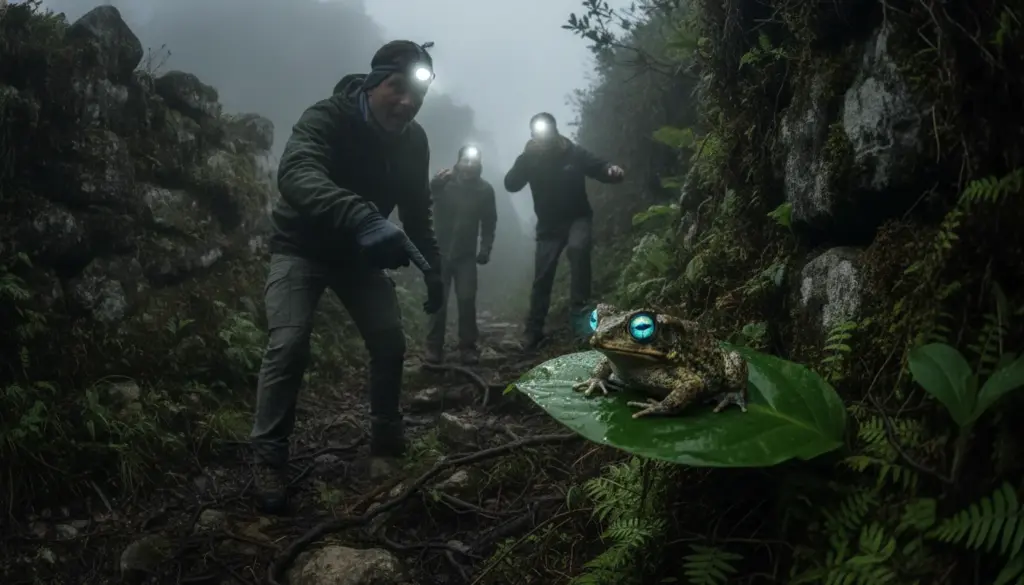
Up in the misty heights of the Bolivian Andes, the overwhelming quiet hits you instantly. The damp air carries the scent of wet moss and ancient stone, making every step on the narrow mountain paths echo loudly. A dedicated group of field biologists cautiously navigates the fog with headlamps, their pulses racing in anticipation. They are searching for a biological ghost—a tiny, indigenous creature that the scientific community had long ago written off as a lost cause.
Suddenly, a team member stops dead in their tracks. Resting on a rain-slicked leaf, two vibrant eyes stare right back through the darkness. The animal is breathing, blinking, and undeniably alive.
Someone softly murmurs a name that hasn’t been uttered in a natural setting for over two decades. In a single heartbeat, the narrative of a nation’s ecological heritage undergoes a profound transformation.
How a Vanished Bolivian Creature Unexpectedly Returned
Like many tales of ecological conservation, this saga begins with a silent fading away. For more than twenty years, wildlife researchers working in Bolivia harbored fears that a native animal, once abundant in the humid mountain woodlands, was gone forever. Local residents gradually stopped spotting it near mountain creeks, nocturnal surveys yielded nothing, and scientific databases discreetly shifted its classification to “possibly extinct.”
Then, during an overcast night expedition deep inside an isolated reserve, a recognizable little shape emerged on a damp, moss-covered stone. It was a single, fragile yet highly alert specimen of a creature that hadn’t been documented in its natural habitat since the early 2000s. That surreal split second, suspended between disbelief and sheer elation, instantly transformed years of ecological grief into pure adrenaline.
The Rapid Spread of Incredible News
Word of the encounter swept through the scientific community with astonishing speed. Found hidden within Bolivia’s Yungas region, this newly recovered animal used to be so commonplace that historical field logs hardly bothered to detail its appearance. It was previously just another small resident in a vibrant, teeming forest ecosystem. Watching it slip away felt akin to forgetting a word from a dialect that no scholar had ever bothered to record.
On that fateful night, the expedition crew didn’t celebrate with loud cheers. Instead, they carefully crouched down to observe, measure, and record its movements, terrified the tiny survivor might simply vanish if they looked away. Exact GPS coordinates were secured like the location of buried treasure. Blurred, excited photographs were immediately dispatched to anxiously waiting peers in La Paz and beyond.
Within mere days, the ultimate confirmation came through: the mountain ghost was authentic. A creature entirely written off in academic reports had stubbornly clung to life in a microscopic sliver of wilderness, seemingly waiting for someone to finally look closely.
Why Did It Evade Detection for So Many Years?
To understand its long absence, you have to look at the extreme environment it calls home. The towering, cloud-covered ridges of the Bolivian Andes present a massive logistical nightmare for scientists. The terrain features impenetrable brush, sheer drops, and punishing downpours that wash away trails in hours. Comprehensive biological surveys in these zones are incredibly costly, rare, and generally prioritize larger, more iconic wildlife.
However, a more troubling reality also played a role. Decades of aggressive deforestation, expanding agricultural plots, new road construction, and shifting climate patterns severely fractured the creature’s native territory. As populations dwindle and fragment, actual sightings shift from rare occurrences to local legends.
The scientific method demands hard proof. When decades roll by without a verified sighting, researchers naturally conclude a species has perished. Yet, as this discovery proves, sometimes the animal quietly persists, clinging to existence right on the fringes of an ever-shrinking map.
What This Andean Rediscovery Means on a Practical Level
Uncovering a presumed-dead animal offers far more than just a heartwarming news update. In the real world of conservation, it ignites a rapid sequence of crucial, tangible interventions. Initial steps are largely bureaucratic but essential: revising official endangerment statuses, planning rigorous new field expeditions, and organizing urgent strategy sessions between academics, local agencies, and government officials. Dormant grant proposals get pulled out and heavily revised with a sudden, renewed sense of emergency.
Back in the damp forests, the original discovery team returns equipped with upgraded gear and highly specific research questions. They need to know the population size, breeding habits, dietary needs, and overall health of these survivors. This represents the gritty, boots-on-the-ground reality of field biology. Every captured vocalization and identified nesting site directly contributes to drafting a comprehensive survival blueprint.
Partnering with Local Communities
Once this ecological map begins to take shape, fundamental shifts start occurring within neighboring villages. Communities scattered across the Bolivian Andes exist in close proximity to these vulnerable ecosystems, typically relying on modest farming, logging, or cattle grazing. When rumors circulate about a “resurrected” animal in their backyard, the response often oscillates between local pride and wary skepticism about potential tourist influxes or strict government fines.
The most successful wildlife preservation initiatives prioritize open dialogue over sudden mandates. Field experts sit in rustic kitchens filled with the scent of roasted coffee and woodsmoke, carefully explaining their findings while absorbing local lore. Elderly villagers might suddenly recall encountering identical creatures decades in the past, sharing long-forgotten stories about specific freshwater springs or hidden valleys where children were warned not to play.
In a matter of days, ancestral knowledge seamlessly integrates with modern ecological data, transforming the animal from a remote scientific oddity into a vital piece of shared community heritage.
The Broader Ripple Effects of Returning from Extinction
Finding a lost creature in Bolivia broadcasts a powerful message far past its physical borders, proving that our global extinction registers are definitively flawed and that certain habitats possess astonishing resilience. Conversely, it serves as a stark reminder of life’s incredible fragility.
Reappearing on the radar doesn’t equate to long-term safety. An animal can be technically alive but still sit dangerously close to total annihilation from a single severe drought, new highway, or chemical spill.
Realistically, the general public isn’t scrutinizing daily conservation status updates. Yet, these seemingly minor administrative adjustments are precisely what unlock vital conservation funding, create ecological monitoring jobs, and establish newly protected zones. A single sighting can rebrand a region from a hopelessly degraded landscape into an invaluable living laboratory that demands defense. Ultimately, the rediscovery functions as a powerful tool for preservation—provided stakeholders actively choose to wield it.
Transforming a Miracle Encounter Into Lasting Safeguards
Shielding a newly documented survivor hinges on a surprisingly straightforward concept: identifying its exact current location. Bolivian researchers currently deploy a fascinating blend of traditional tracking methods and cutting-edge technology, analyzing environmental DNA in waterways and setting up sophisticated bioacoustic listening stations. Nocturnal patrols are meticulously synchronized with specific rainfall and temperature fluctuations, knowing full well that certain elusive creatures only emerge or vocalize under highly precise atmospheric conditions.
Following data collection comes the brutal reality of habitat triage. Conservationists must quickly determine which forest fragments retain adequate moisture, which mountainsides are safe from imminent logging, and which creeks remain pristine enough to sustain delicate lifecycles.
Rather than attempting the impossible task of protecting every single acre, dedicated teams funnel their resources into a handful of critical sanctuaries. Effectively safeguarding one single, thriving valley often yields better results than attempting to loosely shield a massive geographic region on paper.
Moving Past Ecological Guilt to Targeted Action
For casual observers, reading about endangered wildlife often triggers a familiar sense of environmental despair and helplessness, despite personal efforts to recycle or donate. However, experts embedded in this Bolivian conservation effort advocate for a much more grounded perspective. They emphasize championing grassroots initiatives rather than exclusively backing massive international campaigns.
Tangible progress happens through small-scale, community-run nature reserves, sustainable shade-grown coffee operations within the Yungas, and youth groups trained to log local fauna using mobile applications. While these localized approaches aren’t flawless and inevitably face setbacks, they establish deep, enduring community roots.
The returning animal essentially acts as a charismatic anchor, connecting these unglamorous, daily struggles to a much grander, uplifting narrative.
- Prioritize vital refuges: Concentrate resources on the specific isolated zones where the population actually persists, securing precious time for gradual recovery.
- Empower grassroots defenders: Provide support to local rangers, neighborhood groups, and small-scale nonprofits who physically traverse the rugged terrain and engage directly with property owners.
- Leverage the emotional narrative: A dramatic reappearance captures public attention. Translating that fleeting media spotlight into permanent legislative protection and steady funding is the ultimate objective.
- Embrace flawed victories: Ecological work is inherently messy, and some wilderness will inevitably be destroyed. Preserving a fragile lineage requires immense persistence rather than demanding pristine perfection.
- Expand the ecological focus: Whenever an absent organism suddenly emerges, it highlights a hidden durability within the broader habitat. The ultimate goal must be protecting the entire interconnected web, not merely celebrating a single surviving thread.
Revealing Our Ecological Blind Spots
This astonishing Bolivian reappearance powerfully illustrates that the natural world operates entirely outside human schedules and assumptions. While scientific ledgers might confidently declare an organism gone, life has a remarkable tendency to quietly endure in frigid streams and mist-choked canyons, completely ignoring our pessimistic conclusions. This realization offers incredible solace, yet it simultaneously presents a massive scientific challenge.
Such milestone events compel us to reevaluate our definition of “lost.” It forces researchers to wonder exactly how many other undocumented survivors are currently holding out in overlooked, inhospitable corners of the globe, persisting in ways we never thought possible. Tragically, it also begs the question of how many unique forms of life will quietly vanish simply because no qualified observer was trekking through the darkness with a flashlight and a notepad.
The specific Andean jungles sheltering this creature aren’t untouched, magazine-cover paradises. They are actively utilized, highly contested terrains where heavy machinery, agriculture, wildlife, and conservation groups constantly negotiate for space. Within this chaotic friction, a fragile but genuine hope materializes: this incredible rediscovery doesn’t have to just be a viral headline, but a definitive catalyst for change. The central question shifts away from wondering how we nearly wiped them out, focusing instead on defining what kind of future relationship we intend to build with the wild remnants that stubbornly refuse to fade away.
Frequently Asked Questions
Which species reappeared in Bolivia following a 20-year absence?
Field scientists confirmed the incredible return of an indigenous Andean forest dweller that had vanished from natural records for over two decades. Located deep within the Yungas territory, research teams are currently finalizing the creature’s precise taxonomic classification and preparing newly updated ecological data for publication.
How is it possible for an animal to remain hidden yet alive for decades?
Countless organisms inhabit incredibly hostile, difficult-to-reach environments. When wildlife numbers crash and documented encounters cease, biologists are often forced to label them as potentially extinct. However, tiny, highly secretive groups can continue breeding completely undetected in remote ecological pockets, particularly within extreme topographies like the Bolivian mountain ranges.
Does this reappearance guarantee the animal is finally safe?
Absolutely not. This milestone simply confirms the lineage hasn’t been entirely extinguished. The surviving population is likely incredibly small and deeply vulnerable to ongoing threats like aggressive logging, water contamination, and extreme weather shifts. Spotting the animal is merely the starting line for conservation, not a guaranteed happy ending.
What primary dangers threaten this Bolivian survivor today?
The most severe hazards include the destruction of their natural habitat due to agricultural sprawl and highway construction, alongside deteriorating water purity and erratic climate patterns. When forested areas are chopped into disconnected fragments, it becomes nearly impossible for isolated individuals to locate suitable mates and sustain a robust genetic pool.
How can international observers support these localized conservation efforts?
Global citizens can directly fund highly vetted, grassroots environmental organizations operating across the Andes. Additionally, purchasing ethically sourced goods that promote sustainable South American agriculture and sharing scientifically accurate wildlife updates helps immensely. Maintaining steady public interest forces regulatory bodies to transform these miraculous second chances into rigorous, permanent legal protections.