
Why the USS Gerald R. Ford Commands Europe’s Attention
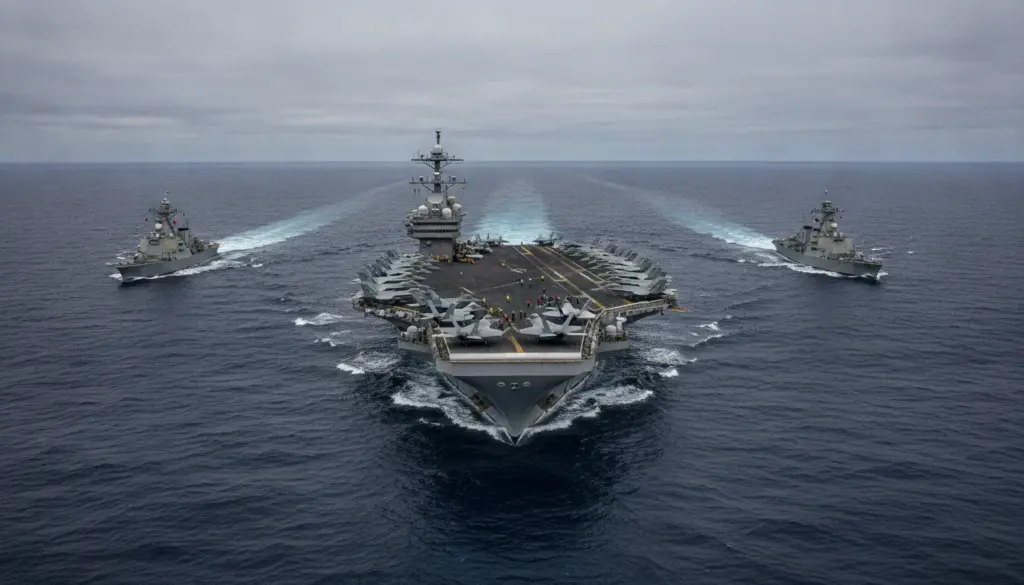
Witnessing a massive U.S. supercarrier cutting through the ocean instantly shatters your normal perception of size. Beneath the overcast Atlantic skies, the USS Gerald R. Ford resembles a heavily fortified floating metropolis rather than a standard military vessel. Escorting destroyers look surprisingly tiny maneuvering alongside it.
Up on the sprawling flight deck, pristine fighter jets rest in neat formations while personnel in brightly colored vests execute their highly synchronized duties. Europe lies just beyond the horizon. Yet, if geopolitical frictions continue to escalate, this formidable strike group might ultimately pivot toward the Middle East.
Most naval vessels slip into regional waters without altering the local geopolitical climate. This latest American supercarrier is a striking exception. As the premier technological marvel in the U.S. naval fleet, its arrival in European territory broadcasts a distinct warning to capitals from NATO headquarters all the way to Tehran.
Defense officials categorize this positioning as reassurance and deterrence. In strategic circles, that phrasing signals an approaching storm, effectively warning adversaries to carefully weigh their next moves. Behind closed embassy doors and within encrypted communication channels, the real maneuvering takes place.
Frictions with Iranian forces have intensified at a remarkably subtle pace over recent months. A confiscated commercial vessel here, an isolated drone assault there, or a proxy-fired projectile serves as a stark reminder of the underlying power dynamics. Every minor skirmish heavily influences the strategic choices made in Washington.
From Atlantic Waters to Middle Eastern Hotspots: The Strategic Shift
Eventually, military planners stop debating whether to dispatch naval support and start calculating which strike group can arrive the fastest. The moment this colossal vessel navigates into European jurisdiction, geopolitical analysts immediately pull out regional maps stretching far past the Mediterranean.
They plot potential courses down through the Suez Canal, sweeping into the Red Sea, and finally reaching the Persian Gulf. This is the exact maritime zone where Iranian fast-attack craft frequently harass American assets. Positioning this asset nearby grants military commanders unparalleled adaptability.
It fortifies NATO commitments, provides rapid response capabilities for Eastern European flare-ups, and allows a swift pivot if Iranian proxy groups cross established red lines. An agile maritime airfield capable of covering 500 nautical miles daily dramatically expands a president’s strategic playbook.
Packed with electronic warfare tech, elite combat jets, and thousands of highly trained personnel, it represents undeniable leverage. If the fleet inches closer to the Eastern Mediterranean or navigates the Strait of Gibraltar, the underlying message amplifies significantly. The military is fully prepared to project aerial dominance directly over militia networks operating throughout Syria, Lebanon, and Iraq.
While this doesn’t guarantee immediate airstrikes, it provides base commanders with the literal runway required to retaliate if regional outposts face sudden bombardments. A solitary drone impacting a coalition base could force a monumental strategic decision.
Decoding the Deployment Like a Geopolitical Strategist
Analyzing these maritime maneuvers requires more than glancing at news alerts. You can decode these military shifts by examining three fundamental elements: location, timing, and accompanying forces. Staging this carrier near Europe while maintaining a clear transit route to the Middle East proves leadership wants to simultaneously secure NATO flanks and pressure Iranian interests.
This highly reactive deployment aligns perfectly with a noticeable spike in hostile maritime encounters involving Iran-backed factions. Furthermore, the visible escort destroyers, classified submarine presence, and joint exercises with allied nations transform a solitary ship into a comprehensive defensive umbrella.
Recognizing these patterns makes the underlying military doctrine much less opaque. It functions as a heavily calculated geopolitical insurance policy. When following global conflicts, it becomes incredibly easy for the general public to experience fatigue.
Another ship movement or stern warning quickly blurs into background static. However, this recurring reliance on massive maritime presence exposes both American strength and underlying vulnerabilities. While the projection of power is immense, naval crews experience extreme burnout, maintenance schedules compound, and foreign adversaries continuously test boundaries without triggering all-out warfare.
The Unspoken Human Toll Beneath the Jet Noise
Strip away the complex military jargon, and you uncover a fundamental struggle between global security and dangerous escalation. This formidable warship represents both an ironclad guarantee and a looming threat, intricately bound in aviation fuel and reinforced steel.
Coastal residents in allied European nations might view this looming silhouette as an essential protective barrier. Conversely, civilian populations familiar with aerial bombardment often perceive it as an absolute magnet for conflict. Every time these nautical titans shift coordinates, some citizens breathe easier while others brace for impact.
There is also an uncomfortable reality regarding the sustainability of these relentless operational tempos. Constant readiness demands endless rotations, forcing sailors to repeatedly leave their families behind. Meanwhile, young conscripts on the opposing side spend exhausting hours staring at radar monitors, waiting for a massive radar signature to materialize.
Power projection exacts a severe toll on all involved parties, even when actual combat never materializes. It manifests in strained relationships, silent psychological burdens, and economies suffocated by sanctions. Ultimately, parking this maritime fortress near Europe will not instantly neutralize diplomatic standoffs.
At best, it secures critical negotiating leverage. At worst, it introduces another volatile element to a highly unstable geopolitical chessboard, where one misinterpreted radar blip could ignite a global crisis.
Common Questions About the Supercarrier’s Mission
- Why is this specific aircraft carrier patrolling European territory right now? The vessel is currently positioned to bolster international alliances, dissuade hostile state actors, and maintain striking distance to emerging flashpoints, specifically escalating frictions involving Iran.
- Does this naval positioning indicate an imminent strike on Iranian targets? Absolutely not. Moving major naval assets primarily serves as a profound communication tool for deterrence. This specific positioning provides leadership with critical tactical alternatives without guaranteeing immediate offensive action.
- Can the strike group easily transition from Europe toward the Middle East? Yes, quite rapidly. From its current coordinates, the fleet can swiftly navigate the Mediterranean Sea, transit the Suez Canal, and reposition near the Persian Gulf should regional stability deteriorate further.
- How does Iranian leadership traditionally react to these maritime maneuvers? Opposing officials routinely issue aggressive public statements, increase their local maritime patrols, and occasionally launch impromptu military drills. They aim to project ultimate defiance while quietly reassessing their strategic vulnerabilities.
- What geopolitical indicators should observers monitor next? Keep a close eye on commercial shipping patterns, isolated skirmishes involving allied military bases, diplomatic rhetoric from both sides, and any subtle geographic shifts by the escorting strike group toward known conflict zones.