Suddenly jobless just months before retiring
Back in 1975, factory worker Paul assumed he was finally on the home stretch. He had spent his entire career toiling in the demanding but secure ironworks of Champagnole. With retirement rapidly approaching, those final few months felt like a mere formality.
Then, reality struck hard. An unexpected industrial closure stripped him of his job a mere five months before his official retirement date. There was no celebratory cake or heartfelt farewell speech—just a brief office meeting to tell him his career was over.
Many workers from his era can relate to this abrupt, deeply unfair termination after decades of loyal labor. While he received a severance package, he was unknowingly handed something far more valuable: a retirement that would ultimately span more than half a century. During the 1970s, the average life expectancy in France hovered just above 72 years. Living over three decades past that statistical milestone borders on the miraculous. What initially felt like a forced exit blossomed into a bonus chapter, rivaling the length of his entire working life.
Cooking, washing, and visiting the market solo
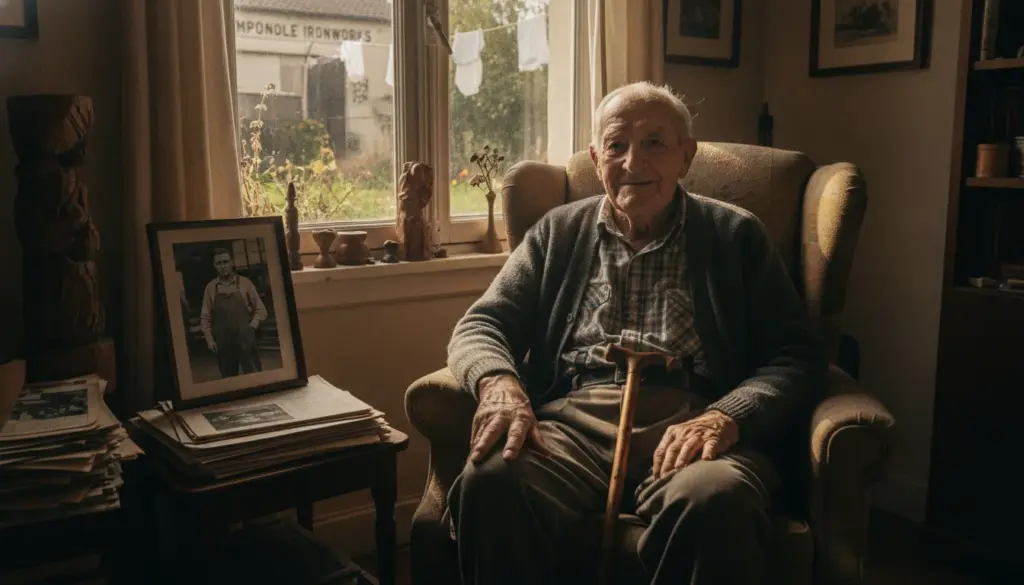
Fast forward to today, and the 104-year-old remains securely anchored in his own house in the quiet village of Ney. He still prepares his own food, manages the laundry, and never misses his weekly trip to the local market. There is no full-time caregiving team running his household, nor around-the-clock monitoring—just a man living entirely at his own pace.
Picture an elderly gentleman carrying a traditional woven basket, chatting animatedly with local vendors to ensure his favorite cheese tastes exactly as it did decades ago. These ingrained habits provide a sturdy framework for his week. He relies on familiar anchors rather than rigid schedules.
However, his journey hasn’t been without serious medical scares. A severe heart attack struck in 1995, but quick intervention from his son saved his life. While a cardiac event of that magnitude forces many seniors to surrender their autonomy, Paul made a fierce decision. As soon as his recovery allowed, he returned directly to his beloved kitchen and his favorite armchair.
Geriatric specialists consistently note that aging in place, provided it is safe, significantly boosts overall quality of life. Being surrounded by cherished memories, personal belongings, and lifelong habits clearly works wonders, as Paul’s situation perfectly illustrates.
- He tackles minor household chores every single day.
- He maintains regular social touchpoints, particularly at the market.
- He stays rooted in a comforting environment filled with recognizable faces.
- He enjoys complete control over his daily schedule.
From resistance fighter to factory worker
His century-spanning existence encompasses much more than just aging and factory work. During the dark days of the Second World War, Paul bravely joined the French Resistance. This led to his capture in 1944 and subsequent deportation to Germany, where he endured freezing temperatures, starvation, and the constant terror of never seeing home again.
Following a grueling imprisonment, American forces finally liberated him. Despite being dangerously malnourished from days without rations, he rejected the notion of simply resting. Instead, he plunged right back into the ongoing conflict in the Alsace region.
When discussing his past today, he completely dismisses any talk of heroism. He attributes his survival, his ability to work again, and his chance to build a family entirely to luck. This immense humility is a hallmark of the “silent generation” who endured unimaginable hardships without complaining. While neighbors view him as a decorated war hero, he simply considers himself a fortunate man.
A local icon watched over by the community
Over the decades, Paul has evolved into a treasured institution rather than just another resident. Virtually every soul in Ney knows his name. When he crossed the century mark, his 100th birthday morphed into a massive village-wide celebration, feeling less like a standard party and more like a collective tribute.
The local mayor routinely drops by his living room just to check in. Neighbors frequently knock on his door, dropping off groceries or simply asking if he requires anything. In our modern era where people barely recognize their next-door neighbors, this tight-knit community spirit feels wonderfully nostalgic—and highly effective.
In smaller towns, an empty chair at the local café instantly sparks concern, naturally prompting residents to look out for one another. If Paul ever missed his regular market day, it would immediately trigger a welfare check. This quiet, organic social safety net is exactly what keeps him secure.
Decoding the secret to modern longevity
Whenever anyone asks for the magic formula behind his impressive lifespan, Paul never mentions trendy supplements or rigorous fitness routines. He simply credits sheer luck. In a digital world obsessed with complex longevity hacks, his refreshingly grounded answer brings a smile to your face.
Naturally, science tells us there are deeper mechanics at play. Reaching extreme old age usually requires a precise alignment of favorable conditions. While longevity researchers consistently highlight the importance of a nutritious diet, daily movement, and avoiding tobacco, this centenarian’s tale highlights an often-overlooked factor: the profound impact of truly belonging somewhere.
Knowing exactly where your favorite coffee mug sits, waving to a familiar face across the street, and bantering with the local grocer might seem trivial. Yet, these tiny interactions compound into a massive sense of stability and purpose.
Essential lessons for families and local care systems
The trajectory of Paul’s life directly addresses pressing conversations happening throughout Europe today regarding our rapidly aging population. How do we successfully balance personal autonomy with necessary safety? Furthermore, how can we prevent crippling loneliness when seniors choose to age in place?
Above all, his journey proves that prolonged independence rarely happens by accident. It requires a delicate, coordinated dance between family members, healthcare providers, and local municipalities. We can extract several actionable takeaways from his vibrant life:
- Optimize the living space for functionality: Ensure everyday items remain easily accessible to drastically reduce the risk of dangerous falls.
- Encourage manageable micro-activities: Promote simple tasks like a brief daily walk, cooking a basic soup, or keeping a weekly appointment in town.
- Foster strong neighborhood networks: Rely on a trusted neighbor for daily check-ins or a local shopkeeper who will raise the alarm if routines suddenly break.
- Honor their personal wishes: Respect the deep-seated desire to remain at home for as long as their physical and mental health safely permits.
For the children and grandchildren of aging parents, this narrative offers a profound perspective shift. Caregiving shouldn’t just be about monitoring caloric intake or medication schedules; it involves actively nurturing the tiny rituals that bring joy to their days. A shared trip to the bakery, a predictable afternoon card game, or a strictly timed phone call can completely transform a senior’s week.
Today’s healthcare organizations constantly use buzzwords like “aging in place” and “holistic wellness.” The life of a 104-year-old former ironworker from Ney puts a beautiful, human face to those clinical terms. He doesn’t represent an unattainable, perfect ideal. Instead, he is simply a man who continues to navigate life on his own terms, embracing the ups and downs long after the world told him his working days were over.