Why Marigolds Are a Gardener’s Best Friend
Marigolds offer much more than vibrant splashes of color in your backyard. These powerful companions actively keep destructive insects at bay, and you can effortlessly multiply them without spending a dime.
As any seasoned gardener will tell you, this particular flower is one of the most valuable allies you can plant. Blooming relentlessly from early June right up until the first frost, it emits a distinct, spicy fragrance that acts as a protective shield for your entire vegetable patch. The greatest advantage? Once you establish that initial batch, you will never need to purchase seeds again.
What Makes These Resilient Blooms So Special
Originating from the warmer climates of Central and South America, these members of the daisy family are truly fascinating. Their deeply lobed leaves are a standout feature, releasing a remarkably strong, tart aroma whenever you gently crush them between your fingers.
Depending on the specific variety you choose, they can reach heights anywhere between 8 to 40 inches, boasting brilliant blossoms in fiery shades of yellow, orange, and red. Three specific varieties are particularly favored for home cultivation:
- Tagetes erecta (African Marigold): This is the large-flowered beauty of the family, boasting an impressive stature that reaches up to 32 inches tall.
- Tagetes patula (French Marigold): Featuring a much more compact growth habit, this often bi-colored variety is a massive favorite for border planting in vegetable patches.
- Tagetes tenuifolia (Signet Marigold): Growing in dense, cushion-like mounds up to 16 inches, this type is famous for its punchy citrus fragrance. Certain varieties are even perfectly edible.
Every single one of these types is remarkably low-maintenance. They bloom persistently while drawing in beneficial pollinators like bees, bumblebees, and hoverflies.
How These Flowers Banish Garden Pests
While we might appreciate their unique, herbaceous scent, many destructive bugs find the smell absolutely repulsive.
Aphids and Whiteflies
Troublesome intruders like whiteflies and various aphid species steer clear of the plant’s strong emissions. There is also a brilliant secondary benefit: the bright blossoms act as a magnet for adult hoverflies. The larvae of these beneficial insects are natural predators that efficiently clean up any lingering aphids in your beds. Tomatoes reap massive benefits from this dynamic. By planting marigolds directly alongside your tomato vines, you can visibly slash aphid infestations.
Harmful Nematodes
These vibrant plants are also a fantastic defense against microscopic root-knot nematodes lurking beneath the soil. The root systems exude specific compounds that are highly toxic to these destructive parasites. By integrating them as a catch crop or through strategic companion planting, you naturally drive down nematode populations. Highly susceptible crops, such as carrots and tomatoes, thrive significantly better with this underground protection.
Carrot Flies and Colorado Potato Beetles
Sowing a dense border of these flowers around your root vegetables is believed to effectively deter the dreaded carrot fly. Additionally, planting them near potatoes can help ward off the destructive Colorado potato beetle. While this specific deterrent effect is still being studied scientifically, countless green thumbs have successfully observed this benefit in real-world practice.
Slugs and Snails
Interestingly, the dynamic flips entirely when it comes to slugs, as they absolutely adore this plant. You can cleverly exploit this fatal attraction by planting a dense sacrificial barrier right at the edge of your vegetable plot. The slimy invaders will greedily attack the attractive flowers, happily ignoring your precious vegetables nearby. To make this trap system work effectively, however, you must consistently hand-pick the mollusks off the decoy plants.
A Simple Guide to Harvesting Your Own Seeds
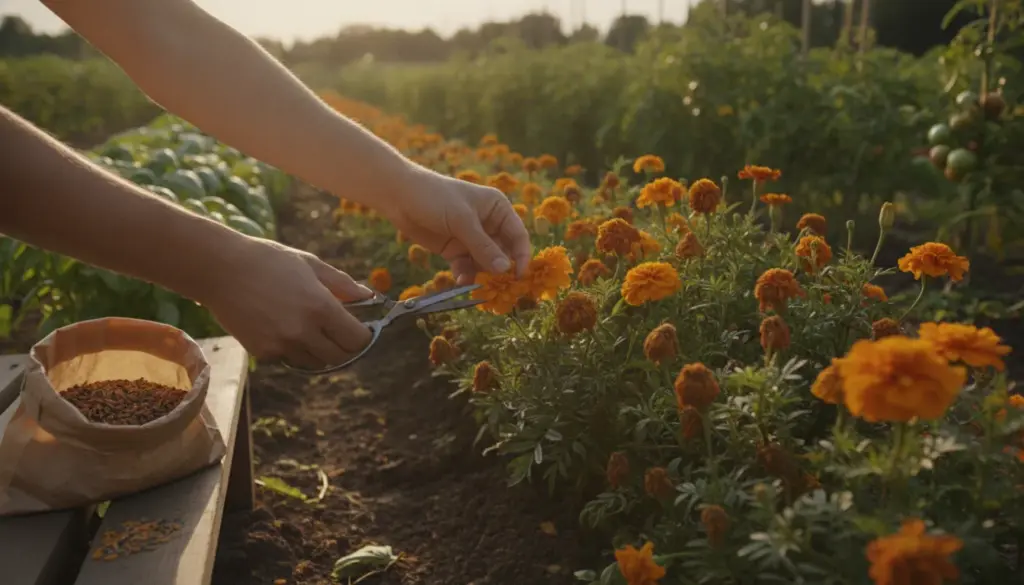
Once these radiant flowers are established in your yard, buying replacement packets becomes a thing of the past. Gathering your own supply is incredibly straightforward and requires just a few basic household items. All you genuinely need is a sharp pair of scissors, a standard plate, and a clean glass jar for storage.
Knowing the Perfect Time to Harvest
To figure out if your late-summer pods are completely ready for collection, perform a gentle squeeze test. If the dried flower base feels slightly soft to the touch and easily yields to reveal dark, needle-like seeds inside, the plant has reached optimal maturity. Always aim to do your collecting on a bright, dry afternoon, as excess moisture quickly leads to devastating fungal issues.
The Extraction Process
Simply snip off the entirely browned, dried flower heads. Hold them directly over your container and gently rub the husks between your thumbs and index fingers until the dark slivers tumble out. If you prefer a mess-free method, you can also toss the dried heads into a paper bag and give it a vigorous shake. After that, just sift through to remove any damaged pieces or excess plant debris.
Storing Your Harvest for Next Season
Proper curing is the secret to successful germination next spring. Spread your freshly gathered bounty evenly across a highly absorbent surface.
Place them in a shaded, well-ventilated room, allowing the ambient air to draw out any lingering moisture over the course of ten to fourteen days. Once they are completely bone-dry, transfer them into simple paper envelopes or tightly sealed jars. Keep your containers in a cool, dark, and dry environment to ensure your future generation of protective companion plants remains highly viable.
Expert Answers to Common Questions
How do these plants combat aphids and whiteflies?
They emit a distinctly potent fragrance that naturally repels insects like whiteflies and aphids. Furthermore, their vivid blooms draw in hoverflies, whose hungry larvae aggressively prey on aphids. Tucking these protective companions among vulnerable crops creates a formidable, chemical-free defense system.
Can they actually eliminate soil nematodes?
Yes, the root systems actively secrete chemical compounds that are lethal to many parasitic root-feeding worms. Utilizing them in mixed cropping schemes naturally diminishes these microscopic pests, creating a much healthier soil profile for susceptible vegetables.
When exactly should the pods be clipped?
Collection time arrives once the flower heads have totally withered and turned a crispy brown. Give the base a soft pinch; if it yields and exposes stiff, dark, stick-like seeds, it is harvest time. Always wait for a completely dry day to prevent devastating mold growth during storage.