Sweet potatoes have been giving traditional spuds a serious run for their money lately. Packed with essential vitamins and dietary fiber, this vibrant root vegetable is easier to cultivate at home than you might think. Here is exactly how to start growing and harvesting your very own supply.
For quite some time now, the mighty sweet potato has been an absolute staple for food bloggers and a star ingredient in trendy poke bowls. Widely celebrated as a genuine superfood, it provides incredible nutritional value. If you are looking to mix up your meal rotation or simply prefer a touch of natural sweetness, this root is the perfect substitute for regular potatoes. It seamlessly fits into a wholesome diet, bringing a wealth of vitamins, minerals, and valuable dietary fiber to your daily meals.
Compared to our local potato varieties, this plant boasts a noticeably higher sugar content, offering a flavor profile that strongly resembles carrots. Because of this natural sweetness, enjoying a baked tuber drizzled with honey and topped with fresh fruit makes for an outstanding breakfast option! Another major culinary advantage is its versatility—it tastes just as delicious eaten raw as it does when fully cooked.
Available in stunning shades ranging from bright orange to deep purple, these tubers originally stem from Central America and the United States. Consequently, the produce you find in the grocery store has usually traveled an incredibly long distance to get there. From a carbon footprint perspective, these lengthy export routes are less than ideal. So, why not skip the supermarket and simply grow this superfood right in your own backyard?
Cultivating sweet potatoes: A greenhouse is your best bet
Cultivating your own supply is surprisingly straightforward. Even if you lack a sprawling garden, you can easily raise them in spacious window boxes or sturdy raised beds right on a balcony. However, if you have plenty of room to spare, a greenhouse provides the ultimate growing environment. Because the sweet potato thrives in warm, sun-drenched conditions, selecting a bright and wind-protected spot is absolutely crucial for a healthy harvest.
Choosing the proper soil mixture is just as important. Also known as the batata, this round to spindle-shaped tuber flourishes in loose, sandy soil that is highly enriched with nitrogen, humus, and vital nutrients.
Naturally, when the weather heats up, this leafy plant gets incredibly thirsty and requires frequent watering. As a general rule of thumb, you should aim to keep the ground consistently moist, but be very careful to avoid waterlogging, which can cause severe root rot. If you decide to use a planting container, ensure it has a generous capacity of at least 30 liters to accommodate the expansive root system.
Cultivating sweet potatoes: Maintain proper plant spacing
When planting directly in a garden bed, it is highly recommended to leave a gap of 30 to 50 centimeters between each individual plant. This generous spacing gives the tubers the essential room they need to develop into large, robust vegetables. For the best planting results, you should start with cuttings. You can easily propagate these yourself by placing one or more sweet potato tubers into a container filled with well-aerated soil. Keep them adequately watered, ensure they receive plenty of sunlight, and they will begin to sprout after a few weeks.
If indoor space is tight, an alternative method is to submerge the bottom half of a tuber in a glass of water and place it on a sunny windowsill. Once a few weeks have passed, the new shoots will be long enough for soil planting. When transferring them to the dirt, make sure the tuber is only half-buried and wait for the optimal planting window.
You can begin preparing your cuttings as early as January, which allows them to be transplanted outdoors between April and May. If you are using a greenhouse, you can move them into the soil much earlier. Keep in mind that sweet potatoes absolutely cannot tolerate frost or temperatures dropping below minus ten degrees Celsius, so never rush the outdoor planting phase.
Cultivating sweet potatoes: Give the soil a rest post-harvest
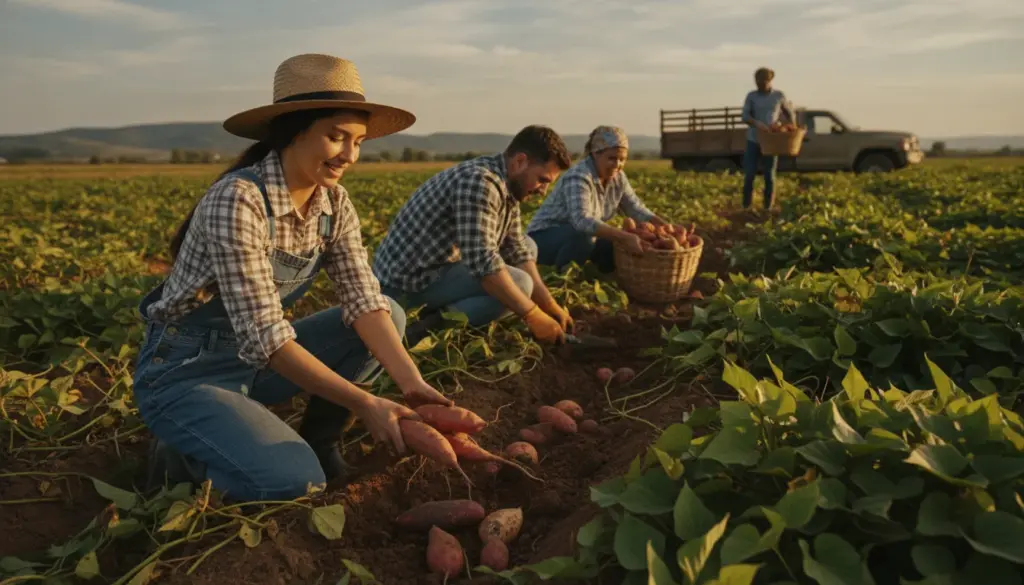
You can finally look forward to gathering your abundant yield starting in September. You will know the sweet potatoes are fully ripe and ready once the plant’s foliage turns yellow. Unlike standard potatoes, these tubers do not have a long shelf life and are prone to rapid rotting. Therefore, it is best to let them dry out undisturbed for the first couple of days after pulling them from the earth, and then consume them relatively quickly.
Finally, remember a golden rule of gardening: growing a monoculture in the same bed is detrimental in the long run! To maintain optimal soil health, rotate your sweet potato patch to a new location the following year. This simple practice ensures the previous plot has ample time to recover and regenerate its nutrient levels.