Transforming Dark Garden Spaces with Fragrant Blooms
A north-facing garden or a balcony dominated by the deep shadows of mature trees doesn’t have to mean a lack of colorful blossoms. While many popular flowering plants absolutely crave the sun, a fascinating selection of botanical beauties has adapted perfectly to dappled light. When evaluating shade-tolerant species, it becomes clear that choosing the proper varieties can completely revitalize a gloomy outdoor space.
These ten resilient perennials thrive with very limited sunshine. Even better, they reward you with captivating fragrances and robust, winter-hardy root systems that guarantee fresh growth year after year.
10 Fragrant and Hardy Perennials for Your Shaded Spots
- Lily of the Valley: Reaching a moderate height, this classic shade-lover produces delicate white bell flowers alongside wide leaves. Blooming from May to June, its legendary, bewitching scent is heavily favored in the commercial perfume industry. A vital warning: This plant is highly toxic, so you must never confuse it with edible wild garlic, which looks remarkably similar!
- Sweet Violet: Acting as a low-growing ground cover, this delicate plant features charming purple blooms. It bursts into color early, flowering from March to April. Just as the name implies, it delivers an intensely sweet, sugary aroma.
- Sweet Woodruff: Characterized by fine stems, small foliage, and tiny white petals, this medium-height perennial blooms between April and June. It is famous for its distinct vanilla-like profile derived from natural coumarin. Note: It is toxic if consumed in large quantities.
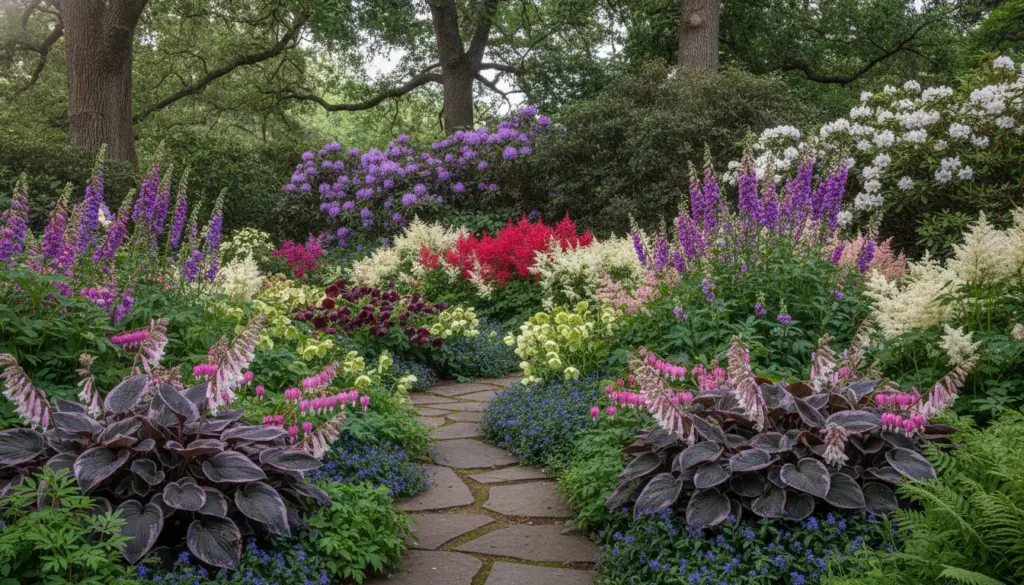
- Bleeding Heart: Growing to a medium or tall height, this stunning plant showcases highly unusual, teardrop-shaped pink and white flowers. Between April and May, it offers a very subtle, elegant fragrance.
- Foamflower: This moderately sized perennial produces frothy, airy clusters of tiny white or pale pink blossoms from April to June. It carries a faint, delicate scent that won’t overpower your garden.
- Astilbe: Varying from compact bushes to quite tall specimens, the false spirea boasts striking, feathery plumes that range from soft pink to vibrant, deep violet. Flowering from May right through to September, it emits a lightly sweet perfume.
- Hosta (Plantain Lily): Primarily grown for its spectacular, broad foliage, this medium-height, wide-spreading plant also produces lovely blossoms in July and August. The flowers release a wonderfully sweet, crisp smell.
- Bergenia: Also known as elephant’s ears, this medium-height plant features distinctive leathery leaves that often flush red in autumn, alongside tall stems bearing cup-like flowers. Blooming from March to May, its fragrance intensity varies significantly depending on the specific cultivar you choose.
- Cranesbill (Hardy Geranium): Available in low to tall varieties, these plants feature deeply lobed foliage and cheerful, bowl-shaped flowers in diverse hues. Appearing from May to August, most emit a pleasantly aromatic herbal scent. Be careful to avoid the Stinking Cranesbill variety, which has a notoriously foul odor.
- Woodland Phlox: Featuring a low, creeping habit, this ground-hugger produces clusters of pale white, lilac, or soft blue blossoms. Flowering in April and May, it delivers a robust, enchanting aroma strongly reminiscent of blooming lilacs.
The Ideal Time to Establish Your Perennial Bed
When should you actually put these shade lovers into the ground? Container-grown plants are sold at garden centers year-round, giving you plenty of flexibility. However, timing your planting correctly makes a massive difference for root establishment.
Spring through late summer provides the most optimal window for planting. Young perennial root systems struggle significantly in cold, waterlogged soil. That said, if the ground remains relatively dry and completely frost-free, you can also successfully plant during the cooler winter months.
Essential Tips for Shade-Loving Scented Plants
Which fragrant perennials work best in partial shade?
For areas with dappled light, your top choices are Lily of the Valley, Sweet Violet, Sweet Woodruff, Bleeding Heart, Foamflower, Astilbe, Hosta, Bergenia, Cranesbill, and Woodland Phlox. They require minimal direct sun while providing reliable, aromatic blooms every single season.
When do these shade plants bloom?
You can enjoy a continuous display of color from March straight through to September by carefully staggering your plants. Sweet Violets and Bergenias kick off the spring season early. April brings Sweet Woodruff and Woodland Phlox, while Astilbes and Hostas stretch the floral show well into late summer.
Which varieties have the strongest scent?
If a powerful aroma is your main goal, prioritize Woodland Phlox for its heavy lilac notes, Sweet Violet for its sugary intensity, and Lily of the Valley for its classic, refined perfume quality. Plants like Foamflower and Bleeding Heart are much more understated and subtle.
Lily of the Valley vs. Sweet Woodruff: Which smells stronger?
Lily of the valley easily wins the fragrance contest with its potent, room-filling perfume. Sweet Woodruff offers a pleasant vanilla-spice aroma, but there is a major catch: the scent develops mainly as the cut foliage wilts and dries out. When it is freshly picked or actively growing in the soil, the smell is barely noticeable.