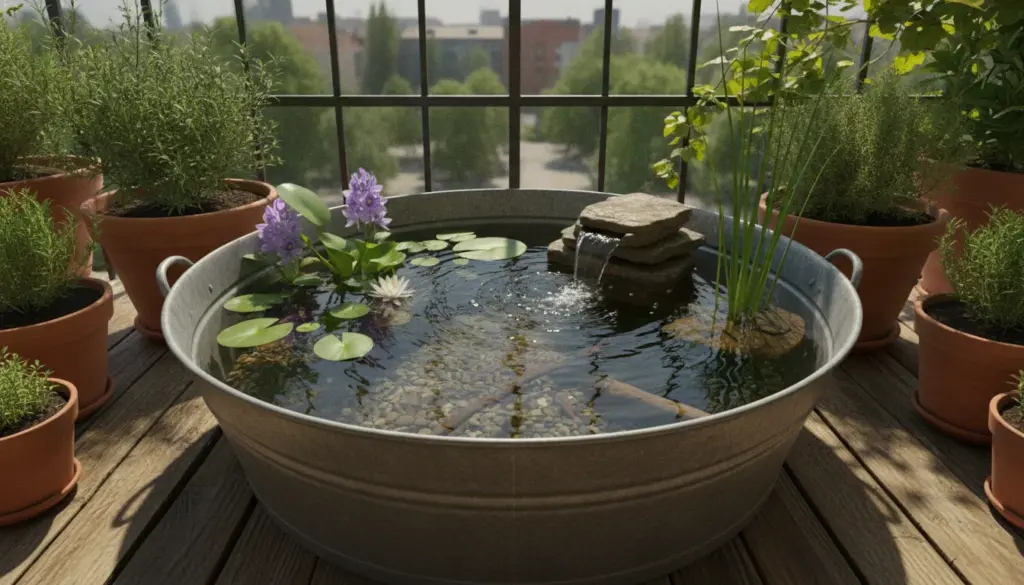
Dreaming of a compact water feature for your balcony or patio? Setting one up requires surprisingly little effort. With just a few straightforward steps, an ordinary metal tub can be completely transformed into a vibrant miniature ecosystem.
The gentle sound of moving water and the sight of lush aquatic foliage make a personal pond highly desirable for outdoor enthusiasts. Fortunately, massive backyard real estate isn’t a strict requirement for this project. A miniature water garden fits perfectly on modest terraces, tight balconies, or tucked into a small outdoor corner, quickly establishing itself as a thriving biological habitat.
Selecting the Ideal Location for Your Miniature Water Garden
Picking the perfect spot is a critical first step before assembling any aquatic elements. A partially shaded area receiving no more than six to seven hours of daily sunlight offers the best environment. Excessive direct sun exposure will drastically raise the water temperature, which inevitably triggers aggressive algae growth.
It is essential to position your chosen receptacle in its permanent home prior to adding any liquid. Once filled to the brim, these containers become incredibly heavy and nearly impossible to shift safely. If placing this setup on an elevated structure like a balcony, always verify the surface’s maximum load capacity beforehand.
Gathering Essential Materials and Plant Life
The foundation of this project relies on a robust, watertight vessel offering adequate capacity. Opting for a larger volume significantly improves the long-term stability of your biological balance. It is highly advisable to select frost-resistant containers, such as an upcycled metal wash tub, half of an oak wine barrel, or rigid plastics free of PVC. Aim for a depth of roughly 50 centimeters and a minimum capacity of 50 to 60 liters.
Should your preferred basin possess minor cracks or lack absolute water tightness, simply lining the interior with standard pond foil will solve the issue instantly. To successfully construct your compact aquatic feature, you will need the following supplies:
- Main vessel: A spacious, waterproof, and preferably freeze-proof container.
- Protective liner: Necessary only if the primary basin lacks a watertight seal.
- Structural rocks: Clean natural stones or standard bricks to construct internal elevation levels.
- Aquatic baskets: Specialized slotted pots to keep root systems properly contained.
- Burlap fabric: Woven jute material to line the planting pots securely.
- Planting mediums: Low-nutrient aquatic soil combined with heavy, coarse gravel.
- Regional aquatic flora: Local varieties such as water mint, marsh marigolds, or mare’s tail.
- Fresh water: Captured rainwater is the absolute best choice for filling the ecosystem.
Choosing Appropriate Flora for Crystal Clear Water
When it comes to vegetating a tiny aquatic space, a restrained approach yields the best results. Utilizing a sand and gravel mixture, or specifically formulated low-nutrient aquatic soil, is a proven technique for preventing murky conditions. Native, slow-spreading aquatic species generally perform best in confined setups.
Varieties such as dwarf bur-reed, brooklime, or vibrant marsh marigolds are exceptional choices. Beyond their visual appeal, these specific specimens naturally oxygenate the environment while providing crucial shelter for visiting beneficial insects. To prevent aggressive root expansion from overwhelming the small space, planting everything directly into submerged slotted baskets remains a best practice.
Optimal Planting Depths for Miniature Ponds
Shallow Zones (5 to 10 centimeters): Water plantain (Alisma plantago-aquatica), marsh marigold (Caltha palustris), and water forget-me-not (Myosotis palustris).
Mid-Level Zones (10 to 20 centimeters): Flowering rush (Butomus umbellatus), fragrant water mint (Mentha aquatica), alongside miniature bulrush (Typha minima).
Deep Water Zones (20 to 50 centimeters): Submerged oxygenators such as mare’s tail (Hippuris vulgaris) and water violet (Hottonia palustris), paired with floating-leaf varieties like frogbit (Hydrocharis morsus-ranae) or compact water lilies.
Building Your Miniature Oasis Step by Step
With all your supplies gathered, assembling the water garden is a highly rewarding and straightforward process. Following a methodical installation approach ensures immediate success:
- Secure the foundation: Position your completely empty tub in its permanent, partially shaded location. Ensure it sits perfectly level by slipping flat stones or wooden shims underneath any uneven edges.
- Seal the basin: If your chosen receptacle requires waterproofing, drape the pond foil inside now. A professional trick is to fill it once with tap water to press the liner firmly into the corners, then drain it completely before proceeding.
- Construct underwater shelving: Stack clean bricks or flat fieldstones inside the tub to form distinct terraces. These varying heights accommodate the specific submersion needs of different aquatic flora.
- Prep the containers: Cut pieces of fine-meshed jute fabric and lay them inside your slotted aquatic baskets. This barrier guarantees that loose soil won’t bleed out and muddy the ecosystem later.
- Pot the greenery: Gently settle your chosen specimens into the lined baskets, filling the remaining gaps with aquatic soil. Cap the top inch with heavy gravel so the planting medium cannot float away once submerged.
- Arrange the layout: Carefully lower the finished baskets onto their corresponding stone pedestals based on depth requirements. Scatter leftover gravel over exposed brickwork and basket rims to create a seamless, natural aesthetic.
- Flood the system: Slowly pour in harvested rainwater, taking great care not to disturb the meticulously placed gravel caps. Your compact aquatic habitat is now ready to flourish!
Maintaining Your Micro-Ecosystem Through the Seasons
As a final piece of essential maintenance advice, always monitor your water levels closely during warmer months. Rapid evaporation is common in compact setups, so periodically topping off the basin with fresh rainwater is vital for keeping the biological habitat perfectly balanced.
Keep in mind that this tiny environment cannot sustain any type of fish, as the restricted water volume lacks the necessary space and oxygen. If housing larger aquatic pets like decorative Koi carp is your ultimate goal, investing the time and resources into excavating a full-sized backyard pond is the only viable path forward.