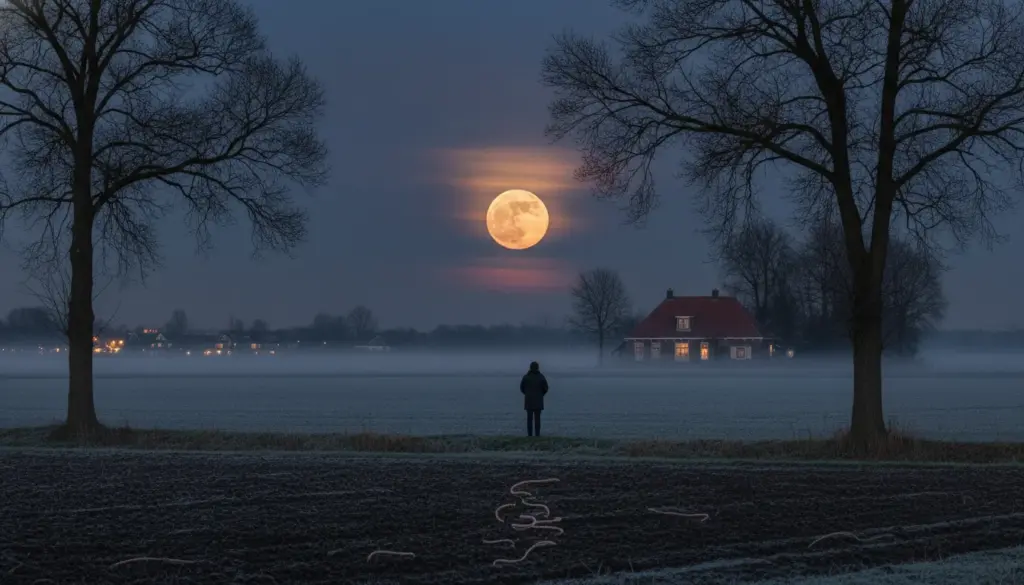
Crisp spring evenings still carry a wintery chill, yet a quiet seasonal herald is about to grace the night sky. As dusk falls on March 3 over the Netherlands and Belgium, a brightly illuminated full moon will emerge, carrying the peculiar title of the “Worm Moon.” While the name might sound a bit off-putting at first, it actually marks a pivotal turning point in our natural environment. Interestingly, this lunar event also aligns with a total lunar eclipse happening simultaneously on the opposite side of the globe.
Decoding the Quirky Worm Moon
To put it simply, the Worm Moon acts as the historical moniker for March’s full lunar phase. Rather than originating in Europe, this terminology stems from Native American cultures, which historically tracked the passing year by assigning highly descriptive labels to each full moon.
Instead of relying on mundane calendar references, these communities drew inspiration from shifting seasons and daily observations. March earned its earthy title because warming temperatures finally caused the frozen ground to thaw, allowing earthworms to wiggle back to the surface. These wriggling creatures not only aerated the soil but also provided a vital food source for returning birds, clearly signaling that winter’s icy grip was finally breaking.
From an astronomical perspective, this event simply represents the first full moon arriving near the onset of meteorological spring. It doesn’t alter the physical mechanics of our solar system, but it serves as a powerful testament to human observation and the timeless rhythms of nature.
Spotting the Lunar Display on March 3
You can catch this brilliant display on Tuesday, March 3, just as the sun dips below the horizon. In Frankfurt, the moon is expected to crest around 6:30 PM, with viewing times across Belgium and the Netherlands following shortly after in the early evening.
For the most spectacular visual experience, you will want to head outside exactly at moonrise. Observers are frequently stunned by the sheer massive size of the lunar disk when it sits low against the landscape. However, this impressive scale is entirely a trick of the mind.
The Magic of the Moon Illusion
This fascinating psychological phenomenon is known by astronomers and psychologists alike as the “moon illusion.” As the glowing orb hovers near the horizon, our brains naturally compare it to familiar foreground elements like church spires, trees, or city buildings.
- Hovering low: The lunar surface appears breathtakingly gigantic and often takes on a deep yellow or orange hue due to gazing through thicker layers of the Earth’s atmosphere.
- Climbing high: Once positioned directly overhead in the dark night sky, the orb seems considerably smaller and bright white, even though its physical dimensions never change.
- The camera reality check: If you try snapping a quick picture with your smartphone, the resulting image will reveal a surprisingly average-sized dot, breaking the visual spell.
To truly maximize your viewing potential, find a spot with an unobstructed vantage point facing east or southeast. Wide-open spaces like public parks, open fields, or raised dikes away from harsh streetlights offer the ideal backdrop.
An Early Herald of Springtime
While the astronomical spring officially kicks off later around March 20 during the vernal equinox, local flora and fauna operate on a strictly natural timeline dictated by sunlight and warmth.
In many ways, this specific lunar phase acts as a celestial spotlight illuminating a very grounded reality. Deep within the thawing dirt, an unseen ecological revolution is kicking into high gear. Millions of earthworms are aggressively churning organic matter, oxygenating the earth, and establishing the foundational food web for small mammals and hungry songbirds.
Staring up at the illuminated night sky is, quite wonderfully, a reminder to appreciate the bustling, microscopic awakening happening right beneath our boots.
A Hidden Blood Moon Eclipse
Fascinatingly, the March 3 event directly coincides with a total lunar eclipse, though observers in Western Europe will completely miss the cosmic show. During this alignment, our planet slides perfectly between the sun and the moon, casting a deep shadow over the lunar surface.
Skywatchers stationed across eastern Russia and western North America will witness the brilliant white disk dramatically shift into a deep, coppery red shade. This striking visual shift creates what we commonly call a blood moon. The crimson coloration occurs as solar rays bend through Earth’s atmosphere, aggressively scattering the shorter blue and green wavelengths while allowing the longer red light rays to bathe the moon.
Why the Eclipse Stays Hidden from Europe
Simple geographical timing is the main culprit for our missed astronomical event. The entire eclipse sequence unfolds long before the moon actually breaches the European horizon. By the time the glowing sphere ascends into the evening sky over the Netherlands and Belgium, it has fully exited the Earth’s shadow and returned to its standard luminous state.
If you desperately want to track the total eclipse, tuning into an international observatory livestream is your only real option. While missing a total eclipse feels like a missed opportunity, the unshadowed brightness of the rising moon remains a phenomenal sight in its own right, provided the cloud cover cooperates.
Making the Most of Your Lunar Experience
You certainly do not need expensive telescopic gear to appreciate this natural spectacle. A few strategic choices can easily elevate a basic moon gazing session into a memorable evening out.
Expert observation strategies:
- Direct your gaze eastward or southeastward immediately following twilight.
- Position distinct foreground silhouettes, such as old trees or urban skylines, to deliberately trigger the dramatic moon illusion.
- Grab a standard pair of binoculars; you will be genuinely shocked by how sharply the lunar seas and craters pop into focus.
- Pay close attention to local wildlife, especially birds returning to their roosts, as their routines shift alongside the lengthening daylight hours.
For photography enthusiasts, experimenting with extended exposure times against striking architectural silhouettes can yield magnificent results. Unsurprisingly, the quirky “Worm Moon” title also provides excellent material for highly engaging social media updates throughout the week.
A Calendar Written in the Sky
This March lunar event is merely one chapter in a much larger celestial naming tradition. Indigenous American tribes, and eventually early agricultural almanacs, heavily relied on the lunar cycle to track the passage of time, crafting a descriptive naming convention for nearly every month:
- January’s Wolf Moon: Coined during the frigid, extended nights when hungry wolf packs howled outside villages.
- February’s Snow Moon: Directly tied to the notoriously heavy snowfalls of late winter.
- April’s Pink Moon: Inspired by the early blooming of vibrant spring wildflowers, rather than any actual change in lunar coloration.
- The Autumn Harvest Moon: Occurring in September or October, granting farmers precious extra illumination to gather late-season crops.
While these highly specific labels originally lacked historical traction in Europe, they have recently experienced a massive resurgence across weather broadcasts and digital platforms. Following these titles effectively provides an alternative, nature-based calendar system that tracks seasonal shifts through environmental milestones rather than rigid dates.
Finding Rhythm in the Night Sky
For many urban residents, early March can still feel endlessly dreary and gray. Tracking this particular lunar phase offers a beautifully simple excuse to step outdoors and witness the subtle, incremental shifts happening all around us.
Many nature enthusiasts leverage the full lunar cycle to establish grounded monthly routines. Whether that means initiating a twilight walking journal, snapping a monthly photograph from the exact same vantage point, or meticulously logging bird calls, the moon serves as a reliable anchor. Some gardeners even playfully align their planting schedules with lunar phases, which, while lacking strict scientific backing, fosters a heightened awareness of soil conditions.
If you have young children, this evening presents a wonderfully engaging educational opportunity. Throw on some sturdy rain boots, grab a bright flashlight, and venture out into the backyard or local park. Encourage them to gaze up at the brilliant glowing sphere before turning their lights downward into the damp dirt to hunt for waking earthworms and scurrying insects. It transforms a strange historical phrase into a tangible, memorable adventure that beautifully connects the cosmos to the soil beneath their feet.