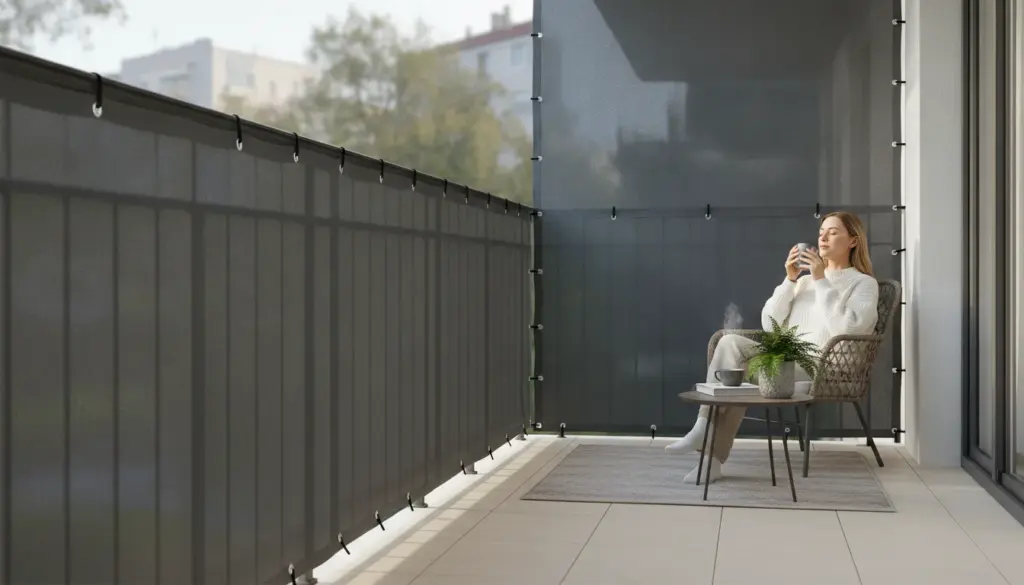
Shielding the Front: Blocking Street-Level and Upward Glances
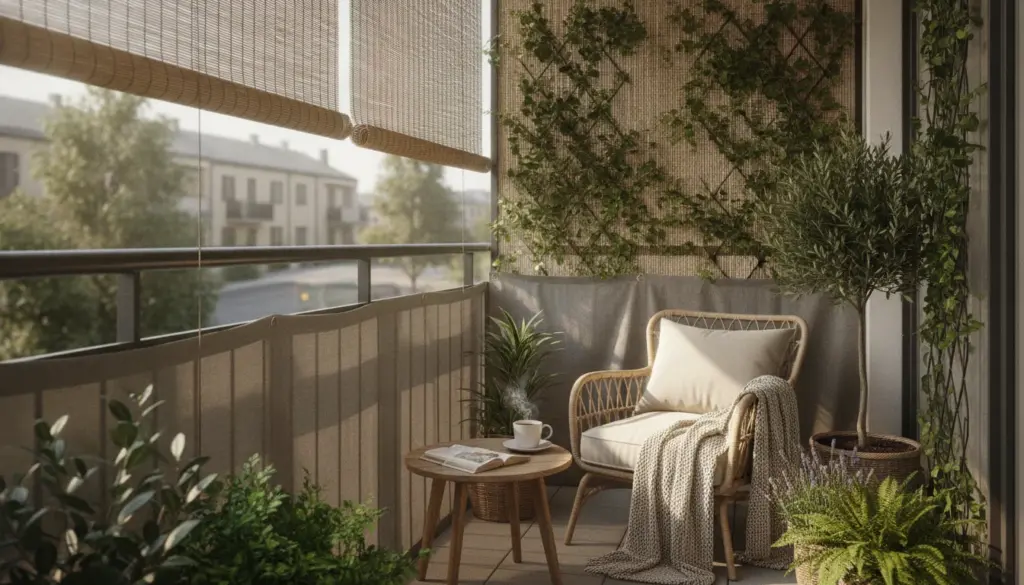
Have you ever tried to sip your morning coffee outside, only to feel like you are on display for the entire neighborhood? Transforming an exposed outdoor space into a relaxing, private retreat is entirely possible with the right approach. The most straightforward defense against curious pedestrians or ground-floor neighbors is attaching a weather-resistant balcony fabric directly to your railing. These practical coverings typically feature built-in eyelets, allowing you to seamlessly secure them using sturdy cords or cable ties. Always ensure you select materials optimized for UV resistance, otherwise, the fabric will quickly fade and deteriorate under the harsh sun.
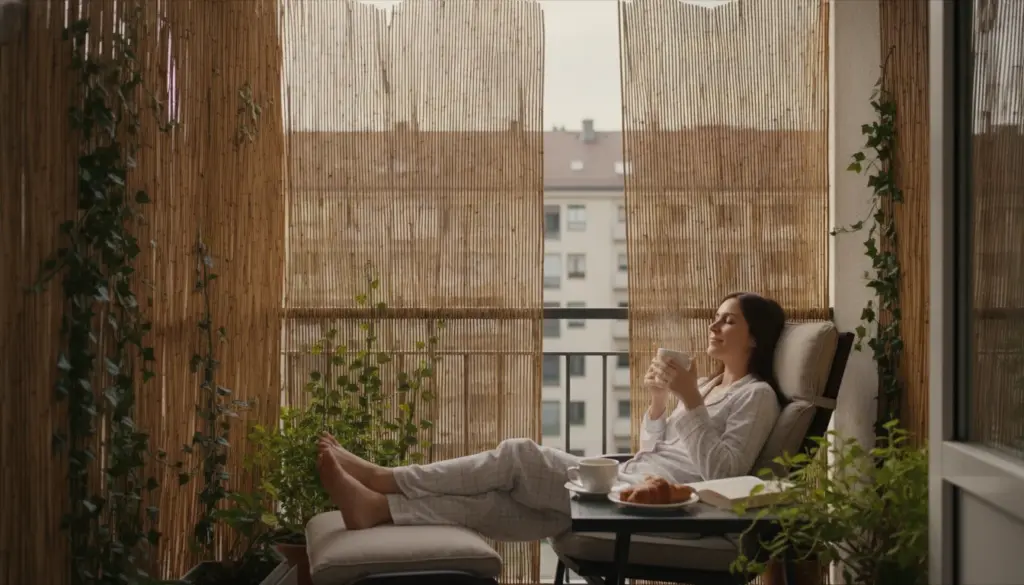
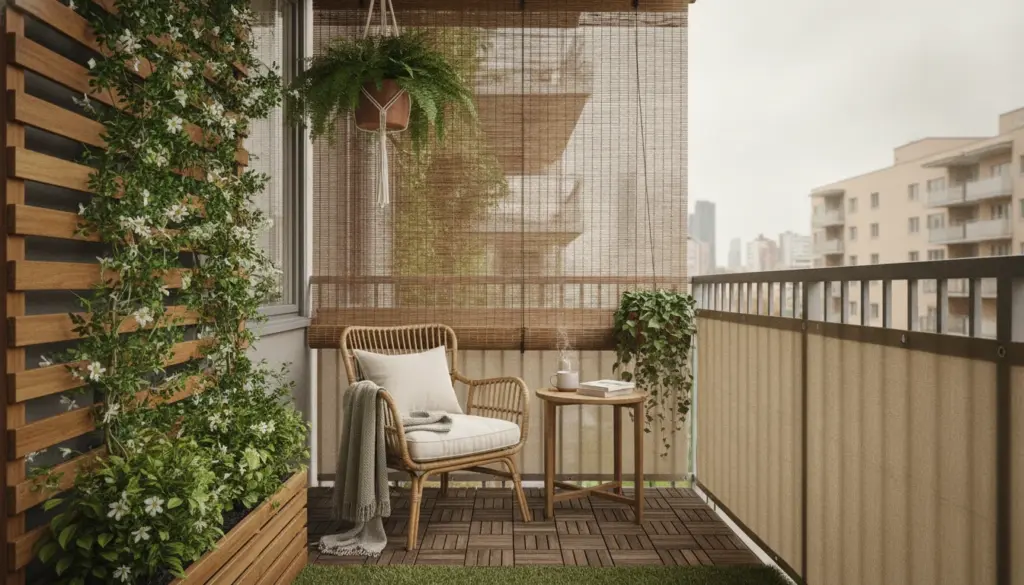
If you prefer a more organic, textured aesthetic, privacy mats crafted from bamboo, willow, or reed are fantastic alternatives that blend beautifully with outdoor decor. These natural barriers can also be swiftly zip-tied to your existing metal or wood railing. However, a crucial installation tip is to mount them slightly elevated above the floor to prevent the bottom edges from rotting due to standing rainwater. Both of these frontal solutions are incredibly tenant-friendly, requiring zero drilling while leaving absolutely no trace behind.
Side Protection: Reclaiming Your Space from Neighboring Balconies
In many modern apartment complexes, outdoor areas are built so close together that you share an unfiltered view directly onto the adjacent balcony. Fortunately, there are several clever ways to establish a solid visual boundary on the sides.
- Freestanding folding screens: These are exceptionally fast to set up and perfectly suited for renters since no permanent fixtures are needed. Keep in mind that they demand additional anchoring to safely withstand strong wind gusts.
- Solid panels made of wood, WPC, or plastic: These heavy-duty dividers offer maximum opacity and outstanding structural stability. While composite and plastic variants require minimal upkeep, wooden screens demand regular seasonal maintenance. Installing these usually requires mounting hardware and formal landlord permission.
- Retractable side awnings: For compact areas, these provide an elegant, space-saving mechanism that pulls out only when needed. Similar to fixed walls, securing the cassette usually means drilling into the building’s exterior facade.
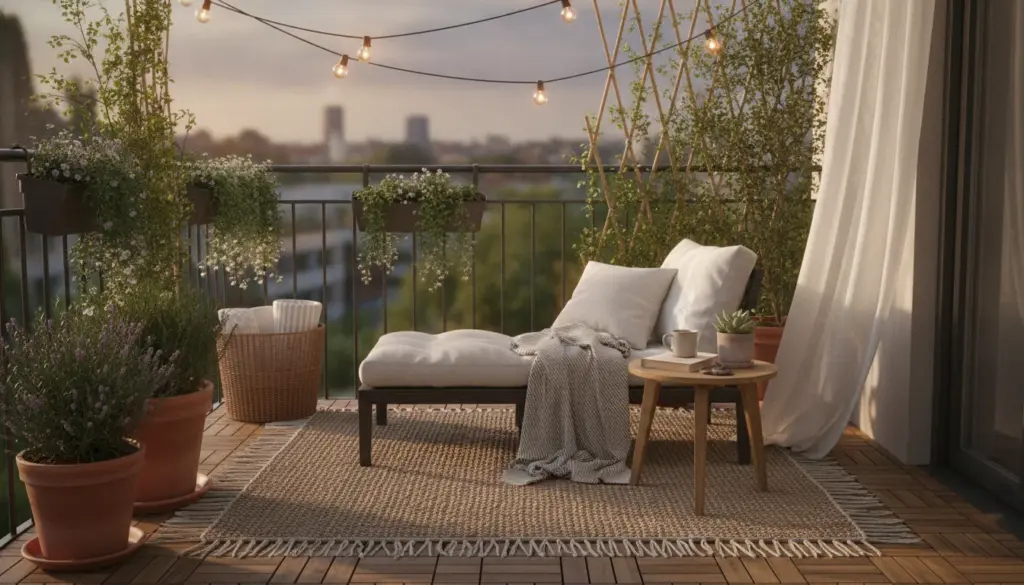
- Trellises with climbing vines: Fastening a metal or wooden grid to your side railing with simple pipe clamps is a highly effective, non-invasive method. It looks visually stunning, though you will sacrifice some privacy during the dormant winter months when the leaves fall.
Understanding Rental Regulations for Balcony Modifications
As a general rule in property management, any installation that can be completely removed without leaving a mark is perfectly acceptable. Freestanding pots and tied-on privacy fabrics safely fall into this category. Conversely, anything that involves drilling holes or setting structural anchors—such as heavy motorized awnings or permanent wooden partitions—mandates explicit, written consent from your landlord. Whenever you find yourself in doubt regarding a specific fixture, it is highly recommended to ask for permission beforehand to avoid costly damage disputes upon moving out.
Vertical Coverage: Defending Against Downward Stares
Living in a multi-story building often means the residents directly above you have an unobstructed view of your seating area. To effectively combat this, you will need a horizontal barrier that acts as a soft fabric roof.
A classic parasol featuring a flexible tilt mechanism is the most accessible, drill-free answer. It can be angled precisely where needed, though the shaded zone remains somewhat localized and heavy winds can easily topple it. Tensioned shade sails offer a much broader canopy and simultaneously protect sensitive potted foliage from severe summer sunburn. The caveat here is that shade sails require incredibly sturdy anchor points on walls or freestanding posts, which almost always involves drilling.
For the ultimate in outdoor luxury, retractable wall-mounted awnings are simply unbeatable. They deploy smoothly at the push of a button and deliver steadfast protection against unpredictable weather. However, they represent the most expensive investment on this list and strictly require professional facade installation.
Space-Saving Strategies for Tiny Balconies
When dealing with extremely limited square footage, preserving your walkable floor space is the ultimate priority. The most efficient designs are those that cling tightly to existing structures, such as woven mats lashed flat against the front railing. Instead of wide, bulky pots, encourage your greenery to grow vertically using hanging planters or slender climbing trellises. Retractable side awnings are also brilliant because they simply vanish into their slim housing when not in use. The golden rule for tiny outdoor retreats is to constantly build upwards rather than outwards.
Botanical Barriers: The Most Picturesque Privacy Solution
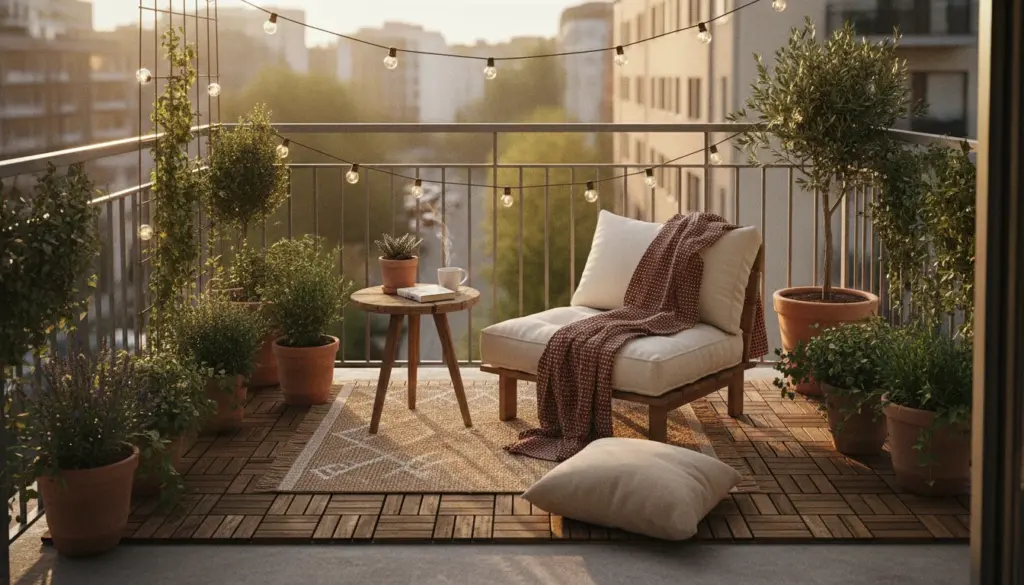
Cultivating a dense wall of living foliage is undoubtedly the most atmospheric way to secure your personal space. Not only does vibrant greenery block unwanted stares, but it also creates a cooling microclimate and transforms a stark city balcony into a lush, relaxing holiday retreat.
- Climbing plants trained up a lattice are the traditional go-to, with specific varieties tailored to every sun exposure. English ivy thrives effortlessly in deep shade on north-facing balconies, while blooming vines like jasmine and clematis prefer sunny to partially shaded spots and offer a wonderful fragrance. Virginia creeper is ideal for full sun, growing rapidly and putting on a spectacular red display in the fall. You can even choose bee-friendly climbers or cultivate vertically growing vegetables like beans and tomatoes, though patience is required while the foliage thickens early in the season.
- Tall ornamental grasses or clumping bamboo flourish beautifully in large, deep containers. Arranging several tall planters in a tight row instantly establishes a modern, rustling privacy hedge that sways in the breeze.
- Elevated raised beds function brilliantly on more spacious balconies, providing a substantial physical barrier while maximizing your urban gardening potential.
The primary downside to relying solely on botanical screens is seasonal leaf drop, which temporarily diminishes your visual coverage during the colder months. For a truly bulletproof, year-round setup, the smartest landscaping approach is to pair an evergreen base or a solid backing mat with your seasonal plant displays.