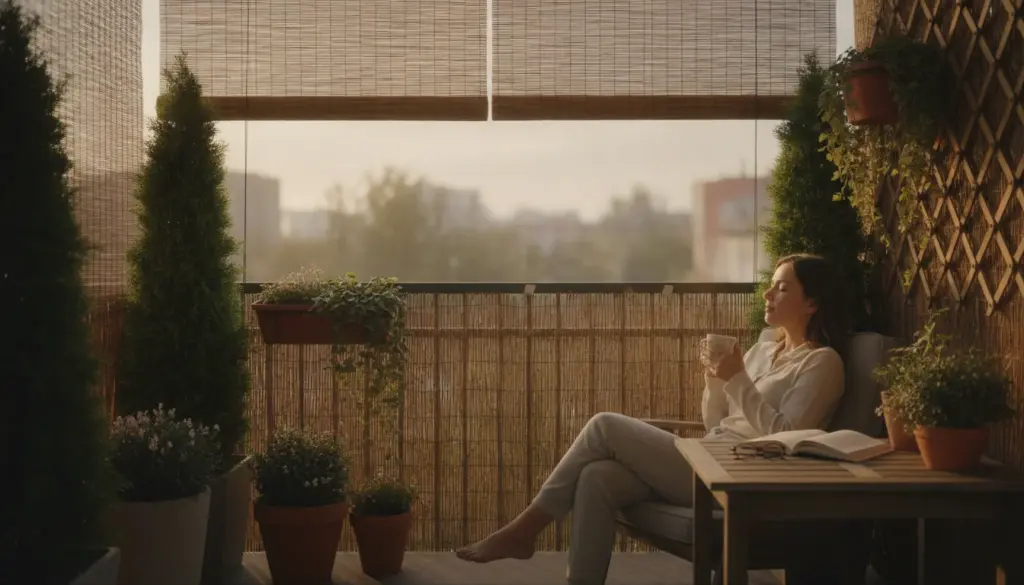
No one wants to sip their morning coffee while feeling like they are sitting in a shop window. Instead of relaxing in your little outdoor oasis, you might find yourself awkwardly dodging curious glances from the street below or making accidental eye contact with the neighbors. Fortunately, transforming your exposed space into a secluded retreat is entirely possible with the right setup. The ideal solution depends heavily on your building’s architecture and your specific privacy needs.
Frontal protection: Blocking views from the street and below
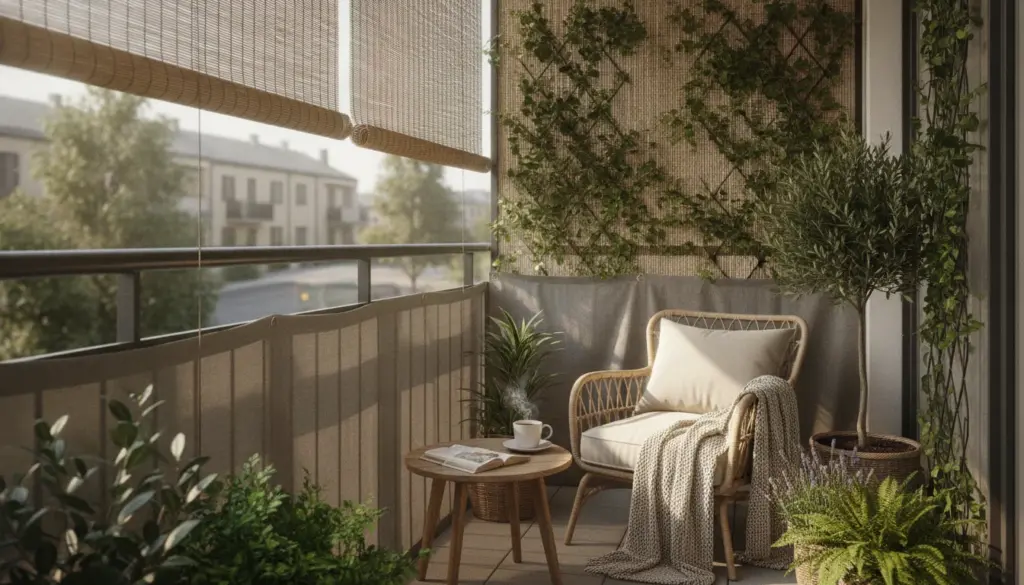
It is incredibly hard to fully unwind when your outdoor space is highly visible to passing pedestrians or ground-floor residents. The most straightforward defense against these upward glances is a weather-resistant balcony fabric. These practical textile covers typically feature built-in eyelets, allowing you to secure them tightly to your railing using heavy-duty zip ties or a strong cord. As an outdoor design principle, always ensure you select UV-resistant and weatherproof materials. Inferior fabrics will quickly fade and deteriorate under harsh environmental conditions.
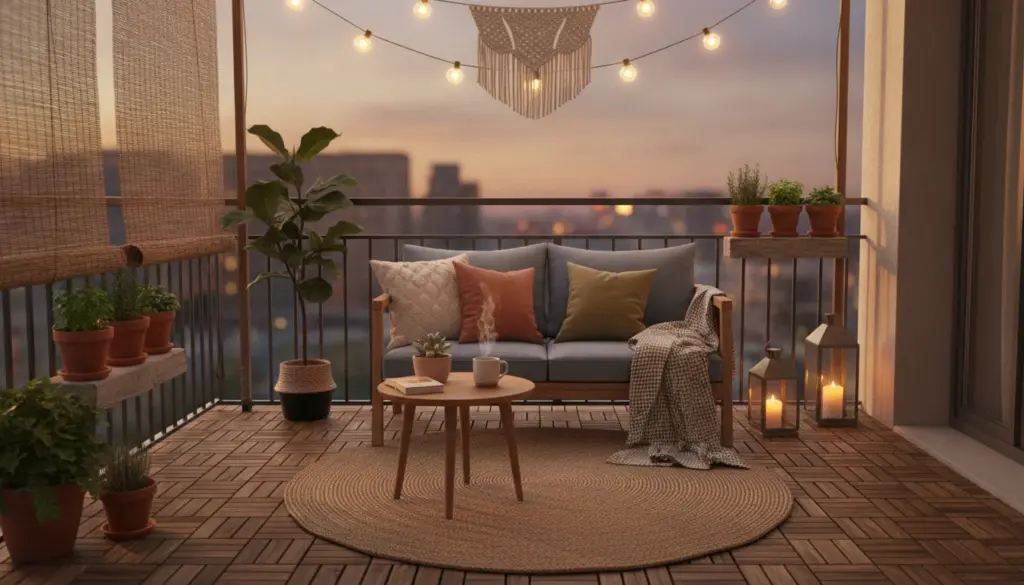
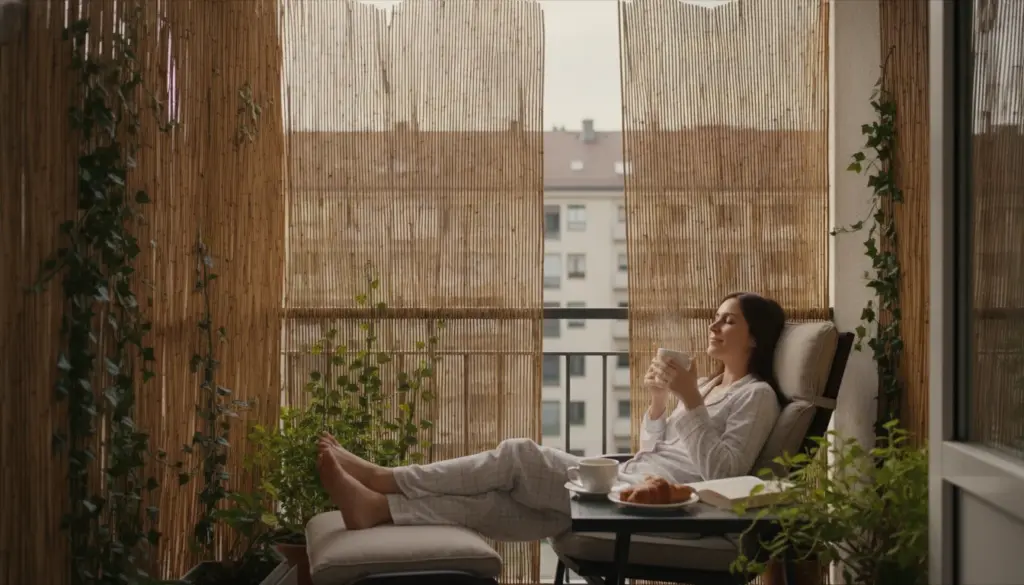
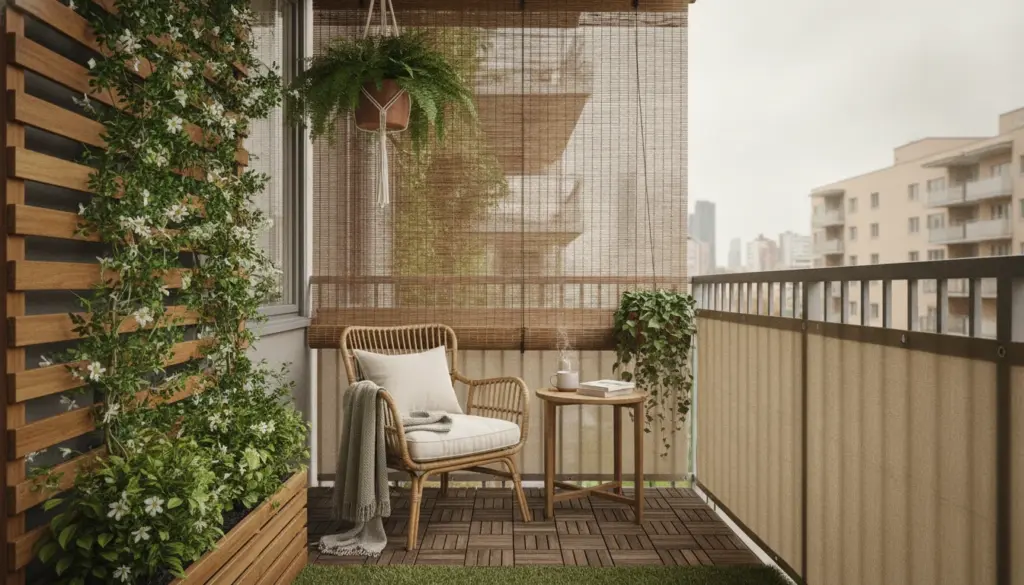
If you prefer a more organic aesthetic, consider privacy mats crafted from bamboo, reed, or willow. Just like the fabric covers, these natural barriers attach effortlessly to your metal railing framework. For long-lasting results, outdoor experts recommend leaving a small gap at the bottom during installation. Constant contact with the floor can cause the natural fibers to absorb standing rainwater and eventually rot.
Both of these front-facing methods are exceptionally tenant-friendly. They require absolutely no drilling into the masonry and can be taken down without leaving a single trace behind.
Lateral protection: Shielding against neighboring balconies
In many apartment complexes, outdoor spaces are constructed right next to each other, resulting in an unobstructed view directly onto your neighbor’s dinner plate. Thankfully, there are multiple effective ways to block these sideways views.
- Folding screens (paravents) offer a rapid, renter-friendly fix that requires zero structural changes. However, they can be highly susceptible to strong gusts of wind and usually demand an additional securing mechanism to stay upright.
- Solid privacy walls made of wood, WPC, or durable plastic provide excellent stability and total opacity. While plastic and WPC are incredibly low-maintenance, wooden variations will need regular protective treatments. Keep in mind that permanently mounting these sturdy panels typically requires formal landlord approval.
- Retractable side awnings present a sleek, space-saving alternative that works wonderfully in tight areas. Much like solid walls, anchoring the heavy cassette enclosure to the facade will necessitate a conversation with your property manager.
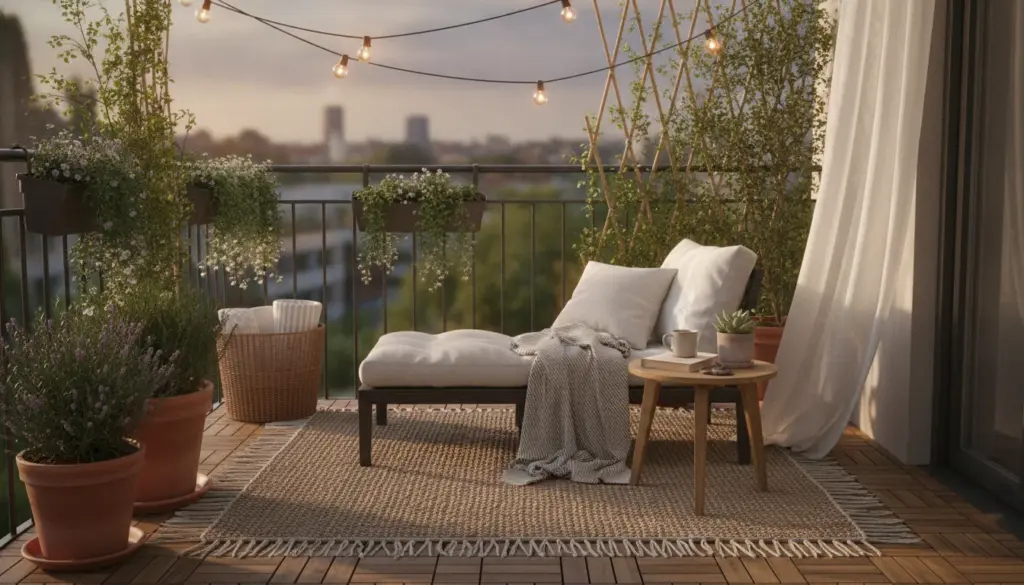
- Trellises adorned with climbing plants create a gorgeous, natural partition. You can easily attach them to the existing railing using simple pipe clamps, making them an excellent choice for renters. Just remember that deciduous vines will drop their foliage in winter, temporarily removing your visual barrier.
Rental regulations: What privacy screens are permitted?
As a general rule of thumb for tenants: anything that can be removed seamlessly without leaving damage is usually perfectly fine. Potted plants and tied-on fabrics rarely require any special permission. However, the situation changes the moment you reach for a drill. Installing retractable awnings or firmly screwing in solid divider walls alters the building’s exterior. For these permanent fixtures, you must obtain written consent from your landlord beforehand. If you ever feel uncertain about a specific installation, simply asking for clarification can prevent serious disputes when you eventually move out.
Overhead protection: Deflecting glances from above
Living in a multi-story building often brings a unique challenge: the residents directly above you can look straight down onto your seating area. To counter this intrusive angle, you need a horizontal barrier that acts as a fabric roof.
A tilting patio umbrella is the most flexible, renter-friendly option available. You can set it up instantly, angle it exactly as needed, and skip the power tools entirely. On the downside, the covered area is fairly localized, and even high-quality umbrellas can become unstable during stormy weather.
Alternatively, a tensioned sun sail provides much broader overhead coverage while remaining securely fixed in place. As a fantastic bonus, this setup offers your sensitive potted greenery excellent protection against sunburn. The catch is that sun sails require sturdy anchor points on the walls, railings, or freestanding posts, which often involves drilling.
Motorized retractable awnings remain the absolute gold standard for balcony comfort. With the simple push of a button, you gain immediate, reliable protection against both prying eyes and unpredictable weather. Because the heavy housing must be bolted directly into the building’s facade, this remains the most expensive and installation-heavy route.
Finding the ideal solution for small balconies
When working with very limited square footage, maximizing every available inch is crucial. The most effective strategies are those that consume absolutely zero floor space. Relying on tight fabric covers or natural mats tied to the railing blocks frontal views without shrinking your usable footprint. When incorporating greenery, utilize railing planters or vertical trellises that encourage plants to climb upward rather than spilling outward. Retractable side cassettes are also brilliant here, as they simply tuck away into a slim housing when not in use. The golden rule for compact outdoor areas: always design vertically, never horizontally.
Living screens: The natural approach to privacy
Cultivating a vibrant wall of foliage is arguably the most atmospheric way to conceal your balcony. A lush barrier of leaves not only stops unwanted attention but also naturally cools the air, casts gentle shade, and brings a relaxing vacation vibe to a concrete urban environment.
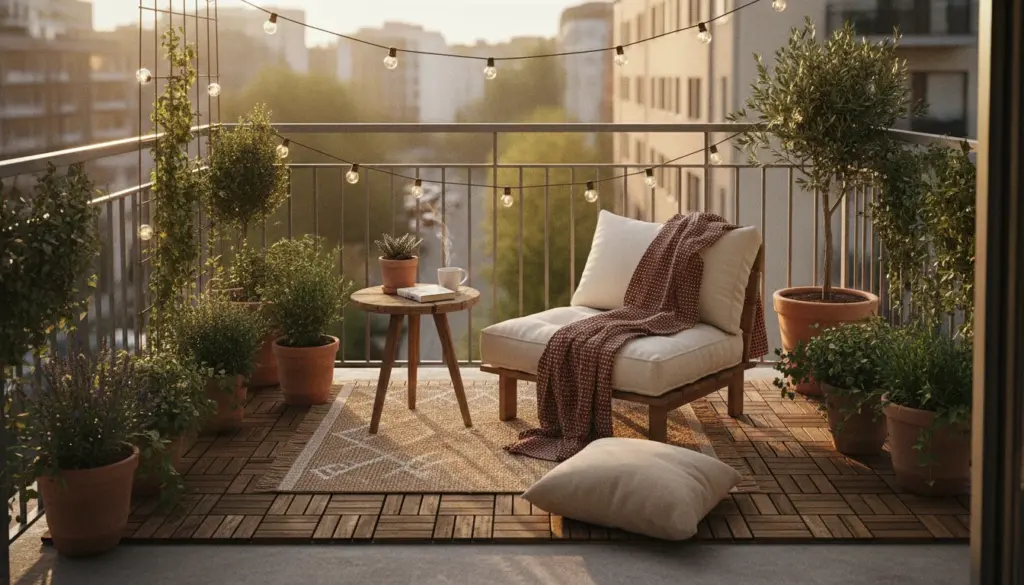
- Climbing plants trailing up a grid or lattice are an absolute classic, and there is a perfect botanical candidate for every sun exposure level. Hardy ivy thrives beautifully in heavily shaded northern exposures. If you have partial to full sun, clematis and star jasmine will reward you with spectacular, fragrant blooms. Virginia creeper is a fast-growing sun lover that puts on a fiery red display in the autumn. You might even opt for bee-friendly bloomers to support local pollinators, or combine utility with privacy by growing tall vegetable vines like runner beans or climbing tomatoes. Just keep in mind that a living wall takes a bit of time to fully establish itself.
- Potted bamboo or tall ornamental grasses are excellent container specimens. Grouping several large planters tightly together creates an immediate, rustling screen that softens harsh architectural lines.
- A raised planter box acts as a fantastic, dual-purpose barrier on larger balconies, elegantly elevating your garden while simultaneously blocking the neighbor’s view.
The one notable drawback to a botanical screen is the changing seasons. Many popular vines and shrubs shed their foliage during the colder months, leaving bare branches and exposed sightlines. For continuous, year-round seclusion, the most strategic approach is layering: simply combine your beautiful seasonal plants with a solid, permanent backing mat or fabric.