Elevating a basic side dish to the center of the table
Looking to serve a vegetable dish that your dinner guests will actually fight over? This brilliant preparation ensures that humble root vegetables will never be pushed aside as a boring garnish again. By combining just a few pantry staples with a splash of scorching oil, you can transform everyday carrots into a memorable culinary experience.
The true magic of this recipe lies in the satisfying crunch paired with a vibrant, perfectly balanced dressing. In most kitchens, carrots end up boiled, roasted, or scooped out of a jar. While those methods are perfectly fine, they rarely leave a lasting impression. This technique takes a completely different route by keeping the produce entirely raw and crisp, while introducing warm, deeply savory, and slightly smoky flavor notes.
The result bridges the gap between a refreshing salad and a modern Asian-fusion side dish. It works flawlessly alongside a casual weeknight dinner, yet packs enough punch to hold its own next to premium cuts of fish, grilled meats, or crispy tofu during an elegant dinner party.
Essential ingredients for the perfect crunch
The brilliance of this preparation relies entirely on accessible items you can grab at any standard grocery store. You won’t need expensive delicacies, just a clever layering of flavors.
What you will need for four servings:
- 3 to 4 large carrots (yielding roughly 200 grams once prepped)
- 2 to 3 firm scallions (around 40 grams), keeping a little extra aside for the final garnish
- 2 tablespoons of finely chopped cilantro
- 1 tablespoon of fresh lemon juice
- 2 tablespoons of sesame oil
- 1 tablespoon of honey
- 2 teaspoons of toasted sesame seeds
- 2 teaspoons of finely grated fresh ginger
- 1 to 2 teaspoons of chili crisp (a textured chili oil)
- Coarse sea salt to taste
Getting the texture exactly right
How you slice the vegetables heavily dictates the final mouthfeel of the dish. Instead of chopping them into chunky rounds, aim for delicate, uniform matchsticks for a professional-level bite.
If a mandoline slicer isn’t available in your kitchen, simply peel long ribbons with a standard vegetable peeler and slice those ribbons into fine threads by hand. It requires a bit more effort, but the resulting airy texture makes the extra prep time absolutely worth it.
The magic of the hot oil dressing
The dressing utilizes a brilliant, science-backed culinary technique. By heating the lipid separately and pouring it piping hot over your aromatics, you instantly release the essential oils trapped within the spices.
Step-by-step sauce preparation
Grab a heat-proof bowl and combine your toasted sesame seeds, honey, freshly grated ginger, and chili crisp.
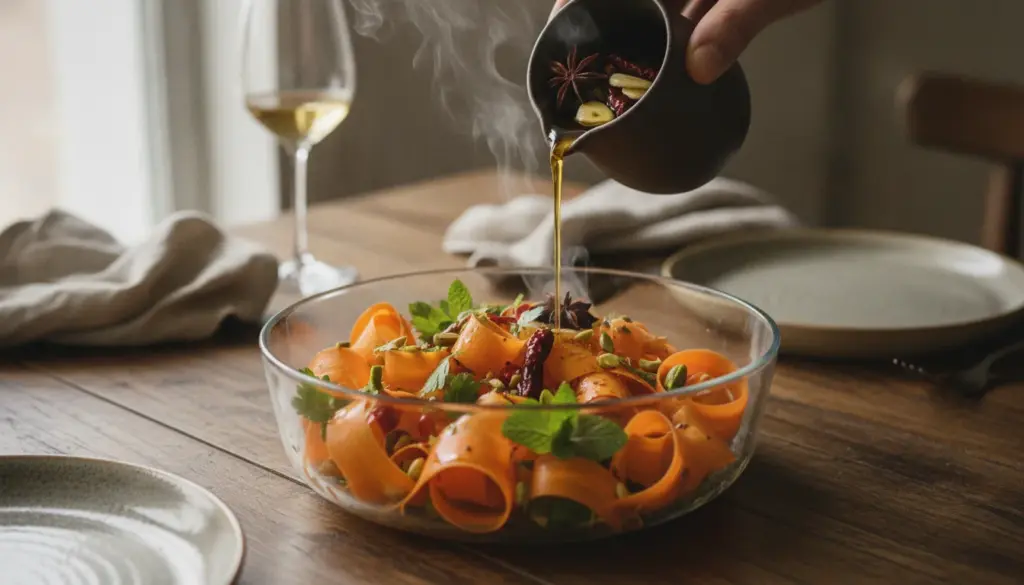
Next, warm the sesame oil in a small skillet until it becomes extremely hot. You do not want it to reach the smoking point, but the surface should shimmer intensely and move fluidly across the pan. Carefully pour this heated liquid directly over the aromatics in your bowl.
This sudden thermal shock mellows out the sharp bite of the raw ginger, extracts the harsh bitter notes from the chilies, and powerfully amplifies the toasted sesame aroma. Whisk everything vigorously until the honey fully dissolves, yielding a glossy, deeply fragrant dressing.
Assembling and seasoning the salad
Toss your julienned carrots and sliced scallions into a spacious mixing bowl. Sprinkle in the chopped cilantro, lemon juice, and a generous pinch of coarse salt. Toss the ingredients thoroughly and let the mixture rest for a few minutes. This brief resting period draws out a little moisture from the vegetables while allowing them to absorb the initial seasoning.
Drain away any pooled liquid at the bottom of the bowl. Spoon the warm, aromatic dressing over the vegetables and toss everything aggressively until every single strand is beautifully coated.
Give the salad a taste and adjust the profile based on your personal preferences:
- Add more coarse salt if the flavors feel a bit muted.
- Mix in extra chili crisp if you prefer serious, lingering heat.
- Sprinkle a handful of reserved scallions over the top for a bright pop of green.
Serve the dish immediately to enjoy the maximum structural crunch alongside the lingering fragrance of the warmed spices.
Quick substitutes and clever variations
While chili crisp is widely loved for its unique blend of dried chilies, oil, and savory alliums, not everyone keeps a jar on hand. You can easily replicate that savory crunch using basic pantry staples.
Simply heat a neutral cooking oil with standard red pepper flakes. Toss in a clove of minced garlic over low heat, and stir in some store-bought crispy fried onions right at the end. Once cooled, this quick DIY substitute delivers both the necessary heat and that essential crunchy texture.
Customizing the base recipe
Once you master this foundational technique, it is incredibly easy to experiment with different flavor profiles without losing the dish’s core identity.
- Fold in thinly sliced radishes or cucumber ribbons for an extra layer of hydration and crispness.
- Toss in some roughly chopped cashews or peanuts for a heavier, satisfying nutty crunch.
- Swap the lemon juice for rice vinegar to achieve a softer, distinctly Asian-inspired tang.
- Splash a teaspoon of soy sauce directly into the dressing for a robust umami boost.
If you happen to have leftovers, they will keep safely in the refrigerator for about a day. The carrots will soften slightly overnight, but they will also marinate deeply in the spicy dressing, making for an excellent quick lunch alongside steamed noodles or rice.
Why the hot oil technique is a culinary game-changer
Pouring scorching oil over raw aromatics is a time-honored practice in various Asian cuisines. The intense heat essentially flash-fries the outermost layer of your spices. This instant blooming process releases volatile aromatic compounds, neutralizes the aggressive pungency of raw alliums, and perfectly emulsifies with natural sweeteners.
Once you understand this chemical reaction, you can apply it to virtually any crunchy vegetable. Thinly shaved Brussels sprouts, shredded white cabbage, and cucumber ribbons all transform beautifully under a spiced oil shock.
A quick word of caution: Pay close attention to your temperatures. Never let the oil smoke, as this introduces bitter, burnt flavors and creates unhealthy chemical compounds. Heat the liquid just below its smoke point, and always pour with care, as it will sputter enthusiastically when hitting moist ingredients.