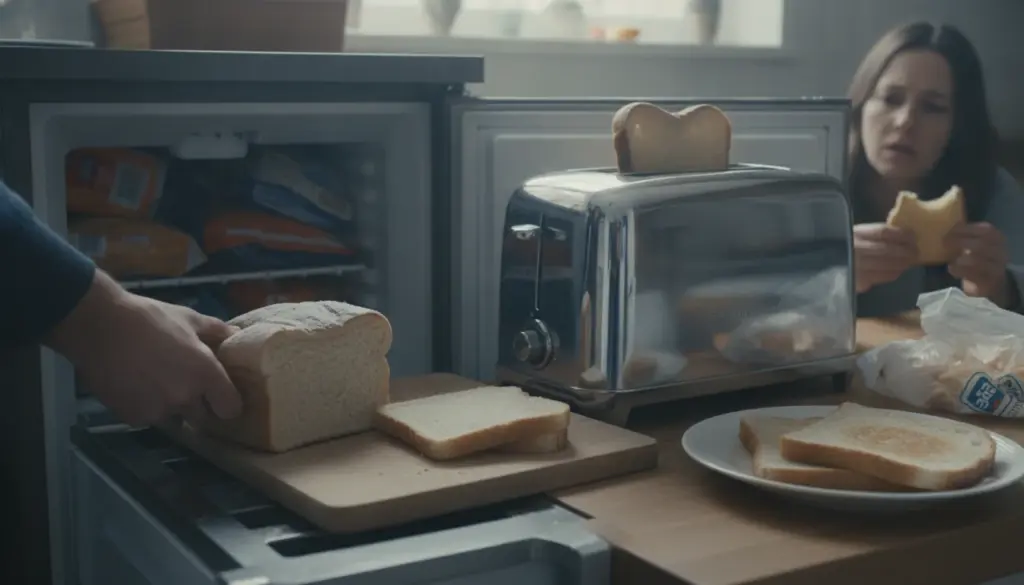
The frustrating reality of frozen toast
It is a familiar routine: you need a quick breakfast, find the bread bin empty, and confidently pull a backup loaf from the deep freeze. Popping those rescued slices into the toaster feels like a great kitchen management win. Yet, the final result is often incredibly disappointing. The crust turns unpleasantly dry, the center feels weirdly gummy, and the flavor reminds you more of an icy drawer than a warm bakery.
You chew through it anyway, assuming that freezing baked goods simply ruins their magic. The crust loses its signature snap, and the interior crumb feels tired and rubbery. Most people accept this mediocre culinary experience as an inevitable compromise, completely unaware that a single storage habit is to blame.
The major error destroying your frozen loaves
Most households simply toss their freshly bought loaves straight into the freezer the moment they get home. Leaving bread in its original flimsy supermarket plastic or paper bakery bag seems like the most logical, hassle-free approach. Unfortunately, taking this convenient shortcut practically guarantees ruined texture and compromised taste.
Over time, that minimal protection destroys the structural integrity of the crumb. When you finally retrieve that forgotten loaf, you will likely notice ice crystals clinging to the slices. The bread often looks slightly gray and carries a faint scent of frozen vegetables. While it remains completely safe to eat, the overall experience becomes deeply uninspiring.
Baked goods contain tiny pockets of moisture hidden within their structure. When stored in a loose, semi-open wrapper, large ice crystals slowly develop and puncture the delicate crumb. This draws vital moisture to the surface, where the harsh, dry air strips it away entirely. Simultaneously, odors from leftover dinners easily penetrate the thin packaging, turning your morning toast into a sponge for savory smells.
How to freeze bread properly for bakery-fresh results
Preserving that fresh-out-of-the-oven quality requires a little proactive effort before the freezing process begins. Never toss an entire, unprotected loaf directly into the ice box. If the bread is still warm from the store, allow it to cool entirely on a wire rack. Once at room temperature, slice it up based on your typical household consumption so you only thaw what you need.
The secret lies in creating an impenetrable, airtight barrier. Wrap your portioned slices tightly in high-quality freezer bags or heavy-duty cling film, pressing out absolutely every bit of excess oxygen. For an added layer of defense against freezer burn, you can wrap the portions in parchment paper before sealing them in plastic. This double-layer method acts as a robust protective shield, locking moisture inside while keeping extreme dryness out.
While portioning groceries after a long day sounds tedious, turning this into a quick weekly habit pays massive dividends. Spending just five minutes organizing small stacks of sliced bread means you will never have to chisel apart solid frozen bricks on your kitchen counter again.
Thawing techniques and essential preservation rules
Many people ruin perfectly stored slices during the thawing process. Leaving wrapped portions sitting on a humid kitchen counter or blasting them in the microwave often creates a rubbery texture. Preserving quality relies entirely on speed and protection. Rapid freezing, airtight shielding, and decisive reheating are the ultimate keys to success.
- Freeze immediately: Process your loaves while they are at peak freshness, rather than waiting until they start going stale.
- Eliminate air: Squeeze out as much oxygen as physically possible when sealing your storage bags to prevent internal frost.
- Watch the clock: Consume your frozen stash within one to three months to enjoy the best possible flavor profile.
- Heat directly: Transfer slices straight from the freezer into a hot toaster or oven for optimal crispness.
- Isolate from odors: Keep your baked goods far away from pungent frozen items like garlic dishes or leftover seafood.
Enjoying toast that tastes freshly baked
Implementing these simple storage tweaks transforms your morning routine. When prepared correctly, frozen slices emerge from the toaster with a satisfying crunch and a soft, resilient interior. That stale, icy aroma is replaced by the comforting fragrance of a bustling neighborhood bakery.
By treating your freezer storage as a deliberate preparation step rather than an afterthought, you eliminate food waste without sacrificing quality. Try adjusting this one simple kitchen habit, and you will likely never toss a flimsy, store-bought bag into the freezer ever again.
Frequently Asked Questions
How long does bread stay good in the freezer?
While it remains food-safe for many months, consuming it within one to three months ensures the best texture. Beyond that window, the risk of freezer burn and flavor degradation increases significantly.
Should warm loaves cool down before freezing?
Absolutely. Trapping warmth creates internal condensation, which quickly turns into damaging ice crystals and soggy patches. Always let baked goods reach room temperature first.
Is the original bakery bag sufficient for freezing?
No, this is highly discouraged. Standard paper and thin plastic allow too much air and moisture circulation. Always transfer the contents to a heavy-duty, airtight freezer bag.
When should I use a bread box instead?
A quality bread box is perfect for short-term storage lasting one or two days. For anything beyond that strict timeframe, proper freezing is vastly superior.
Can I toast frozen slices without thawing them first?
Yes, this is actually the preferred method. Applying immediate, high heat ensures the exterior crisps up beautifully while the interior retains its natural moisture.