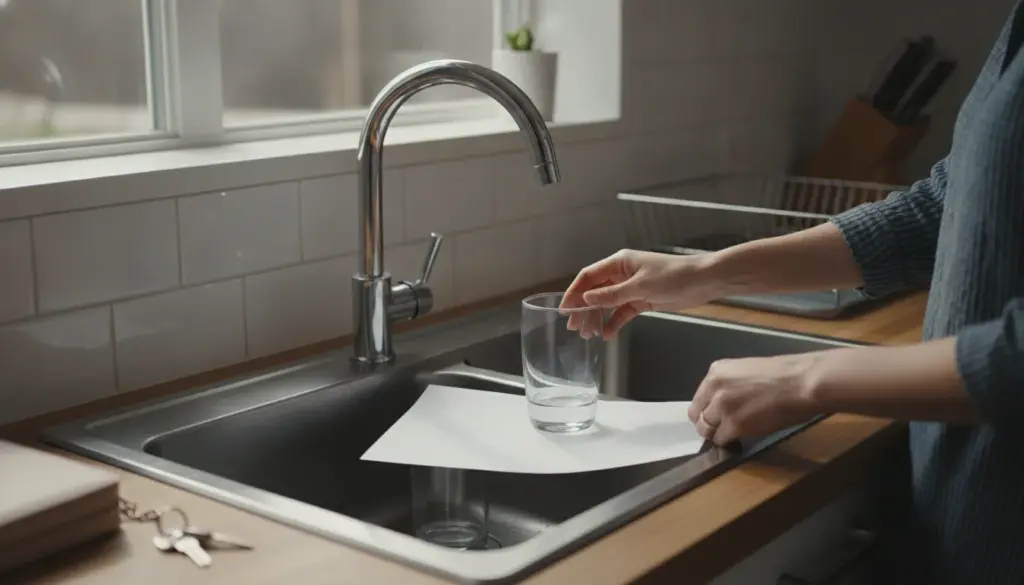
The Mechanics of the “Glass and Paper” Technique
Daily routines often include peculiar little quirks, like double-checking a locked door or tapping a light switch. Now, a rather unusual practice is gaining traction: purposely putting an empty glass and a single sheet of paper into your kitchen sink right before walking out the front door. This isn’t rooted in superstition. Rather, it serves as an incredibly effective method for maintaining a safer, tidier, and more peaceful home environment.
The concept requires minimal effort. Right before you depart, simply rest a clean glass alongside a piece of paper or sticky note directly inside the sink basin. Avoid placing them on the dining table or kitchen counter; they must go straight into the sink. For many, this specific placement instantly triggers a quick safety sweep of their home, ensuring water, gas, lights, and windows are secure.
This subtle action functions like a psychological circuit breaker. The moment your eyes catch the unusual items in the sink, your brain automatically shifts into inspection mode. Originally popularized within minimalist and home-organization communities as a stress-reduction strategy, this method boasts impressive retention rates. Those who test it out for just a few days typically stick with it for months.
Why This Simple Trick Rewires Your Brain
Creating a Visual Anchor
Human memory tends to gloss over ordinary, expected scenery. A perfectly empty sink feels “complete,” allowing you to walk past it entirely on autopilot. By intentionally placing something out of the ordinary inside it, you successfully disrupt that thoughtless momentum.
The paper and glass serve as a visual anchor. Spotting them forces your mind into a conscious state of review. Homeowners frequently use this prompt to run through a rapid mental checklist:
- Are the stove burners completely turned off?
- Have all the faucets been tightened?
- Are the windows securely shut and locked?
- Has perishable food been returned to the fridge?
- Are there any hot pans left resting on cooling elements?
Dedicating a mere ten seconds to this visual cue can ultimately prevent devastating household fires or incredibly costly water damage.
The Strategic Importance of the Sink
Most individuals naturally pass through the kitchen right before they leave. Whether you are grabbing your keys, packing a lunch, pouring a final cup of coffee, or picking up a bag, the sink is almost always along your exit path. This high-traffic location makes it the ultimate spot for a final visual warning.
Furthermore, kitchen sinks are intrinsically linked to concepts of water, cleanliness, and potential messes. Seeing an object resting where water normally flows subconsciously highlights plumbing vulnerabilities, reminding you to look out for running dishwashers, dripping taps, or looming blockages.
Practical Perks: Safety, Cleanliness, and Peace of Mind
Lowering the Risk of Leaks
Even the most meticulous individuals occasionally forget to fully close a tap or overlook a loosely connected washing machine hose. By forcing yourself to pause at the sink before exiting, you naturally inspect these critical water sources.
A Clever Defense Against Kitchen Clutter
A widespread household annoyance is the gradual accumulation of mugs, plates, and miscellaneous clutter across countertops. Implementing this new departure ritual disrupts that messy cycle. The glass sitting in the basin doesn’t just prompt safety checks; it also encourages you to finish pending tasks.
Those who adopt this routine frequently report that they:
- Proactively carry stray dishes to the sink area.
- Resist the urge to abandon dirty items on tables.
- Routinely rinse out the basin itself.
- Notice strange plumbing odors much faster.
The secret weapon isn’t the glassware itself, but the associated behavioral shift: observing, processing, and completing tasks.
Eliminating Departure Anxiety
Almost everyone has experienced that sudden spike of panic while driving to work: Did I remember to turn off the stove? Because our morning routines are so deeply ingrained, we rarely form concrete memories of doing them.
Transforming your exit into a deliberate micro-ritual—seeing the glass, executing the inspection, and perhaps even whispering “everything is off” aloud—forges a distinct memory. Later in the day, you can effortlessly recall that specific moment. This intentional recollection drastically reduces unnecessary worrying.
Establishing Your Own Departure Routine
Building the Habit Step-by-Step
Repetition is the core driver of this technique’s success. Here is a reliable framework to get started:
- Place a completely empty glass into the sink basin just before you plan to leave.
- Set a blank slip of paper or a tiny notepad right beside it.
- Take a deliberate look at your counters, stovetop, and faucets.
- If time permits, do one final sweep of your lighting and windows.
- Only after returning to the kitchen should you grab your keys and head out.
Within a few days, your brain will effortlessly link the glassware to this brief walkthrough. You won’t need to force it anymore; the inspection will flow naturally, initiated by that single, intentional starting point.
Adapting the Routine to Your Lifestyle
Every home operates differently, meaning this trick requires a bit of flexibility. You can easily tweak the concept to match your specific living situation:
- Compact apartments: Swap standard paper for a brightly colored sticky note that instantly commands attention in smaller spaces.
- Families with children: Turn the responsibility into a game by appointing a rotating “glass guardian.” The child on duty sets the items down and completes the safety sweep alongside a parent.
- Couples and roommates: Agree that the absolute last person to leave the property initiates the ritual, eliminating arguments over who left the lights on.
- Unpredictable schedules: Tie the visual cue to a non-negotiable action, such as turning off the main overhead kitchen light or locking the front door.
Unexpected Bonuses: Energy Savings and Emergency Cues
A Signal for Rushed Exits
Interestingly, some utilize this setup as a personal distress signal. If they return home unexpectedly and notice the items still sitting in the sink, it immediately tells them their departure was rushed and their usual checks were likely skipped. If the sink is clear, the sweep was successfully completed.
While seemingly minor, having this backup indicator is incredibly helpful during chaotic moments—like bolting out the door for an urgent phone call—ensuring vital safety steps aren’t permanently forgotten.
Subconscious Energy Conservation
A delayed, yet highly appreciated, side effect is a noticeable drop in household energy consumption. That final scan of the kitchen naturally cascades into broader efficient behaviors, such as:
- Flipping off switches in unoccupied rooms.
- Fully powering down electronics instead of relying on standby modes.
- Catching drafts from windows left slightly ajar during colder months.
What begins as a simple trick by the tap often evolves into a comprehensive approach to managing household utilities.
Clever Hacks for When You Forget
Forming a new habit always comes with a learning curve. If you find yourself repeatedly forgetting to set up your prompt, try these supportive strategies:
- Keep a designated “ritual glass” permanently stationed right next to the basin.
- Write a bold, actionable word on your paper slip, like “Inspect” or “Faucets.”
- For the first week, stick a discreet reminder note on your front door that simply says “Sink.”
- Program a daily alarm on your smartphone for five minutes before your standard departure time.
Over time, reliance on digital alarms fades away as the physical objects in the kitchen become all the prompting you need.
Complementary Habits for a Stress-Free Space
This specific technique perfectly aligns with other micro-routines designed to strip anxiety away from home management. If you want to expand your efforts, consider these logical next steps:
- Establish a nightly “zero-state” rule for the kitchen: cleared counters and a scrubbed sink.
- Designate an uncompromising, permanent drop zone for your keys, wallet, and phone to prevent frantic morning searches.
- Pick one specific day each week to quickly examine exposed pipes and drains.
- Schedule a brief, monthly audit of your fire safety equipment, including smoke detectors and power strips.
Tying essential checks to highly visible, physical objects leverages the way human psychology actually works. We respond far better to spatial cues than we do to vague internal promises.
For a dose of extra motivation, try running a 30-day experiment. Keep a tally on that sink-side paper detailing exactly how many times the visual cue prompted you to turn off a forgotten light or appliance. Seeing the tangible data proves just how many minor disasters you are actively preventing, transforming a quirky little ritual into a deeply logical lifestyle choice.