
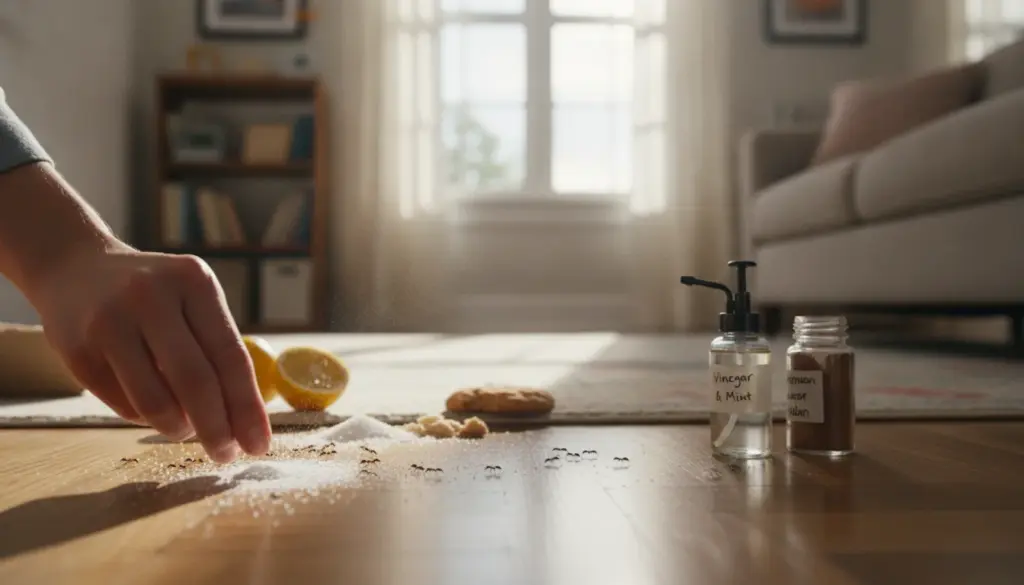
Although ants play a crucial role in our ecosystem, nobody wants these tiny insects taking over their home. When a sudden infestation strikes, reaching for toxic bug sprays isn’t your only option. You can effectively banish these unwanted guests using simple, everyday household items.
Why do ants invade your home?
These industrious insects typically build their colonies outdoors. However, the search for sustenance frequently leads them inside—and they aren’t picky about whether you live in a ground-floor house or a high-rise city apartment. Once spring arrives and colonies expand, tiny cracks in windows and doors become open invitations.
When one scout discovers a rich food source, it leaves a chemical scent trail behind. This invisible path acts as a glowing neon sign for the rest of the colony, quickly resulting in a busy highway of insects marching straight toward your kitchen pantry. The better the food, the stronger the scent signal becomes.
Cut off their food supply first
Before tackling the insects directly, you absolutely must eliminate what’s attracting them. Sweet and sugary treats should be locked away in airtight containers. Surprisingly, even refrigerators aren’t completely ant-proof, so ensure your chilled foods are properly sealed as well. If you have potted plants on your balcony, check them for aphids; these pests secrete a sweet honeydew that ants find irresistible.
Once the food is secured, grab a mop. Thoroughly wipe down the established insect trails using a mixture of water and a splash of vinegar. This simple trick erases their chemical navigation system, leaving the remaining bugs completely disoriented. Finally, check your window seals and doorframes, patching up any noticeable gaps to permanently shut the door on future invasions.
5 natural home remedies to banish ants
With the food locked away and the paths erased, it’s time to set up your defenses. Here are five highly effective, chemical-free barriers you can deploy right now:
- Adhesive tape: Placing sticky tape across their usual routes immediately disrupts their journey. They lose the scent trail and can no longer navigate toward your food.
- Standard chalk: Drawing a thick, continuous chalk line creates a surprisingly effective border. Ants naturally refuse to cross it. Apply this right at their entry points, such as window frames or cracks in the masonry, to stop them before they get inside.
- Petroleum jelly: Smearing a thick layer of heavy ointment or Vaseline across entryways acts as an impassable physical barrier. Like chalk, they simply will not walk through the sticky substance.
- Baby powder: Sprinkling this fine dust along their marching paths creates a terrain that the insects actively avoid at all costs.
- Strong natural scents: Essential oils and pungent kitchen staples overwhelm their delicate sense of smell. Scatter cinnamon, lavender, garlic, lemon peel, or vinegar near their entryways to send them retreating.
Occasionally, you might also spot winged ants indoors. These are just individuals that took a wrong turn during their summer mating flights and can easily be ushered back outside without any fuss.
What to avoid: Why baking soda is a bad idea
Many online guides suggest using baking powder, baking soda, cornmeal, or coffee grounds to eliminate an infestation. However, these methods cause an agonizing and unnecessary death for the insects. Spraying the invaders with hairspray or glass cleaner is equally inhumane and fundamentally flawed.
Killing a few workers does absolutely nothing to stop the rest of the colony from sending replacements. It is vastly more sustainable and effective to rely on scent deterrents and physical barriers that simply convince them to forage elsewhere.
Frequently Asked Questions (FAQ)
How can I prevent ants from entering the house? The absolute best prevention is removing temptation. Keep all sugary foods in airtight containers, sweep up crumbs daily, and don’t leave pet food sitting out all day. Pair this cleanliness with well-sealed window frames and a few drops of preventive lavender oil at common entry points.
How do I locate the colony’s nest? Follow the marching trail backward. In many cases, it will lead outside to small mounds of dirt in your lawn or between patio stones. Inside the home, trails might disappear behind baseboards, into porous walls, or under floorboards. A cluster of dead ants in one specific room can also hint at a nearby nest.
What should I do about ants in potted plants? If a colony has moved into your balcony planters, the solution is heavy watering. Repeatedly flooding the potting soil with a watering can makes the environment entirely unlivable for the colony. They will quickly pack up their eggs and relocate voluntarily. Just remember to treat any existing aphid problems, as they are likely what drew the ants to the pot in the first place.