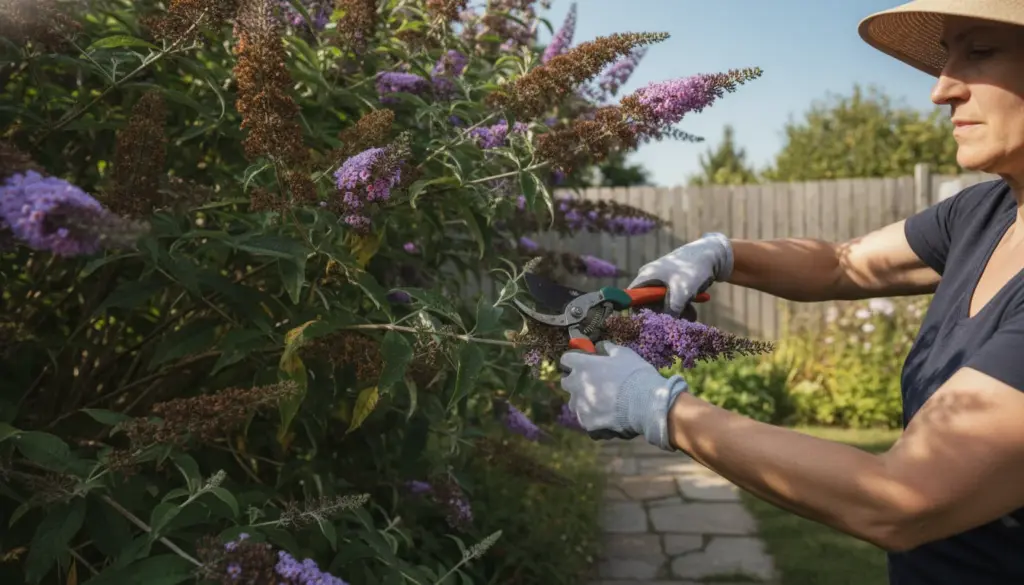
The vibrant butterfly bush, also known as summer lilac, offers a gorgeous floral display well into the autumn months. However, failing to grab your pruning shears during the warmer season can lead to severe overgrowth. To ensure your fast-growing Buddleja davidii maintains a stunning shape and produces abundant blooms, regular maintenance is absolutely essential.
While the primary structural trimming takes place in early spring—when the shrub is heavily thinned and cut back—summer pruning is equally crucial. Between July and October, actively removing spent blossoms paves the way for fresh, colorful growth.
Why Summer Pruning is Vital for Butterfly Bushes
If you want your shrub to blossom prolifically right up until autumn, consistently deadheading the withered flowers throughout the summer is a must. This simple maintenance step conserves the plant’s energy, redirecting its internal resources toward generating brand-new buds for the current season. Without this intervention, a vibrant second flush of flowers is highly unlikely. Plus, let’s be honest: those brown, decaying floral spikes simply look unappealing.
Beyond aesthetics and continuous blooming, there are several vital reasons to keep up with this summer routine:
- Preventing aggressive spreading: Butterfly bushes are notorious for their prolific reproduction. A single plant can generate an astonishing three million seeds. If these are allowed to mature and scatter, you will find countless unwanted saplings taking over your yard the following spring. Furthermore, these resilient seeds can remain viable in the soil for up to 40 years before sprouting.
- Controlling invasive tendencies: Originally introduced from China, this species exhibits highly invasive behavior. It can easily escape garden boundaries, aggressively outcompeting and displacing vulnerable native plant populations.
- Boosting plant health: Removing excess growth and spent blooms significantly improves air circulation throughout the shrub’s interior. Better airflow drastically reduces the risk of dangerous fungal infections taking hold.
Because of these compelling factors, horticultural best practices dictate snipping off the remaining dead panicles in the autumn, even when no further blooms are expected. Alternatively, gardeners can opt for modern sterile cultivars that completely eliminate the risk of self-seeding.
How to Properly Deadhead Your Summer Lilac
For the best results, make it a habit to inspect your shrub weekly with a sharp, clean pair of pruning shears. As soon as the last lingering white, pink, or purple petals on a flower cluster turn completely brown, it is time for them to go.
To execute the perfect cut, position your shears at a slight angle and snip up to 10 centimeters directly below the decaying flower head. For optimal healing and rapid regrowth, always aim to make this angled cut just above the nearest healthy leaf node.