
The Accidental Discovery That Lowers Bills
Searching for the ultimate secret to slashing those sky-high energy costs? You might assume it requires installing expensive solar panels, upgrading your home’s insulation, or hunting down a brand-new utility contract. Yet, the real solution often hides in plain sight. It usually involves something incredibly minor: a forgotten electronic device that has been sitting in a wall socket for years, completely ignored.
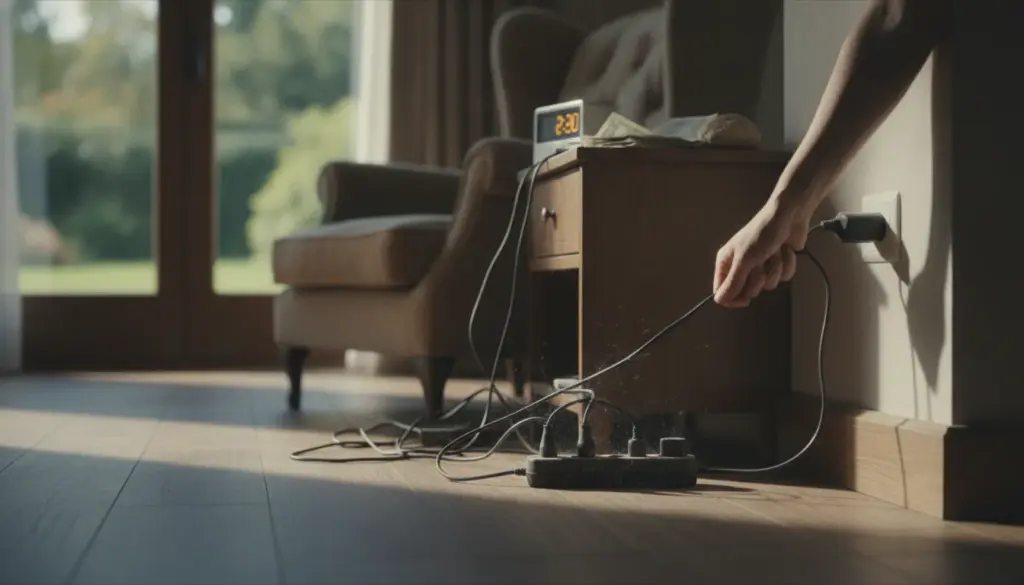
Many of us are familiar with that tangled mess of cables lurking behind the living room sofa or a bedroom nightstand. Perhaps you shifted a piece of furniture, and a cord accidentally popped out of the wall. You thought nothing of it, going about your daily routine. Then, your next electricity statement arrives, and the total is mysteriously lower—even though absolutely nothing else in your daily habits changed.
These unexpected scenarios happen far more frequently than you might realize. Whether it is an outdated smartphone charger, a dusty appliance nobody uses anymore, or an extra television in the guest room, we tend to leave them plugged in permanently. Even when these gadgets appear to be completely “off,” they continuously draw power from the grid. While they only sip tiny amounts of electricity, they do it relentlessly, twenty-four hours a day.
These silent energy drainers operate non-stop. You remain oblivious to their presence until that hefty annual settlement lands on your doormat. In an era of skyrocketing utility rates, a lucky accident like unplugging a single cord can suddenly make you realize just how much effortless money you can save around the house.
The Ultimate Energy Vampire: Forgotten Chargers
When it comes to standby power drain, the classic offender is the everyday phone charger. You will usually find them dangling from an outlet next to the bed, tucked under a home office desk, or resting near the couch. The cord sits there ready for action, even when no mobile device is attached. It looks completely harmless, yet that little adapter continues to consume electricity.
This hidden consumption applies to far more than just your smartphone gear. Numerous other household adapters stay active as long as their prongs touch the socket. Most people simply stop noticing these everyday items, but they are quietly ticking away on your meter every single month.
- Power adapters for smartphones and tablets
- Charging bricks for laptops and internet routers
- Docking stations for electric toothbrushes or shavers
- Extension leads equipped with an illuminated switch left in the “on” position
Individually, each device might only cost you a few extra dollars a year. However, a typical modern household easily harbors ten to twenty of these small electronics plugged into the mains. Over twelve months, this pure phantom drain easily adds up to a substantial financial leak.
Why “Off” Doesn’t Actually Mean Off
Today’s modern appliances are heavily reliant on standby modes. Think of the television with its glowing red light, the gaming console perpetually waiting in “rest mode,” or the coffee maker keeping its internal heating element primed for instant action. This modern convenience certainly makes life easier, but it undeniably costs money—even when nobody is actively operating the machine.
Energy experts frequently refer to this invisible power draw as vampire consumption. It encompasses any household appliance that continues to pull electricity while seemingly dormant. Common examples include:
- Televisions resting in standby mode
- Video game consoles sitting in sleep or instant-on states
- Audio systems, receivers, and soundbars
- DVD and Blu-ray players
- Coffee machines utilizing warming plates or digital clocks
- Cable decoders and internet provider set-top boxes
A contemporary home can easily waste between 5 and 10 percent of its total annual electricity consumption on gadgets that are doing absolutely nothing. Because this continuous usage is spread across the entire year and divided among dozens of tiny devices, it rarely catches your attention. There is no massive spike in usage to trigger an alarm, yet the financial impact steadily accumulates on your final bill.
The True Value of Pulling the Plug
While the exact financial savings will naturally fluctuate depending on the specific household, energy specialists provide clear estimations on how much money can be clawed back. For some families, the yearly savings might be relatively modest, while others will see a dramatic drop in costs.
If you own a massive collection of consumer electronics, multiple flat-screen TVs, various gaming setups, and endless computer peripherals, your household will easily hit the higher end of these expert estimates.
Devices You Should Never Disconnect
Naturally, you cannot just walk around yanking every single cord out of the wall. Your refrigerator must obviously stay running to keep perishable food safe for consumption. Likewise, standalone freezers, central heating boilers, heat pumps, and specific internet connections should never be powered down abruptly.
However, there is a notable exception for refrigerators during extended vacation periods. If you are going away for a long trip and have completely emptied the fridge, you can temporarily lower its internal temperature setting. If you want to shut it off completely, you must leave the appliance door wide open to prevent nasty mold growth. If you are leaving food behind, simply let the appliance run normally.
You also need to be careful with electronics that instantly lose their internal memory when deprived of power. Certain older central thermostats, digital alarm clocks, and electric stovetops require tedious reprogramming after every single power outage. In everyday practice, this inconvenience usually prompts homeowners to simply leave these particular items permanently powered on.
Turning Cord Checks Into a Daily Routine
The real power of energy conservation lies in steady repetition. A massive, one-time unplugging session is certainly helpful, but you will only see lasting effects by building a fresh habit. Here are a few simple concepts to keep the process effortless:
- Utilize multi-plug extension boards with a dedicated on/off switch, and flip it off right before going to sleep.
- Assign a specific central spot for chargers, and pull them from the wall immediately after your device reaches full battery.
- Take a quick walk through the house with a checklist before leaving for vacation, removing all unnecessary cords.
- Place a tiny, colorful sticker next to specific wall outlets that you want to check on a regular basis.
Start treating your electrical outlets exactly like light switches: whenever you leave a room, ensure anything that isn’t actively needed is completely turned off.
If you have young children in the house, you can easily turn this chore into an engaging game. Challenge them to find the most “vampire plugs” and declare a winner. This clever trick transforms household energy savings from a boring financial task into a fun, collaborative family activity.
Inspect Your Electrical Installation, Not Just Gadgets
Beyond simply removing cords, seasoned professionals frequently emphasize the importance of checking the actual condition of your home’s electrical wiring. Loose physical contacts, outdated breaker panels, and poorly wired wall sockets can generate unnecessary heat and power loss. More importantly, these unseen flaws significantly increase the risk of a house fire.
Scheduling a periodic inspection by a certified electrician can be incredibly beneficial, especially if you live in an older property. An expert will thoroughly evaluate the main distribution board, the internal cabling, and the grounding system. This proactive measure not only provides immense peace of mind but can also uncover hidden inefficiencies long before they cause disaster.
Practical Bonus Tips to Minimize Phantom Drain
If you catch the energy-saving bug after that first accidental cord pull, you can take things even further without having to purchase expensive smart home gear. Here are several highly accessible suggestions to keep your meter from spinning:
- Swap out outdated halogen bulbs for highly efficient LED lighting, which requires drastically less electricity to operate.
- When purchasing replacement appliances, actively seek out energy-efficient models, prioritizing those with excellent independent energy ratings.
- Activate the built-in eco-modes on your televisions, personal computers, and gaming systems, and significantly shorten the timer for automatic sleep functions.
- Turn off your main Wi-Fi router overnight when everyone is sleeping, provided you don’t rely on smart home systems that demand continuous internet access.
If you genuinely want to pinpoint your home’s biggest power hogs, consider investing in a standalone plug-in energy monitor. This handy tool allows you to measure exactly how much electricity an individual device draws during active use versus its standby state. It completely eliminates the guesswork and clearly highlights exactly where taking action will save you the most cash.
Ultimately, that one random coincidence—a cable that accidentally slipped out of a wall socket—can easily spark a highly deliberate conservation strategy. You don’t need a massive home renovation or a giant financial investment. Instead, by taking small, steady steps, you eliminate wasteful consumption and finally gain control over a utility bill that once felt completely unavoidable.