
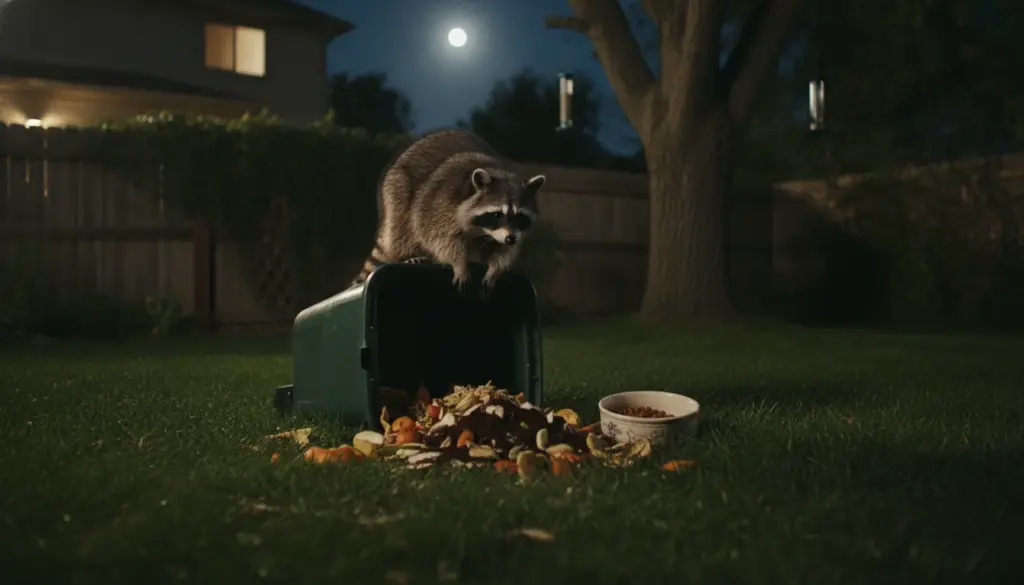
A single moment of carelessness is often enough to find a masked bandit rummaging through the compost bin or feasting on leftover pet food in the middle of the night. Countless homeowners unknowingly turn their properties into an absolute paradise for these nocturnal visitors. Understanding exactly what draws these critters to residential areas is the first step in keeping them at bay.
The irresistible backyard buffet
As highly adaptable omnivores, raccoons often discover a much richer food supply in our neighborhoods than they ever would in the wild. Driven by intense curiosity, these clever animals are constantly on the prowl for an easy meal and a safe place to rest.
Unfortunately, well-intentioned backyard setups or loosely closed garbage bins act as massive magnets. Some of the most common accidental food sources include:
- Unattended bowls of dog or cat food left on patios or near entryways.
- Easily accessible trash cans without locking lids.
- Exposed food scraps sitting openly on compost heaps.
- Overripe or fallen fruit left decaying under garden trees and bushes.
For these highly intelligent scavengers, a suburban yard represents the ultimate convenience store. Instead of foraging for hours, they can find a complete, calorie-dense feast all in one localized spot.
Cozy hiding spots and perfect shelters
A reliable food source isn’t the only thing that makes a property appealing; secure hiding places are equally crucial. Cozy, easily accessible shed roofs and undisturbed attics practically serve as an open invitation for these mammals to move in permanently.
Wildlife experts frequently note that structural gaps in building facades, false ceilings, and even cluttered areas under balconies provide excellent daytime retreats. Since these creatures are primarily active at dusk and overnight, they desperately need these quiet, safe havens to sleep or raise their young undisturbed.
The hidden dangers of feeding wild animals
Many nature lovers genuinely believe they are helping out by leaving a little extra food out for local wildlife. When dealing with these particular animals, however, this generous habit can quickly backfire into a significant nuisance.
Once they associate humans with a free meal, they rapidly lose their natural fear and can become surprisingly pushy. This lack of boundaries brings them dangerously close to living spaces, making it incredibly difficult to evict them later. While generally not aggressive by nature, they possess the strength and dexterity to cause severe structural damage to homes and landscaping.
Additionally, close proximity to their droppings carries a significant risk of transmitting dangerous parasites to humans and pets alike.
Proven strategies to raccoon-proof your property
While it is nearly impossible to stop a wandering animal from taking a quick peek over the fence, a few strategic adjustments will dramatically lower the chances of a permanent infestation.
- Bring all pet food indoors before dusk, including any dishes left out for neighborhood hedgehogs.
- Seal compost piles securely or upgrade to fully enclosed composting bins.
- Lock down garbage cans with tight-fitting lids, using heavy-duty straps or bungee cords if necessary.
- Routinely clean up fallen fruit from the lawn before it begins to ferment.
- Block off access points to attics, sheds, and underneath wooden decks.
- Install physical climbing barriers, such as smooth metal collars around tree trunks and rain gutters, to prevent easy scaling.
It is vital to understand that independently trapping and relocating these animals is strictly prohibited by law in many regions, often carrying severe penalties related to poaching and animal welfare violations. If a stubborn family has already settled inside a building, hiring a specialized pest control professional is the safest, most effective way to handle the situation and secure the property against future invasions.