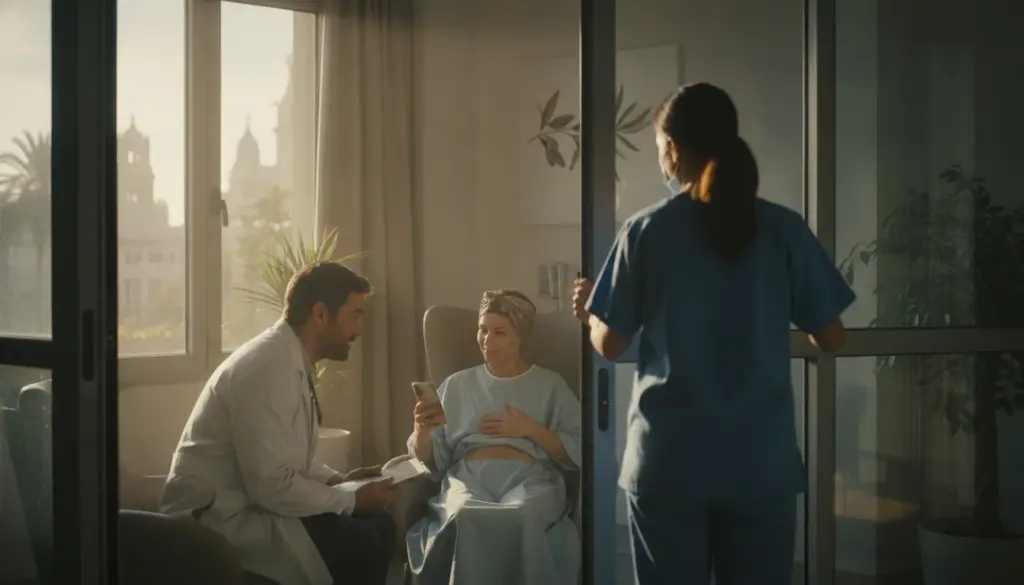
In Barcelona, early morning light hits an oncology ward as a nurse pushes open the heavy doors. Marta, a 46-year-old patient, sits near the window looking at her phone, her hand gently resting over her surgical scar. Not long ago, hearing you had pancreatic cancer felt like a definitive, devastating endpoint. Yet today, her physician approaches with a noticeable shift in tone—offering a small but genuine glimmer of optimism.
While city life buzzes outside, a silent medical transformation is taking root across research facilities and hospitals in Spain. In these highly specialized halls, medical professionals never throw around terms like “breakthrough” without solid evidence.
A Quiet Medical Revolution in Spain
For decades, oncologists have dreaded delivering a pancreatic cancer diagnosis. Because the tumor remains hidden deep within the body, symptoms usually appear far too late, leaving patients with painfully few medical options. This grim reality has prompted researchers and physicians throughout Spain to collaborate with an urgency that resembles wartime triage.
These experts know the bleak statistics intimately and see the human toll every single day. Driven by the frustration of having no alternative treatments to offer, they are actively changing the narrative. At Hospital Universitario 12 de Octubre in Madrid, a groundbreaking trial led by a Spanish research network is shifting the way daily consultations happen.
Instead of relying on a standard chemotherapy regimen for everyone, medical teams are now analyzing patients for unique immune markers and genetic profiles. One early trial participant, a 52-year-old mechanic from Seville, had already started getting his end-of-life affairs in order before joining the program. Today, he continues to work part-time, and his medical scans reveal something rarely seen in this field: actual tumor regression.
This innovative strategy is rooted in a fundamental shift in thinking: pancreatic cancer is not a single, uniform disease. By blending advanced DNA sequencing with AI-driven analysis and cutting-edge imaging, Spanish medical teams are categorizing tumors into highly specific subtypes. This allows physicians to prescribe a completely customized defense—whether that involves immunotherapy, targeted drugs, or a heavily modified chemotherapy plan that the patient’s body can comfortably endure.
Personalizing a Fierce Battle
One of the most powerful adjustments made by Spanish healthcare teams is surprisingly straightforward: they altered the timeline of the fight. Instead of rushing to surgery before fully understanding the mass, multiple medical centers now deploy neoadjuvant therapies immediately upon discovery, guided by rapid molecular testing.
This means the initial weeks following a diagnosis aren’t wasted on endless paperwork and agonizing delays. Instead, this becomes a critical window where the cancer is immediately targeted, giving doctors real-time data on how the tumor responds to the intervention. While patients previously described those early days as a terrifying void filled with frantic internet searches, clinics in cities like Valencia and Barcelona are now providing highly structured, proactive care plans.
Make no mistake, the treatments remain physically demanding. Patients still endure exhausting days filled with fatigue, pain, and nausea. However, there is a profound psychological benefit when individuals realize their care isn’t locked into an inflexible template. They find comfort in knowing a dynamic, living strategy dictates every pill and injection, rather than a generic medical recipe.
From a clinical perspective, this customized approach makes perfect sense. Pancreatic malignancies exhibit massive biological diversity, and Spanish scientists have proven that certain cancer variations react exceptionally well to specific drug combinations. When these treatments are perfectly matched to the tumor subtype, survival curves slowly start to bend upward.
Here, the concept of a breakthrough truly takes shape—not as a magical cure, but as a statistical line that finally refuses to stay flat. For cancer specialists accustomed to dismal outcomes, granting a patient several additional months of quality life is monumental. It translates to graduations attended, birthdays celebrated, and final family vacations that previously seemed impossible.
Navigating a Fragile Yet Promising Frontier
For individuals and families navigating this medical storm, these Spanish innovations introduce a new set of responsibilities. The first step involves asking highly specific questions during consultations. Patients are encouraged to ask if their tumor is receiving genetic profiling, if a multidisciplinary board is reviewing their charts, or if they qualify for specific European or Spanish clinical trials.
While this might feel overwhelming when you are frightened and fatigued, bringing a handwritten list of questions to your next doctor’s visit can be a profoundly empowering act. Relatives often admit they hesitate to voice concerns because they worry about seeming uneducated or bothering busy hospital staff. In reality, no one expects patients to read complex clinical guidelines while just trying to survive the week.
According to oncologists in Spain, the greatest missed opportunity in cancer care is polite silence. Simply nodding along when you do not understand the medical jargon can prevent you from accessing better care. Asking a physician to explain something in plain language can uncover treatment options that might otherwise remain hidden.
“We never guarantee miracles,” notes an oncology specialist in Barcelona leading one of these major trials. “What we do guarantee is utilizing every available tool and continuously adapting our approach as we learn from the patient’s body. That represents true progress.”
Actionable Steps for Patients and Families
- Inquire about molecular testing: Ask if your cancer is being classified into a specific genetic subtype, as this directly determines your eligibility for targeted therapies.
- Request a multidisciplinary review: Having genetics experts, radiologists, surgeons, and oncologists collaborate on your case often yields highly creative medical solutions.
- Look into clinical trial registries: Many cutting-edge therapies are initially accessible only through research studies hosted by major hospitals throughout Spain.
- Bring a trusted advocate: Having a relative or friend in the room—or listening via speakerphone—helps capture vital details you might miss when feeling overwhelmed.
- Track daily lifestyle shifts: Documenting minor changes in pain levels, appetite, and sleep patterns helps medical teams adjust your care in ways that lab machines cannot.
Writing a Collaborative New Chapter
It is important to acknowledge that this Spanish medical advancement is not a magic wand. A pancreatic cancer diagnosis remains one of the most formidable challenges in modern healthcare, and overall survival rates still have a long way to go. Nevertheless, a vital shift in momentum is taking place within the hospital corridors where these intense battles are fought.
Families who previously faced a single, devastating prognosis are now presented with branching pathways and contingency plans. While this array of options does not eliminate the underlying anxiety, it provides something immensely valuable: the breathing room to plan and build hope on hard medical facts rather than desperate late-night web searches.
We understand how jarring it is when a diagnosis abruptly splits your life into a “before” and an “after,” forcing you to learn a terrifying new medical vocabulary. Yet, the ongoing work in Spain proves that a unified effort can slowly shift even the most stubborn obstacles. Every patient volunteering for a trial, alongside dedicated nurses and researchers, is laying the groundwork for a medical pathway that simply did not exist a decade ago.
Whether you are reading this because a loved one is currently fighting this illness, or simply because the disease itself is frightening, knowledge brings comfort. From high-tech laboratories in Madrid to quiet hospital wards in Málaga, dedicated professionals are steadily rewriting the future of one of the world’s most daunting conditions.
Frequently Asked Questions
Are these Spanish pancreatic cancer advancements available to all patients?
While access is expanding, these personalized protocols and neoadjuvant treatments are currently most accessible through specialized clinical trials and major research hospitals across Spain.
How does this differ from traditional cancer care?
Instead of a standard, one-size-fits-all chemotherapy plan, this new method relies heavily on immediate genetic profiling to create a dynamic, personalized treatment strategy right from the start.
Can international patients access these trials or care centers?
Patients from other countries can often participate, though it generally requires close coordination between your home oncologist and the specific Spanish research facility hosting the trial.
Do these tailored treatments offer a definitive cure?
At this stage, they are not classified as a complete cure. However, they are showing remarkable success in shrinking tumors, extending life expectancy, and significantly improving the daily quality of life.
What is the most critical practical question to ask after a diagnosis?
Always ask your medical team if your tumor is being genetically profiled and if your case is being reviewed by a multidisciplinary board to ensure you receive the most highly customized care possible.