
Why Chasing a Round Number at the Pump Is a Costly Habit
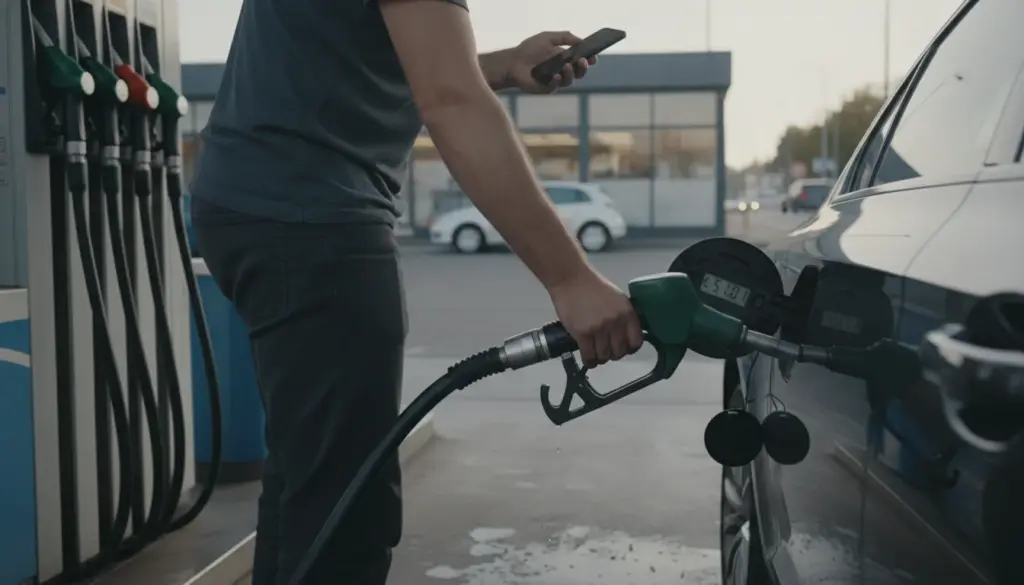
We have all witnessed that impatient driver at the local filling station. They hastily slam their door, jam the nozzle into the tank, lock the handle, and scroll through their smartphone. Suddenly, the pump clicks to signal a full tank. After a brief pause, they squeeze the trigger again, forcing in extra drops just to hit a perfectly round number on the display. Fifty euros and one cent. Fifty euros and sixteen cents. Finally, a flawless fifty-one.
You can practically hear the vehicle groaning under the pressure. While chasing that satisfying zero at the end of your receipt seems like a harmless, clever little game, a vital component is secretly taking the hit. Unforgiving mechanical damage is brewing right beneath your fuel cap.
The Hidden Dangers of Forcing Extra Fuel
Observe the pumps for just a few minutes, and a familiar dance unfolds. The automatic sensor clicks, clearly communicating that the tank has reached its maximum capacity. Instead of listening to the machine, the human decides to take charge. A few extra squeezes are added to squeeze in a couple more cents, often followed by a smug nod of satisfaction.
Imagine a typical weekday scenario at a busy highway rest stop. A family traveling to see relatives pulls over to refuel. The driver grumbles about current gas prices, locks the pump, and hears the automatic stop. Refusing to leave the total at exactly €59.72, they deliberately squeeze the handle until the screen shows a flawless €60.00, laughing off the minor overfill.
Fast forward a few months, and that very same vehicle develops a faint gasoline odor after every trip to the station. The check engine light randomly illuminates on the dashboard, disappears, and then stubbornly returns. A professional diagnostic eventually reveals severe complications within the Evaporative Emission Control (EVAP) system, specifically targeting the integrated carbon canister.
The final repair invoice? It easily runs into hundreds of euros, sometimes skyrocketing even higher if internal sensors and fragile vacuum hoses have been heavily soaked and degraded by raw fuel.
Why You Should Always Trust the Automatic Stop
That sudden cutoff at the pump is a highly engineered safety feature, not a mere suggestion. Contemporary fuel pumps detect subtle shifts in air pressure and vapor flow once the tank reaches capacity, immediately shutting off to prevent hazardous overflows. When you persistently force extra gasoline into the tank, there is simply nowhere for it to go. Consequently, the overflow gets shoved right up the filler neck and directly into your EVAP lines.
Your vehicle’s emission system was exclusively designed to manage gases, never raw liquid. Deep inside, a highly sensitive charcoal filter works like a vapor sponge to safely capture harmful fumes. When liquid gasoline floods this delicate canister, the internal materials quickly deteriorate, purge valves get stuck, and your emission controls completely fail. What feels like a harmless twenty-cent top-up gradually morphs into a massive mechanical headache.
How to Fill Up Without Destroying Your Charcoal Filter
The smartest way to refuel your car is incredibly straightforward. Simply insert the nozzle entirely, select your preferred grade, and let the pump run until you hear that initial, definitive click. Do not try to round up your total, and definitely avoid carefully balancing the trigger for those final few drops. Let the gas station hardware and your car’s internal vapor management do exactly what they were designed to do.
If you prefer strict control over your spending, prepay a specific amount at the register or manually release the trigger just before the automatic shutoff kicks in. This strategy perfectly protects your internal filters while keeping your budget firmly in check.
Countless motorists mindlessly repeat a trifecta of terrible fueling habits: tilting the nozzle at a weird angle, topping off after the cutoff, and violently shaking the handle to extract the last drops. While these actions might feel like a minor triumph over rising gas prices, they are actually directing raw fuel exactly where it does not belong.
Expert Tips to Protect Your Fuel System
It turns out that very few drivers ever pay attention to the small warning labels near the pump advising against topping off. Independent automotive specialists who frequently replace saturated charcoal canisters point out that most drivers are completely unaware they are causing the damage themselves. Motorists often blame faulty electronics or poor-quality gasoline, only to realize their lifelong habit of squeezing past the first click is the actual culprit.
- Respect the first click: Treat that initial cutoff sound as an absolute boundary rather than a challenge to squeeze in more gas.
- Maintain a straight angle: Keep the nozzle perfectly aligned during the process to prevent unnecessary splashing and ensure the pump’s pressure sensor reads accurately.
- Allow room to breathe: A small amount of empty space is critical for fumes to expand safely during warmer weather and helps the vapor recovery process function seamlessly.
- Monitor your vehicle for red flags: Persistent gas smells, stumbling engine idle after filling up, or unexpected check engine warnings often point toward a saturated filter.
- Request a professional diagnostic: If you suspect an issue, mechanics can perform a specialized smoke test to identify minor system leaks before they evolve into catastrophic failures.
Rethinking Our Daily Driving Habits
This everyday scenario at the filling station teaches us a valuable lesson about modern automotive care. It highlights how ingrained routines often overpower brilliant engineering, and how seeing a perfectly round number on a screen somehow feels more important than protecting a crucial internal component. Even though the carbon canister remains hidden deep within your vehicle’s chassis, it works tirelessly to protect your engine’s longevity and improve the air quality around us.
The next time you feel the overwhelming urge to round your purchase up to exactly fifty dollars, try to interpret that mechanical click a little differently. Treat it as your vehicle politely telling you that it has had enough. Walking away at that exact moment might just become the smartest new tip you share at your next family gathering.
Frequently Asked Questions
Can overfilling damage the vapor system after just one mistake?
A single accidental overfill is unlikely to cause immediate failure. However, consistently forcing extra fuel into the tank over a period of months or years will slowly saturate the charcoal element, ultimately degrading its lifespan and placing extreme stress on the connected diagnostic sensors.
What are the symptoms of a ruined charcoal canister?
The most frequent indicators include a strong, lingering scent of gasoline around the car, check engine lights triggering EVAP-related fault codes, failing your local emissions inspection, or experiencing an engine that heavily hesitates right after a trip to the gas station.
Is it harmless to stop fueling before the pump automatically clicks?
Absolutely. Releasing the trigger early to hit a specific spending limit is completely safe. Stopping before maximum capacity never negatively impacts your internal components; the danger solely lies in pushing past the machine’s automatic shutoff threshold.
Are diesel vehicles impacted by this habit as well?
While modern gasoline-powered cars utilize highly sensitive charcoal canisters, diesel engines operate a bit differently and are generally less susceptible to EVAP failure. Nevertheless, overflowing a diesel tank can still trigger messy spills, unexpected fluid expansion, and overflow issues, making the exact same cautious approach highly recommended.
How should I communicate this issue to my repair shop?
Be entirely transparent about your past pumping routines. Inform the technician that you frequently topped off your tank past the initial click. Specifically request that they carefully inspect the entire evaporative system, including all hoses, purge valves, and the charcoal filter itself, while scanning the computer for fuel vapor control codes.