Why leftover egg water is an unexpected botanical powerhouse
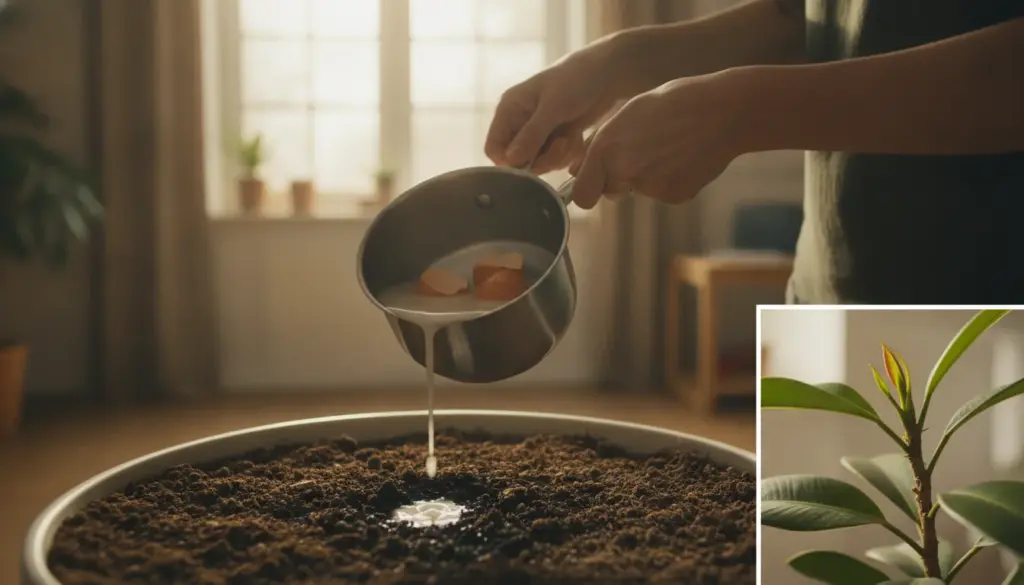
Three empty shells float in the pan, leaving behind a milky liquid. Most of us simply let this cool and thoughtlessly pour it down the sink before moving on with our day. But not today. Today, you are taking that small pot straight to the potted ficus in your living room.
You pour it gently. The liquid soaks into the dry soil, vanishing as if the houseplant was much thirstier than anticipated. A few days later, vibrant green shoots suddenly appear at the tips of the leaves. You might wonder if this is just a coincidence, or if that leftover egg water truly delivers an impactful, natural dose of calcium. That lingering thought is absolutely spot on.
Whenever you prepare boiled eggs, you are inadvertently brewing a miniature mineral cocktail on your stove. Eggshells are packed with calcium, and a significant portion of those minerals leaches directly into the surrounding water. While the liquid might look entirely unremarkable, it is highly enriched. You cannot taste or smell the difference, but your greenery certainly feels it.
For flora, calcium acts like a microscopic construction worker. It reinforces cell walls, encourages robust root development, and prevents stems from becoming fragile. Serving your leafy companions a splash of cooled egg water provides exactly the gentle push they need to thrive. Forget expensive fertilizers from the garden center; this solution comes straight from your everyday kitchen routine.
We have all stared at a stagnant potted plant, wondering why it refuses to grow. This often leads to frantic internet searches and purchasing random plant foods, only to remain unsure of the outcome. A straightforward trick like repurposing egg-boiling liquid eliminates that guesswork. You are taking a tangible, fuss-free step without needing a precise, milliliter-perfect instruction manual.
Using kitchen scraps to fortify home gardens is becoming a major movement, with coffee grounds, vegetable peels, and banana skins leading the charge. Eggshells rank incredibly high on that list, primarily due to their stellar calcium content. Gardening forums are filled with enthusiastic hobbyists sharing impressive before-and-after photos of their tomatoes treated with this nutrient-dense liquid. While it may not be a formal scientific study, the sheer volume of positive anecdotal evidence is impossible to ignore.
The agricultural science behind structural growth
Seasoned horticulturists understand that sufficient calcium prevents weak stems and bizarre brown spotting on both foliage and fruit. In tomatoes, a lack of this nutrient frequently causes blossom-end rot, a frustrating condition where a dark, sunken lesion forms at the bottom of the crop. Supplementing with extra calcium through regular watering drastically lowers this risk. While not a magical cure-all, it represents a crucial link in a healthy growing cycle.
Inside the plant’s internal system, calcium functions as a vital structural glue. It binds cellular structures tightly together and ensures that fresh tissue emerges strong and resilient. Furthermore, it assists in transporting other essential nutrients throughout the vascular system. Without an adequate supply, overall growth stalls, even if the soil contains plenty of nitrogen and phosphorus. Regularly applying egg water quietly fulfills this fundamental biological requirement, offering a steady, gentle enhancement rather than an aggressive, synthetic spike.
How to apply cooled egg water safely
The foundational recipe is remarkably straightforward. Simply boil your eggs exactly as you normally would, but completely omit any salt from the pot. Allow the liquid to cool down entirely to room temperature. This step is non-negotiable, as hot liquids will literally cook delicate root systems. Once properly cooled, gently pour the mineral liquid directly onto the soil at the base of your plant.
The leftover water from one or two eggs provides plenty of nourishment for an average medium-sized houseplant. If you are tending to a massive potted shrub or an outdoor raised garden bed, you can comfortably utilize the liquid from four to six eggs, distributing it across several different plants. There is no need for daily application; repeating this process once every two to three weeks is more than sufficient. Think of it as a periodic nutritional broth rather than a daily meal.
Let us be realistic: nobody is actually doing this every single day, and you absolutely do not have to. Greenery thrives on consistency, but it despises overbearing care. If you apply the nutrient liquid today and completely forget about it for the next month, you are not failing as a plant parent. You are simply human.
Crucial mistakes to avoid
Always ensure that absolutely no salt is added to the boiling pot. Sodium severely damages root structures and throws the delicate soil chemistry out of balance. If you prefer cooking your breakfast with salted water, simply discard that batch down the drain. When you want to pamper your indoor jungle, just prepare an extra, unsalted egg specifically for this purpose.
Another frequent error is over-application, usually driven by the hope of triggering rapid growth. When applied excessively, minerals accumulate rapidly, making the soil far too rich, particularly in compact containers. If you spot a chalky white film developing on the topsoil, or notice the leaf edges turning dry and brown, it is time to hit pause. Simply flush the pot with pure, clean tap water for the next few cycles.
Do not panic if a minor mishap occurs. If you accidentally pour lukewarm liquid, or notice a specific species reacting poorly, it is not a catastrophe. Generously flush the potting mix with standard water and patiently wait. Botanical life is incredibly resilient, provided we avoid forcing radical new treatments every single week.
Real experiences and building a green routine
“Ever since I started pouring my leftover egg water on my potted basil, it looks significantly less droopy,” shares Marieke, 38, from Utrecht. “Initially, I thought I was just imagining things, but within a few weeks, the stems were undeniably thicker. Plus, I am throwing less away, which just feels incredibly rewarding.”
To help build a foolproof routine, consider keeping a simple mental checklist:
- Cool completely: Lukewarm might feel safe to the touch, but it remains dangerously hot for delicate roots.
- Skip the salt: Salted liquids belong in the kitchen sink, never in your favorite planters.
- Pace yourself: Application once every two to three weeks is the perfect rhythm for most indoor foliage.
This approach builds a tranquil, sustainable habit. Instead of a strict gardening regimen, it becomes a thoughtful practice that naturally merges with your existing cooking schedule.
Transforming kitchen waste into a conversation starter
The true beauty of repurposing this nutrient-rich liquid is that it taps into two deeply satisfying feelings: attentive care and clever resourcefulness. You are nurturing your environment while smartly utilizing something that normally ends up in the municipal sewer. That subtle sense of pride often surfaces when people discuss their gardening routines, sounding as if they have unlocked a secret hack absent from traditional horticultural manuals.
Perhaps you will test this method on a single, hesitant plant first—maybe a trailing philodendron, a fenestrated monstera, or a sad supermarket herb. You water, you wait, and you observe. When fresh growth emerges looking thicker and more vibrant, you will inevitably feel inspired to expand the treatment to the rest of your collection. It transforms from a perceived magic trick into an additional layer of mindful care within your daily life, creating a calming ritual between cooking and dining.
Gradually, this shifts your entire perspective on household waste. Pasta water, vegetable trimmings, and leftover morning coffee suddenly hold hidden potential. While not everything is usable, your kitchen essentially evolves into a miniature circular ecosystem where very little is considered disposable. Your leafy companions benefit instantly from this mindset shift, and on a quiet, unspoken level, so do you.
Sharing these sustainable tips with colleagues and friends often sparks surprisingly intimate conversations. People eagerly recount tales of the beloved fern they accidentally overwatered, the resilient ficus that survived five stressful apartment moves, or the cherished heirloom cutting passed down from a late grandmother. Houseplants are rarely just green decorations; they stand firmly at the center of our personal histories.
Frequently Asked Questions
Can I use any type of egg, including standard supermarket ones?
Absolutely. Both organic and standard conventional eggs release valuable calcium into the boiling liquid. The specific origin of the grocery item changes very little about how the baseline minerals benefit your soil.
Is it safe to use water that has been lightly salted?
It is highly advised against. Sodium easily damages sensitive root hairs and rapidly accumulates within the potting mix, which ultimately stunts healthy development and causes visible distress.
Which specific plant varieties respond best to this treatment?
The vast majority of standard houseplants, culinary herbs, and potted garden vegetables will thrive with this addition. However, if you own highly sensitive or rare exotic species, it is always wisest to run a small test first.
What is the ideal watering schedule for this method?
Applying the enriched liquid roughly once every two to three weeks establishes a fantastic rhythm. Treat it as a supportive dietary supplement, rather than a complete replacement for your standard watering and feeding routine.
Can I store the leftover liquid to use at a later date?
You can safely keep it sealed in a bottle inside the refrigerator for about twenty-four hours. Beyond that timeframe, the risk of unpleasant odors and bacterial growth spikes significantly, so it is always best to use it as fresh as possible.