The Unspoken Reality of the Modern Eco-Friendly Neighborhood
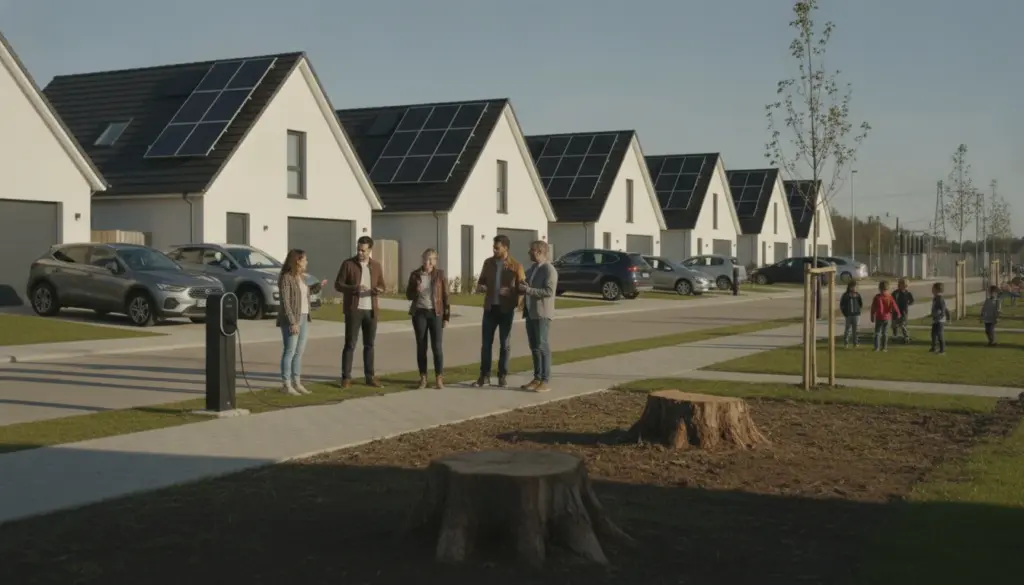
Picture a crisp Saturday morning in a freshly built suburban development. Solar panels gleam from nearly every rooftop, while polished electric vehicles sit quietly charging in driveways. Neighbors chat amiably on the sidewalk, boasting about their plummeting utility bills and their commitment to a climate-conscious lifestyle. But the cheerful mood shifts when someone casually mentions the growing list of grievances in the community group chat.
Complaints range from kids losing their shaded play areas to heated disputes over vibrating heat pumps, alongside ethical debates about the rare metals powering their home batteries. Suddenly, the lively conversation grinds to a halt. One person quietly asks the lingering question: are we actually saving the planet, or are we part of the problem?
It turns out that the shift to renewable power is far more complicated than the pristine marketing campaigns suggest. There is an underlying friction we can no longer dismiss.
The Hidden Costs of Our Environmental Pride
Society loves championing the ultimate climate savior. We applaud the neighbor who completely disconnects from the gas grid, the corporation boasting about its carbon-neutral headquarters, and the local government declaring itself a pioneer in sustainability. Standing on the right side of history provides a undeniable rush of satisfaction.
Yet, that comforting narrative is beginning to crack under scrutiny. Hidden behind every shiny solar array, wind turbine, and high-tech battery lies an extensive global web of extraction, manufacturing, heavy transport, and eventual waste. You will not find this complex supply chain detailed on your monthly electricity statement, but its impact is very real.
When you take a closer look, an uncomfortable truth emerges: our well-intentioned ecological choices frequently just repackage old environmental issues in a shiny new wrapper.
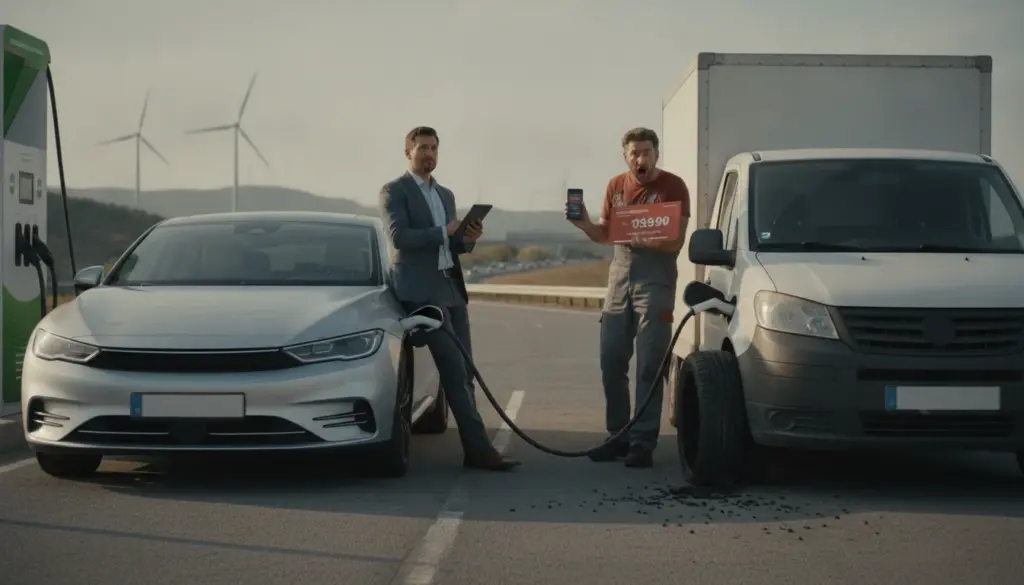
Consider the modern electric vehicle. Television commercials portray these cars gliding silently through untouched mountain ranges, entirely free of tailpipe emissions and environmental guilt. The actual journey of that vehicle, however, often starts in a Congolese mining operation where youths extract cobalt for meager daily wages. It also traces back to the salt flats of Chile, where intensive lithium extraction leaves indigenous farmers battling severe water shortages.
By the time that same car is proudly parked on a European driveway as a beacon of progress and responsibility, a massive ecological debt has already been incurred. The visible exhaust pipe has disappeared, but the environmental footprint remains largely intact.
This profound contradiction leads to a unique form of eco-fatigue. Consumers genuinely want to make responsible choices, yet digging deeper only reveals an endless expanse of moral gray areas. We have spent years embracing the illusion that green innovation will allow us to maintain our high-consumption, fast-paced lifestyles without consequence. We simply added the word “sustainable” to our existing habits, but that highly marketable promise simply does not reflect reality.
In the midst of these complex global discussions, our daily information feeds often highlight a mix of surprising realities:
- Why charging your phone at night is less innocent than it seems
- When you feel like your emotions are piling up
- Studies linking the gut microbiome to autism, anorexia, and ADHD
- Spain opening Casablanca’s largest tuna canning factory using national technology
Trading One Global Crisis for Another?
Wind turbines, photovoltaic cells, and massive battery parks are undeniably essential for slashing greenhouse gas emissions. At the same time, these technologies demand staggering quantities of raw silicon, copper, steel, and rare earth elements, not to mention vast expanses of land. We are essentially forging a brand-new global dependency.
Instead of relying on fossil fuels, our modern infrastructure is now inextricably tied to intensive mining operations, complex logistics, and scarce geological materials. This leads to a daunting question that few policymakers want to address publicly: are we simply swapping a climate emergency for a resource and biodiversity crisis?
How to Make Genuine Eco-Friendly Choices Without the Guilt
Fortunately, there is a more grounded approach that does not involve mindlessly chasing the newest sustainable gadgets. True progress starts at a personal level, requiring less performative heroism and a lot more practical realism. Before making a major purchase, ask yourself three fundamental questions: Do I genuinely need this? Is there an option to share, rent, or buy it secondhand? What exactly happens at the very beginning and the absolute end of this product’s lifecycle?
Opting to thoroughly insulate your home before rushing to install a high-tech heat pump is a perfect example of this grounded mindset. It might not look as impressive as a smartphone-controlled heating system, but it is frequently much cleaner and significantly more effective.
This exact logic applies to our daily transportation. The most sustainable step is reducing total mileage first, and only then upgrading to a cleaner vehicle. An electric car that spends most of its life sitting idle in a driveway is ultimately just an incredibly expensive, resource-heavy battery on wheels.
Today’s consumers face immense pressure to execute sustainability flawlessly. The relentless push for a zero-waste lifestyle, eating strictly seasonal produce, boycotting air travel, and achieving the ultimate home energy rating often creates a toxic recipe for extreme guilt. We’ve all hit that wall where we just want to give up because the standard is set impossibly high.
It is crucial to practice self-compassion when navigating these green decisions. Making imperfect choices is simply part of the process. If you end up purchasing solar panels from a massive corporation with a less-than-stellar track record, you can still mitigate the impact by prioritizing excellent installation quality, long-term durability, and eventual recyclability.
Let’s be completely honest: nobody actually manages this flawlessly every single day. A much more achievable strategy is to transform just one daily habit each year and stick to it religiously. While it lacks the dramatic flair of a viral social media post, this slow-and-steady approach generates far more lasting power.
The Human Element of the Green Transition
Amidst sweeping debates over infrastructure, policy frameworks, and carbon reduction targets, it is dangerously easy to forget the real people affected. These are individuals who just want to work, breathe, and live comfortably. A farmer living adjacent to a newly constructed wind farm captures this perfectly:
“Everyone insists this is necessary for the climate. But when I look out my kitchen window, all I see is a forest of steel masts. I truly feel like my personal landscape has been sacrificed simply to satisfy someone else’s environmental conscience.”
This specific type of societal friction is echoing across numerous communities. You see it among residents living next to massive, energy-draining data centers. You hear it from tenants facing steep rent hikes after mandatory sustainability upgrades. You feel it from lower-income families who are entirely excluded from government subsidies because they do not own the roof over their heads.
To move forward equitably, we must focus on:
- Prioritizing and actively listening to local community concerns long before breaking ground on wind or solar parks.
- Demanding total transparency regarding the extraction, manufacturing, and disposal of green technologies.
- Designing inclusive climate policies that support citizens without cars or homeownership.
- Directing financial subsidies toward sharing initiatives and consumption reduction, rather than exclusively funding new tech.
- Openly acknowledging that every new technological solution inevitably introduces its own set of challenges.
Using the Energy Shift as a Mirror, Not a Magic Trick
The darker realities of our transition away from fossil fuels extend far beyond damaged landscapes and overseas mining operations. This shift holds up a mirror to our modern existence, highlighting the extreme comforts we have normalized and absolutely refuse to surrender. Casting ourselves in the role of the ultimate climate hero is incredibly seductive; accepting that our consumption habits are a core part of the problem is much harder to swallow.
However, for those willing to look past the uncomfortable truths, there is genuine optimism to be found. We do not have to be labeled as environmental villains, nor do we need to strive for the impossible caricature of the flawless eco-saint. We must create space for honest skepticism, imperfect progress, and messy solutions that cannot be neatly packaged in a marketing brochure.
Ultimately, the true hero of this generational energy shift might not be the homeowner with the largest solar array. Instead, it will be the person brave enough to critically examine their own endless appetite for energy—and who is willing to have open, honest conversations about it with their community.
Frequently Asked Questions
Are electric vehicles genuinely detrimental to the environment?
Not entirely. When measured across their entire operational lifespan, electric vehicles generally emit significantly less carbon than traditional combustion engines. However, manufacturing them requires intensive energy and heavy resource extraction. Because of this, consciously driving fewer miles remains the single most impactful choice you can make.
Do solar panels create more ecological damage than they prevent?
In the vast majority of scenarios, solar panels generate exponentially more clean energy than the energy required to manufacture them. Nevertheless, valid concerns remain regarding ethical labor conditions, end-of-life recycling, and land usage. To minimize impact, prioritize long-lasting premium panels and maximize available rooftop space before converting natural fields into solar farms.
Is individual action completely pointless in such a complex system?
Absolutely not. Micro-behaviors scaled up across millions of households generate monumental shifts. Simple actions like sharing resources, eliminating waste, and proper home insulation matter deeply. Simultaneously, we must maintain relentless pressure on corporations and politicians to enact massive systemic reforms.
Could nuclear power provide an effortless escape route?
While nuclear energy effectively solves certain issues—like zero-carbon electricity generation—it introduces entirely different long-term hazards and waste management dilemmas. It is certainly a piece of the puzzle, but it is not a magical remedy that will allow us to maintain our currently unsustainable energy consumption rates.
What are the clearest warning signs of corporate greenwashing?
Stay highly skeptical of campaigns that exclusively highlight benefits while conveniently omitting hard data. Be wary of terms like “carbon-neutral” when used without detailed methodology. Always push for transparent answers regarding total lifecycle emissions, raw material sourcing, product longevity, and eventual disposal processes.