From the Kitchen to the Bathroom
Many of us instinctively reach for pricey, specialized cleaning sprays, completely unaware that a basic household staple can achieve incredible results. A growing number of households are ditching those brightly colored toilet gels and rim blocks. Instead, they are grabbing something that has been sitting in their kitchen cabinet all along: the standard dishwasher pod.
Originally engineered to power through baked-on grime in casserole dishes, this tiny block proves to be remarkably effective in the bathroom. By utilizing a few clever techniques, you can maintain almost all of your sanitary fixtures with this single product.
Why Dishwasher Pods Are So Powerful
These little tablets are packed with highly concentrated cleaning agents. We are talking about a heavy-duty blend of degreasing compounds, enzymes, and often oxygen-based bleach. While this specific chemical cocktail is meant to dissolve stubborn food particles during a wash cycle, it is equally capable of breaking down limescale, organic matter, and stubborn dirt inside a toilet bowl.
Mineral deposits build up rapidly around the waterline and drain, especially if you live in a hard water area. Standard bathroom cleaners frequently just mask unpleasant odors with heavy perfumes without truly dissolving the underlying buildup. The active ingredients in a dishwasher pod target exactly what needs removing: uric acid, stubborn limescale, and greasy residues.
You can think of it as a super-concentrated bathroom cleaner that simply happens to have “dishwasher” printed on the packaging. However, because this formula is incredibly potent and slightly caustic, it does require a cautious approach.
What You Should and Shouldn’t Clean
Because the formula is quite aggressive, it shouldn’t be used on delicate finishes. Here is a quick breakdown of where it is safe to use:
- Safe materials: Enamel surfaces, porcelain, ceramic tiles, and rigid bathroom plastics.
- Materials to avoid: Untreated wood, natural stone, marble, aluminum, and any unsealed metals.
Pro tip: Always ensure the room is well-ventilated, wear protective cleaning gloves, and rinse the treated areas thoroughly with clean water.
5 Unexpected Bathroom Cleaning Hacks
1. Melting Away Toilet Bowl Limescale
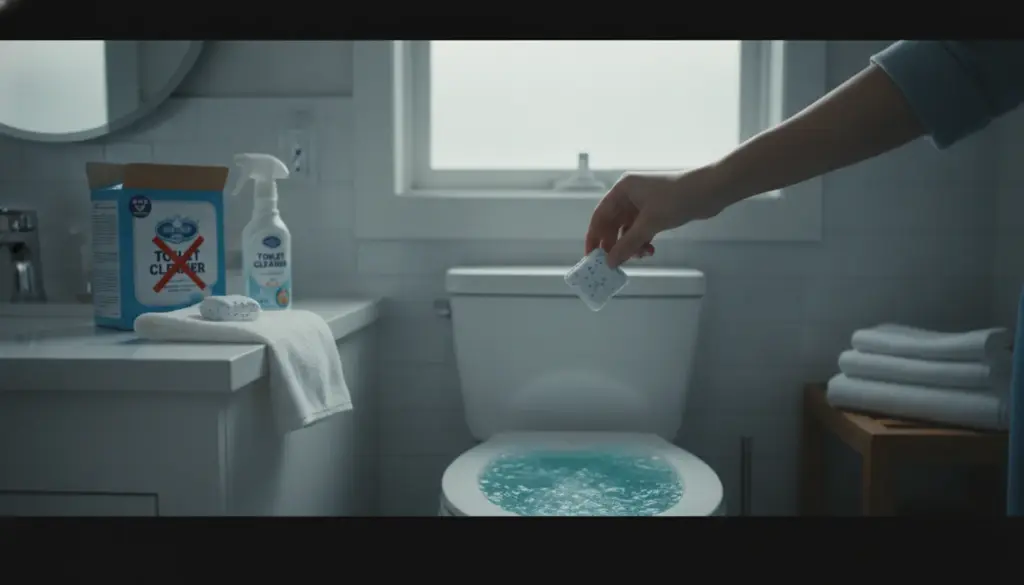
This is arguably the most popular and impressive trick. If you are dealing with a heavily calcified toilet bowl, drop one or two pods directly into the water. Pour in a generous splash of warm water—never boiling—and simply let the mixture sit overnight.
When you return the next morning, your scrubbing brush will glide through that stubborn calcium layer. Those unsightly gray or yellow streaks will vanish with virtually no elbow grease required.
2. Restoring a Dull Shower Base or Bathtub
Over time, tubs and shower floors develop a dingy, grayish haze caused by a mixture of hard water minerals and soap scum. Your trusty kitchen tablet is the perfect remedy for this cloudy buildup.
Simply dissolve a single pod in a bucket filled with warm water, stirring until it has mostly broken down. Grab a sponge and apply this soapy solution to the walls and floor of your tub. Allow it to sit for a few minutes so the enzymes can work, making sure it doesn’t dry out completely. Follow up with a light scrub and a thorough fresh water rinse. The soap residue will lift away easily, leaving behind a visibly brighter and smoother surface.
3. Brightening Dark Grout Lines
Grout lines are notorious for turning black as they trap mold, soap, and dirt. While pure bleach can sometimes discolor your grout, a dissolved dishwasher pod offers a much safer, targeted approach.
The active enzymes actively pull dirt and fungal remnants out of the microscopic pores in the grout. Because the formula is controlled, it cleans deeply without eating away at the protective glaze on your surrounding ceramic tiles.
4. Banish Odors From Stubborn Drains
Even a perfectly spotless sink or shower can harbor terrible smells. Hair, soap chunks, and skin cells often get trapped in the P-trap, creating a fermenting, foul-smelling blockage.
To break up this smelly sludge, crack a tablet into smaller pieces. Drop about a quarter of the pod into the offending drain and run a little warm water to push it down into the P-trap. Let it work its magic undisturbed for several hours, ideally overnight. The next morning, flush the drain with plenty of hot tap water. The degreasers will have dismantled the organic matter, drastically reducing the smell. Note: If the blockage or odor persists, the issue might be deeper in the pipes, and calling a plumber is the safest bet.
5. Disinfecting the Toilet Brush
The brush and its holder are the ultimate forgotten bacteria traps in any bathroom. You really don’t need a dedicated antibacterial spray to handle this gross chore.
Drop half a tablet directly into the brush holder along with some water. This simple trick freshens up the bristles, sanitizes the container, and completely eliminates that lingering musty odor in the corner of your room.
Usage Limits and Frequency
Adopting this method can seriously reduce your spending on specialized limescale removers and bathroom gels. A single box of pods goes a very long way, effectively replacing three or four bulky plastic bottles under your sink.
For routine maintenance, treating your toilet bowl once every other week is generally sufficient. Many people prefer to alternate this heavy-duty trick with milder, natural cleaners like baking soda and white vinegar. This ensures that harsh chemicals aren’t being flushed into the local water system on a daily basis.
Safety, Environmental Impact, and Septic Systems
Keep in mind that these pods contain strong bleaching agents and phosphates. While brilliant at dissolving baked-on grime, they shouldn’t be treated as an everyday, all-purpose cleaner. To minimize your environmental footprint, reserve this hack for targeted, heavy-duty jobs rather than daily wiping.
If your home relies on a private septic tank or water purification system, exercise extreme caution. Flushing highly aggressive chemicals can wipe out the beneficial bacteria that keep your tank functioning. For septic owners, vinegar and baking soda remain the gold standard for weekly chores, while the dishwasher pod should be kept for rare emergencies.
Crucial warning: Never mix cleaning products. Combining a dishwasher tablet with chlorine bleach can trigger a chemical reaction that releases highly toxic fumes. Stick to one product per cleaning session and always rinse away the residue before introducing anything else.
Practical Tips Before You Start
If you are ready to test this out, a few smart habits will save you from potential headaches:
- Cut them up: Snip or break the pods in half for minor cleaning tasks to make your supply last twice as long.
- Spot test: If you have an older or vintage toilet, test a small, hidden patch of the glaze first to ensure it doesn’t cause etching.
- Watch the temperature: Always use lukewarm to warm water. Pouring boiling water into a toilet bowl can cause the porcelain to crack instantly due to thermal shock.
- Air it out: Turn on your exhaust fan or crack a window to dissipate any strong chemical smells while you clean.
If you already buy these pods for your kitchen, trying this trick costs absolutely nothing. It is a fantastic space-saving hack for small apartments where storage is limited, allowing one single box to clean your dishes, shower, and commode.
For those looking at long-term use, consider switching to “eco-friendly” pod varieties. They utilize slightly gentler compounds, making them less harsh on the environment, though you should still wear gloves and rinse carefully. By making this simple swap, a basic kitchen item becomes a powerhouse in your weekly chore routine, keeping your bathroom sparkling without the need for a cluttered cabinet full of sprays.