Many homeowners suddenly notice buzzing mosquitoes in their yards or on their balconies as early as March. According to entomologists, this early arrival is far from a coincidence. It stems directly from a combination of mild, wet winter weather and a few critical extra degrees on the thermometer. Taking a few straightforward, proactive steps right now can largely prevent a massive summer infestation around your property.
Mosquitoes are appearing weeks earlier than usual
Across large parts of the globe, shifting seasonal patterns are becoming increasingly obvious. Winters are generally milder, rainfall is more frequent, and daylight stretches out a bit faster. This creates the ultimate recipe for an unusually early start to the mosquito season.
Entomology experts have already spotted active larvae in small water containers and rain barrels by late February. While the first real nuisance typically began in April or May decades ago, milder years now push adult mosquito activity around homes into March. This significant timeline shift gives the insects a multi-generational head start if left unchecked during the early spring.
How these pests survive the winter and hatch in massive numbers
A common misconception is that mosquitoes completely die off during the freezing winter months. In reality, they simply ride out the cold season in a dormant egg phase. Surprisingly, these eggs are often resting much closer to your living space than you might imagine.
Understanding the lifecycle around your property
During the late summer and autumn, female mosquitoes deposit their eggs on dry or slightly damp surfaces right near the edges of small water reservoirs. Think about neglected flower pot saucers, forgotten buckets, rain barrels, or plastic toys left out on the grass. A single female can deposit up to 150 eggs per batch, and she will produce several of these batches throughout her short lifespan.
- Strategic placement: Eggs are attached to the inner walls or crevices of small containers.
- High resilience: They can easily withstand freezing temperatures and light frost.
- Temperature triggers: The eggs naturally activate when the thermometer hits roughly 15 degrees Celsius (59 degrees Fahrenheit).
- Moisture activation: The very first significant spring rain submerges them, sparking the hatching process.
- Rapid growth: Within approximately one week, a tiny larva transforms into a biting adult.
The biological reality is stark: these insects are essentially waiting dormant in your yard. They do not migrate from distant swamps; they are already staged in outdoor items you likely haven’t touched since last fall.
Why residential yards and balconies are highly attractive breeding grounds
The specific mosquito species that cause the most grief around residential areas are surprisingly localized. They typically live their entire lives within a tight radius of just 100 to 150 meters from where they hatched. Therefore, the annoying bug buzzing in your bedroom at midnight almost certainly originated from your own property or your immediate neighbor’s yard.
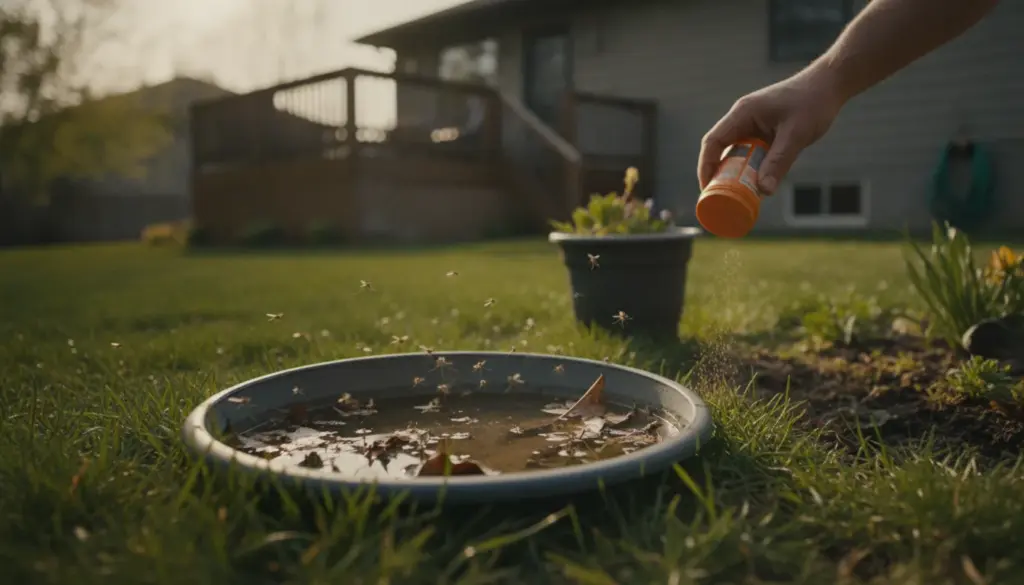
Unlike other species that prefer vast wetlands, ditches, or agricultural fields, these urban pests require barely any moisture to multiply. A minuscule layer of stagnant water inside a parasol base or a plant saucer is perfectly sufficient. This creates incredibly stealthy breeding zones:
- Drainage saucers sitting beneath potted plants.
- Old watering cans, buckets, and empty planters collecting rainwater.
- Children’s outdoor toys, like plastic dump trucks or sandbox molds.
- Folds and deep creases in weather tarps where moisture pools.
- Uncovered rain barrels and neglected ornamental ponds.
The exact moment when intervention makes the biggest impact
When it comes to pest control, timing is just as critical as the method itself. Pest management professionals emphasize keeping an eye on two environmental triggers: rising temperatures and consistent rainfall.
The most effective battle against biting insects happens behind the scenes: several weeks before you experience that first agonizing evening of constant swatting.
Making your outdoor space mosquito-proof in just ten minutes
The greatest advantage here is that you absolutely do not need harsh chemical sprays or complex extermination systems to drastically improve your situation. Committing to a brief weekly inspection makes an astonishing difference.
Step 1: Eliminate the water to restore the peace
Grab an empty bucket and take a quick stroll around your yard, patio, or balcony. Target anything capable of holding even a few drops of stagnant water:
- Manage plant saucers: Empty the standing water and fill the saucers with coarse sand. This allows the roots to absorb moisture while denying mosquitoes a liquid breeding pool.
- Secure the toys: Turn all playthings upside down so they can drain properly, or store them inside a shed after a storm.
- Check patio furniture: Drain the heavy bases of patio umbrellas and seal them tightly when not in active use.
- Invert empty containers: Store unused buckets, storage bins, and planters upside down or move them to a dry location.
- Tighten the tarps: Pull protective covers taut over furniture or firewood to eliminate sagging pockets where rain accumulates.
Water features require slightly more focused attention. Ensure all rain barrels are securely capped with a solid lid or a fine-mesh screen. For ornamental ponds, introducing specific fish species or applying targeted, biological mosquito treatments can safely reduce larval populations, provided you follow the manufacturer instructions carefully.
Step 2: Reassess after every heavy downpour
Executing one massive cleanup in March is a fantastic start, but it will not sustain you through the summer. Every time a heavy rainstorm rolls through, new miniature puddles inevitably form. Conducting a rapid weekly sweep between April and November keeps the local breeding sites strictly minimized.
Public health departments often recommend integrating this quick yard check into a regular weekly chore, much like hauling the trash bins to the curb. When multiple neighbors adopt this identical routine, the entire community experiences a dramatic drop in mosquito density.
Additional steps to minimize nuisance and health risks
Beyond ruthlessly eliminating stagnant water, several supplementary strategies can help keep your skin bite-free during the warmer months.
Smart protection and technical deterrents
- Carbon dioxide and heat traps: These specialized devices mimic human respiration and body heat to lure and capture searching females. Over time, they can genuinely suppress the local population, especially when deployed as a neighborhood initiative.
- Topical repellents: Lotions or aerosol sprays containing active ingredients like DEET, icaridin, or oil of lemon eucalyptus (citriodiol) are highly effective. They are perfect for humid vacation nights, though they only mask your scent rather than eliminating the source.
- Physical barriers: Installing high-quality window screens and using bed canopies remains a foundational defense. They are incredibly reliable for preventing midnight bites in bedrooms and nurseries.
- Strategic wardrobe choices: Wearing long sleeves and pants during dusk drastically reduces your exposed skin. Opting for light-colored, breathable fabrics keeps you comfortable while offering excellent coverage.
A quick warning from experts: Be highly skeptical of heavily marketed miracle cures like sonic repellent apps or infused silicone wristbands. Independent laboratory tests consistently prove that these gimmicks offer little to zero actual protection against bites.
Health risks: More than just an annoying itch
Beyond the frustrating skin irritation, serious public health factors are increasingly at play. Specific mosquito species are capable of transmitting dangerous viral infections traditionally confined to tropical zones. Pathogens like Dengue, Chikungunya, and the Zika virus are becoming global concerns.
In recent years, Southern Europe has recorded isolated local outbreaks after returning travelers inadvertently introduced a virus to the native insect population. While these specific diseases remain exceptionally rare in northern temperate regions, health authorities are closely monitoring the evolving situation. The math is simple: fewer mosquitoes lingering near residential homes equals a significantly lower statistical chance of any imported virus taking root. That simple ten-minute weekly yard sweep protects your backyard barbecues today and helps mitigate broader infection risks in the long run.
Why your yard and balcony make a massive difference
Because urban mosquitoes possess such a limited flight range, every single street and backyard functions as its own interconnected miniature ecosystem. Just a handful of neglected rain barrels or a hidden pile of junk collecting rainwater can unleash a miserable summer upon an entire block. Conversely, a street full of vigilant homeowners can practically eradicate the localized threat.
Consider this practical success story: neighborhoods that organize annual mosquito inspection days in the early spring consistently report vastly fewer complaints by August. Chatting over the fence with neighbors also helps spread awareness about hidden breeding zones no one considered, such as clogged roof gutters or cracked drainage pipes.
Investing just fifteen minutes during the first mild days of the year to dump out stagnant water and secure those rain barrels literally buys you peace for the entire summer. Striking at the exact right moment pulls the stinger out of the impending infestation long before the swarm ever takes flight.