The Truth Behind the Viral Bending Technique
A widely shared cooking tip floating around online promises to eliminate tough, fibrous asparagus ends in a single motion, completely bypassing the need for a chef’s knife. While this hands-free technique sounds like the ultimate time-saver, seasoned culinary professionals offer a word of caution. Relying solely on this viral method often sends perfectly tender, edible vegetable portions straight into the compost bin.
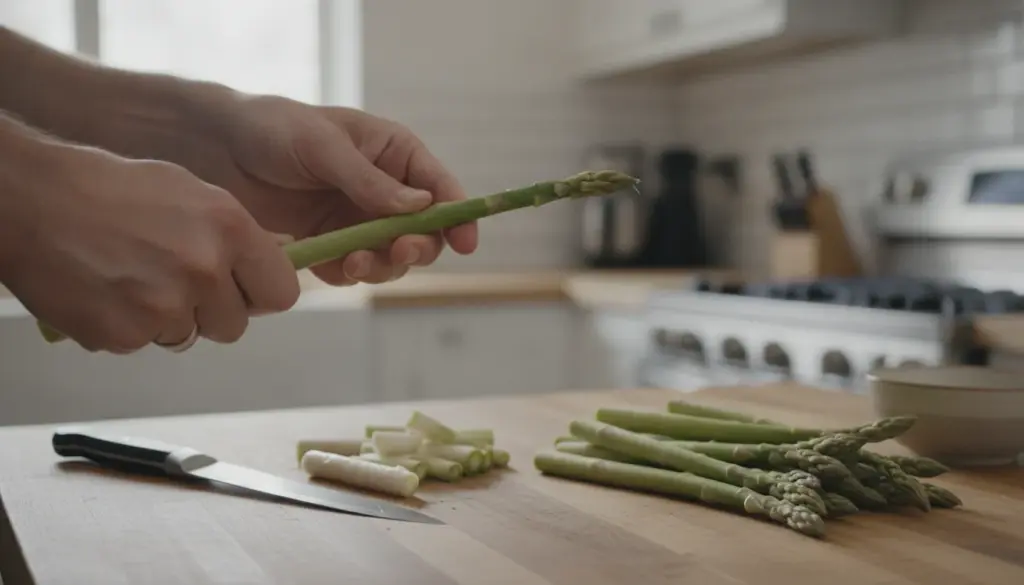
The entire concept revolves around a simple physical reaction. By grasping a spear with both hands and gently bending it, the stalk naturally gives way and fractures. Enthusiasts claim this break happens exactly where the succulent stem meets the woody base. For home cooks looking to avoid extra dirty dishes and cutting boards, this supposedly foolproof hack has become incredibly popular.
Why Snapping Often Leads to Food Waste
The theory makes logical sense, as the dehydrated, stiffer bottom section should crack before the pliable upper portion. However, practical kitchen tests reveal that the natural breaking point is rarely precise. Spears frequently snap much higher up the stem than necessary, costing you valuable bites of your meal.
The exact location of the break depends on several crucial variables:
- Overall freshness and harvest time
- Stalk thickness and natural diameter
- Bending pressure and hand placement
- Moisture levels within the vegetable
When handling incredibly fresh, robust spears, the fibrous zone is actually quite small. Yet, the stalk might still snap halfway up simply because the lower region lacks flexibility. As a general rule: the bending trick serves as a decent quick-check for texture, but fails miserably as a precise measuring tool.
Green vs. White Asparagus: A Crucial Distinction
When to Snap Green Asparagus
This hands-free approach yields the best results with green varieties. Because these stalks possess thinner skins and greater natural flexibility, you generally only need to discard a tiny fraction of the base. In fact, many experienced chefs skip peeling green spears entirely, reserving the peeler only for exceptionally thick jumbo stalks.
If you are rushing to prepare a large batch of green asparagus for the barbecue or roasting pan, snapping them by hand remains a highly effective, time-saving shortcut.
Why White Asparagus Demands a Knife
White varieties require an entirely different preparation strategy. The primary issue isn’t just the woody base, but rather the intensely fibrous outer skin encasing the entire stalk. If left intact, this exterior remains incredibly chewy and unpalatable. Simply snapping the end off does absolutely nothing to solve this textural problem.
Professional kitchens typically follow a strict protocol for white spears:
- Trim the base: Slice off the bottom half-inch to an inch straight across.
- Peel thoroughly: Strip away the outer layer starting just below the delicate tip all the way down to the base.
- Adjust for age: Older, massive stalks require more generous trimming at the root end.
Attempting the snap trick here is counterproductive. You will merely end up with a shorter stalk that still contains unpleasant, stringy fibers throughout its length.
How to Master the Hybrid Trimming Method
You don’t have to abandon the satisfying snapping trick completely. Culinary experts often recommend a hybrid approach that maximizes speed while minimizing unnecessary waste.
The professional compromise: Deliberately snap just one single stalk to identify the general location of the woody boundary. Once you have that visual reference, line up the remaining bunch on your cutting board and slice them all simultaneously with a sharp knife at that exact length.
Spotting Premium Asparagus at the Grocery Store
The best way to avoid trimming away half your produce is to buy exceptionally fresh bundles. High moisture content translates directly to less woody material. When browsing the produce section, look for these quality indicators:
- Firm posture: Stalks should stand tall and feel springy, never limp or rubbery.
- Tight crowns: The delicate top tips must remain completely closed, avoiding any frayed or flowering appearance.
- Flawless exterior: The skin should appear smooth and vibrant, free from deep wrinkles or shriveled patches.
- Hydrated bases: Check the cut ends—they should look slightly damp rather than browned or cork-like.
The squeak test: Gently rub two raw spears against one another. Premium, newly harvested bundles will produce a distinct, subtle squeaking sound. If they remain completely silent and yield to the touch, the bases have likely already begun turning to wood.
Expert Storage Hacks for Maximum Tenderness
Even the most pristine farmers market bundle will degrade rapidly if tossed carelessly into the crisper drawer. To halt the dehydration process, employ one of these proven preservation methods:
The Hydration Wrap
Loosely bundle the stalks inside a damp kitchen towel or moistened heavy-duty paper towel. Place this wrapped bundle inside an unsealed plastic bag before refrigerating. This creates a humid microclimate that prevents premature drying.
The Floral Arrangement Method
Treat your vegetable bundle exactly like fresh-cut flowers. Trim a tiny fraction off the absolute bottom, then stand the spears upright in a heavy glass containing an inch of cold water. Drape a lightweight plastic bag loosely over the fragile tips to lock in ambient moisture.
For the best culinary experience, consume your purchase within 48 to 72 hours. Extended refrigeration inevitably leads to tougher bases, tempting you to cut away larger portions.
Brilliant Uses for Tough Asparagus Scraps
If looking at a pile of discarded ends breaks your heart, rest assured they still hold immense culinary value. While too fibrous to chew, these scraps are packed with intense, earthy flavor. Try these zero-waste ideas:
- Vegetable stock: Simmer the woody ends with onions and celery for a vibrant base perfect for spring risottos.
- Flavor infusion: Toss the tough bases into the boiling water used to blanch your edible spears, naturally amplifying the overall asparagus flavor before straining them out.
- Sauce foundations: Steep the scraps in heavy cream or broth intended for sauces, removing the solid pieces right before serving.
These exact same techniques apply to the tough peelings removed from white asparagus, guaranteeing every ounce of flavor is extracted.
Perfecting Your Cooking Technique
Flawless preparation can still be ruined by poor cooking methods. To guarantee tender results every single time, implement these foundational kitchen rules:
Uniformity is key: Always trim your batch to identical lengths so they finish cooking at the exact same moment. Keep in mind that pale varieties generally require a slightly longer cooking time than their green counterparts; always test for doneness by piercing the thickest part with a paring knife.
Moisture management: When boiling or steaming, always transfer the finished vegetables to a clean towel for a few seconds. This prevents residual cooking water from diluting your sauces or creating a soggy plate.
Ultimately, the enduring popularity of the snapping hack speaks to modern cooking preferences: fast, tool-free, and slightly theatrical. But by combining basic ingredient knowledge with proper knife skills, you can ensure that not a single spear falls victim to poor preparation.