A Strategic Facility on the Atlantic Coast
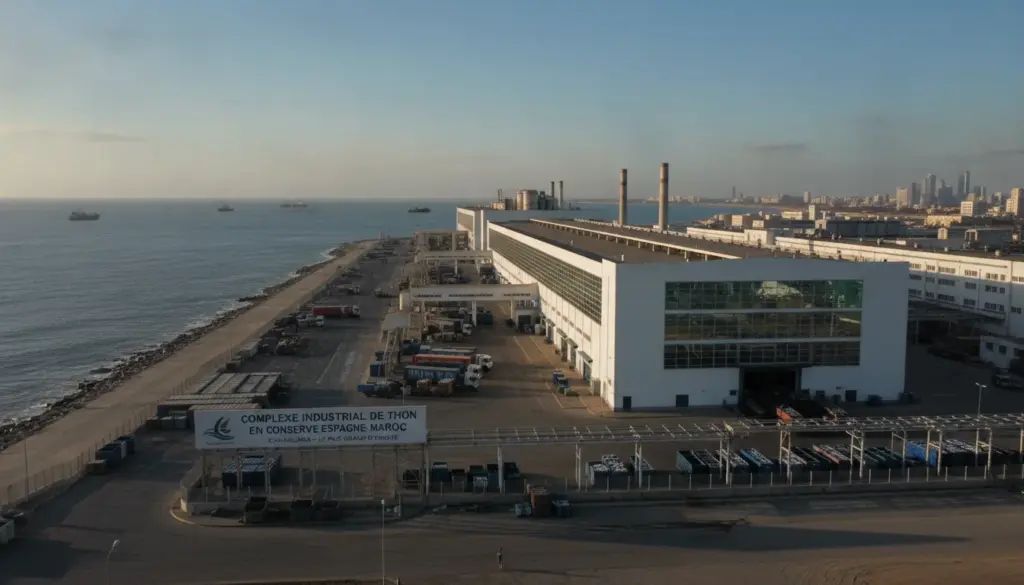
A new industrial powerhouse is emerging in the port city of Casablanca, potentially shaking up the global tuna trade. Commissioned by a Moroccan group, a Spanish engineering firm has constructed a state-of-the-art facility that handles everything from raw fish to finished canned goods. This massive project aligns perfectly with Morocco’s strategic goal to process catches locally, retaining maximum economic value within its borders.
Casablanca is now home to Morocco’s largest tuna processing and canning installation. Designed and built by the Spanish company Gaictech for the Moroccan Tunamax group, this massive site focuses heavily on large-scale industrial output. The facility seamlessly transforms fresh and frozen tuna into export-ready cans and an array of processed goods.
The plant smartly targets two distinct markets simultaneously. It produces traditional staples, like tuna packed in oil or water, alongside higher-value items such as ready-to-eat salads, convenient pouches, and specialized food industry ingredients. By diversifying its output, Tunamax is strategically positioning itself to compete directly with dominant Asian and European industry giants.
Every step of the process—from sourcing, cooking, and cleaning to canning, sterilizing, and packaging—runs on a fully automated continuous line. Crucially, the entire operation is strictly aligned with rigorous European and North American safety standards.
Automation, Speed, and Waste Reduction
Cutting-edge technology sits at the very heart of this facility. Gaictech provided a comprehensive turnkey solution, delivering not just the physical machinery but also handling the complete integration, production line design, and system launch.
This intense level of automation is designed to achieve three primary goals:
- Processing massive tuna volumes at high speeds
- Significantly reducing processing and cutting waste
- Ensuring precise batch traceability from arrival to the final retail product
Traceability is particularly crucial for today’s market. North American and European buyers demand meticulous records of every single manufacturing step. This includes tracking the exact origin of the fish, monitoring cooking times and temperatures, logging hygiene checks, and recording precise packaging dates. By managing all this data digitally, retailers can quickly identify potential issues and execute highly targeted product recalls if ever necessary.
From Raw Catch to the Supermarket Shelf
The new factory seamlessly integrates every manufacturing phase into a single, cohesive chain. By housing the entire production lifecycle under one massive roof, the company drastically reduces the need to transport half-finished goods between different locations.
This integrated approach yields major benefits. It significantly cuts down on overall costs, saves valuable time, and lowers transportation emissions. Ultimately, keeping everything in one centralized hub makes the entire manufacturing process much easier to control and monitor.
Morocco’s Push Beyond Basic Fishing
Historically, the regional tuna industry was heavily focused solely on the initial catch. Massive quantities of raw fish were shipped off to Asia or Europe for further processing. Consequently, the real added value—fueled by labor, logistics, and technology—was generated entirely outside of Morocco.
This Casablanca facility is actively trying to break that outdated economic model. Essential processing steps like cooking, cleaning, sterilizing, and canning are now handled locally. This shift not only generates valuable new jobs but also ensures a much larger profit margin remains within the local economy.
The ultimate goal is to transform Morocco into a comprehensive food industry hub, rather than remaining a mere supplier of raw seafood. Production is primarily geared toward the export market. A substantial portion of the output will head to European retail brands and North American supermarket chains. To secure steady volumes and predictable pricing, Tunamax is establishing long-term contracts with major international distribution networks.
Ripple Effects on the Regional Economy
The massive financial investment extends far beyond the factory walls. A vibrant network of supporting businesses is rapidly developing around the site to meet the surging demand for auxiliary services. Local enterprises are stepping up to provide:
- Civil construction and ongoing maintenance
- Industrial automation and IT connectivity
- Maritime and road transport logistics
- Labels and specialized packaging materials
- Professional cleaning and technical support
Project leaders estimate the facility will generate hundreds of direct jobs, ranging from quality control inspectors to line operators and logistics coordinators. Furthermore, the indirect employment impact will be massive, stimulating growth for cold storage warehouses, transport firms, packaging suppliers, and port services.
Spanish Technology Gaining Global Ground
For Gaictech, this Moroccan mega-factory serves as a prime showcase project. The firm specializes in food processing installations, focusing heavily on all-in-one turnkey solutions that combine consulting, design, construction, and activation. These types of comprehensive projects are becoming increasingly popular in emerging markets where local groups and governments are eager to modernize their industrial capabilities.
This specific tuna plant highlights how Spanish engineering is successfully positioning itself as a viable alternative to Northern European and Asian equipment suppliers. From a geopolitical standpoint, the project is highly beneficial for Spain, as it deepens vital economic ties with Morocco across the Strait of Gibraltar.
Meanwhile, Tunamax is leveraging this technological leap to establish itself as a dominant force across the Mediterranean and Africa. They are competing not just on sheer volume, but by maintaining exceptional quality standards that rival those of Italy or Spain—the traditional heavyweights of the canned tuna world.
Shifting the Balance with Asia and Europe
Currently, the global tuna market is dominated by massive production clusters in countries like Italy, Spain, the Philippines, and Thailand. While Morocco has long enjoyed prime access to Mediterranean and Atlantic fishing grounds, its processing capabilities have traditionally lagged behind.
With the launch of this advanced factory, Morocco is fiercely pulling a significant chunk of the value chain back to its own shores. Companies choosing to process their tuna in Morocco can completely eliminate the heavy costs of shipping raw fish overseas. They benefit from highly competitive labor rates while still utilizing technology that strictly adheres to complex US and EU regulations.
By pairing strict quality control with localized processing, Morocco aims to prove that an African manufacturing base requires zero compromises for premium European supermarket chains.
Navigating Food Safety and Sustainability Risks
When it comes to canned seafood, impeccable food safety is non-negotiable. Even minor errors in sterilization, hygiene, or temperature control can result in severe health hazards like botulism. To mitigate these threats, modern factories invest heavily in digital monitoring systems, sensitive environmental sensors, and rigid safety protocols.
Ecological concerns present another significant challenge. Expanding processing capacity could put dangerous pressure on global tuna populations without the enforcement of strict catch quotas. A major lingering question is whether international agreements and fishing management can keep pace with this surging industrial demand. To legally export to the EU, companies must definitively prove their fish was caught according to established maritime regulations.
Additionally, relying too heavily on a single export product carries inherent economic risks. If a region becomes hyper-focused on one commodity, it becomes vulnerable to trade disputes, sudden price drops, or shifting consumer habits. Should major retailers pivot to alternative sourcing countries, the local job market could suffer immediate consequences.
What Does This Mean for the Everyday Consumer?
In the short term, everyday shoppers browsing the canned goods aisle likely won’t notice immediate changes. Canned tuna will remain a highly convenient, budget-friendly pantry staple. However, the origin labels printed on the back of the tins might gradually begin to shift. While shoppers currently see Asian countries, Italy, or Spain listed, Morocco will soon become a much more common sight.
For eco-conscious consumers, it remains crucial to carefully inspect packaging details. Shoppers should actively look for:
- The specific catch area and the exact scientific name of the fish
- Verified sustainability and clear traceability certifications
- Explicit information regarding the processing country
A massive, digitized facility like the one in Casablanca is perfectly equipped to process MSC-certified tuna on isolated, fully tracked production lines. If major supermarkets actively prioritize these sustainable options, it could organically force less responsible fisheries to improve their practices.
Future Scenarios for the Tuna Supply Chain
Imagine a future where consumer demand for processed tuna continues to climb over the next decade, just as international bodies heavily restrict wild catch quotas. Under those circumstances, highly efficient factories that minimize waste while maximizing quality will become incredibly valuable. These advanced plants can extract maximum value from every single catch, repurposing by-products into valuable fish oils, animal feed, or fishmeal.
Alternatively, the market might experience a massive shift toward industrially scaled farmed tuna or plant-based seafood alternatives. Even in this scenario, the formidable logistics and infrastructure established in Casablanca would remain highly relevant. With minor mechanical adjustments, these advanced production lines could easily process and package completely different protein sources, ensuring the massive investment remains profitable regardless of wild tuna availability.