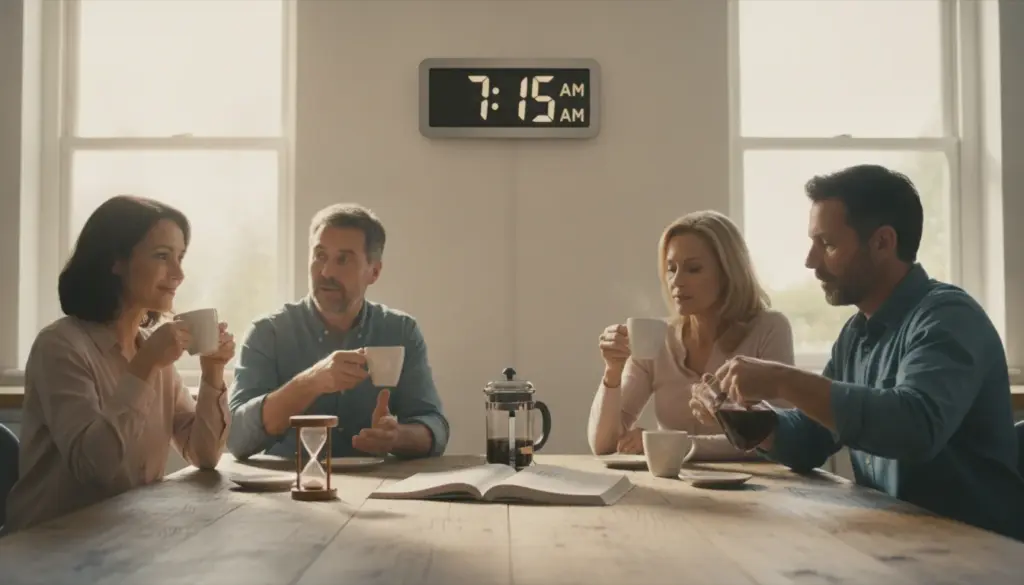
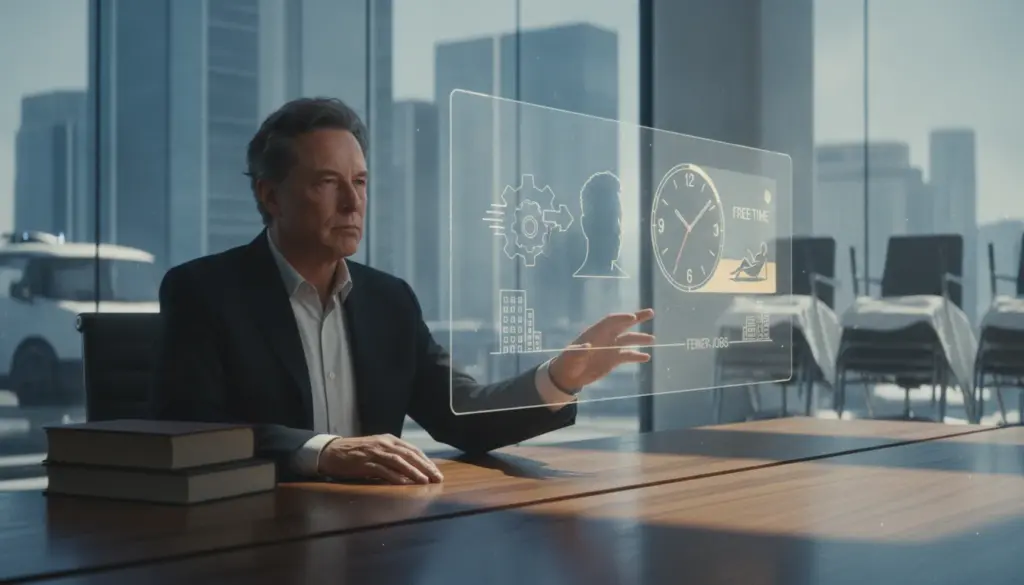
Physicist Giorgio Parisi shares a vision that tech giants Elon Musk and Bill Gates have popularized, though his outlook is a compelling mix of optimism and profound unease. Artificial intelligence is poised to shoulder a massive chunk of our daily workload, granting future generations an unprecedented amount of leisure hours. However, this massive societal shift means standard 9-to-5 occupations will become incredibly scarce.
Why a Nobel Laureate Sees the Office Fading Away
Awarded a Nobel Prize for his groundbreaking research on complex systems, Parisi does not dabble in baseless sci-fi fantasies. This deep analytical background is exactly why tech billionaires and global policymakers pay close attention to his robotic and AI forecasts. He observes the exact same economic trend as Gates and Musk: the traditional employment blueprint is rapidly approaching its expiration date.
His rationale is incredibly grounded. Algorithms are currently writing software, processing complex insurance claims, analyzing medical scans, drafting legal documents, and directing warehouse machinery. Anything that relies on predictable, repeatable rules is slowly being handed over to artificial intelligence.
Parisi cautions that as AI steps in to replace human labor, society must urgently rethink how we distribute wealth, purpose, and our newfound time. This mirrors Musk’s push for a “universal high income” to combat vanishing roles, as well as Gates’s suggestion to tax automated systems to keep our social safety nets fully funded.
Driving More Output With Fewer Employees
We are already witnessing this structural shift across various modern industries. Software development teams are steadily shrinking, yet their code output continues to multiply. Insurance companies process complex client files much faster without hiring extra personnel, while fulfillment centers rely on tireless robotics that never require sick leave or paid vacations.
The underlying economic logic is brutally straightforward. If a corporate entity can achieve higher productivity with a significantly smaller workforce, it absolutely will. While this makes perfect sense for shareholders, it signals a harsh reality for everyday workers: stable careers featuring predictable promotions and solid pensions are no longer a guarantee.
We are steadily drifting toward an economic landscape where a tiny fraction of society designs the automated systems, leaving smart machines to handle the vast majority of execution.
Abundant Leisure Sounds Great—Until the Reorganization Email Arrives
Musk and Gates frequently frame this automated future as a glorious liberation. With machines handling the mundane chores, humanity can fully pivot toward caregiving, entrepreneurship, arts, and creative pursuits. While Parisi’s language is a bit more restrained, his ultimate horizon looks remarkably similar.
Yet, there is a distinct and sharp edge to this utopian vision. Extra leisure only feels like a luxury when your financial stability and basic income remain fully intact. Leaving the office early on a Friday is a treat. Facing an entire year without a paycheck or career prospects is downright terrifying.
Abundant free time without a solid social safety net isn’t freedom; it’s just delayed panic.
Parisi clearly distinguishes between two vastly different realities:
- Leisure backed by financial security, giving you a clear sense of purpose.
- Empty hours plagued by a lack of security, leading to crushing anxiety and status loss.
In that second reality, having nothing to do quickly becomes an enormous burden. Anyone who has ever experienced unexpected unemployment knows this cycle well. The initial days feel like a sudden holiday, but that sensation is quickly replaced by intense guilt and the quiet dread of scrolling through endless job boards.
Transitioning From Job Security to Time Security
To navigate this technological wave, Parisi argues that society needs a massive political and psychological reset. We must stop obsessing over simply “having a job” and start focusing on securing access to stable income, meaningful activities, and free time itself. Time must be viewed as a fundamental public resource.
This paradigm shift raises three monumental questions for the future:
- How will we distribute the massive financial gains of automation once traditional salaries are no longer the primary wealth distributor?
- How can we foster social connection, status, and personal meaning when the traditional workplace disappears?
- How do we prevent a scenario where fulfilling leisure is hoarded by a wealthy creative elite, while the masses languish in precarious, boring gig work?
Actionable Ideas: From Basic Income to Urban Test Labs
Parisi strongly prefers actionable solutions over abstract theories. He actively advocates for testing guaranteed income models right now, long before mass job displacement hits critical mass. These shouldn’t be treated as emergency panic buttons, but rather as controlled societal laboratories.
Using Cities as Reality Checks
Local municipalities and regional governments could provide a guaranteed monthly stipend to workers in highly vulnerable sectors—such as logistics, administration, and call centers. This financial support would ideally be linked to specific community conditions:
- Aggressive retraining for roles that complement, rather than compete with, artificial intelligence.
- Vital community volunteering in education, neighborhood projects, or caregiving.
- Pursuing scientific and cultural endeavors that lack an immediate commercial business model.
These urban test runs would reveal exactly how people structure their days when the relentless pressure to bill hours disappears, yet the human need for routine remains. Authorities could finally discover the perfect recipe of financial backing, community spaces, and personal guidance. The bottom line is that managing abundant free time requires just as much deliberate organization as a standard workday. The only difference is that control shifts from corporate employers back to citizens and local communities.
Investing in Non-Market Value
Parisi passionately campaigns for drastically increasing budgets allocated to what he terms “non-market value.” These are absolutely essential societal activities that currently offer terrible pay or zero direct commercial profit.
Prime examples of this crucial work include:
- Neighborhood support and elderly care.
- Local journalism, grassroots arts, and cultural initiatives.
- Foundational scientific research without a quick monetization angle.
- Adult continuing education and late-stage upskilling.
- Grassroots civic projects focused on climate, energy, and urban livability.
In a future economy stripped of conventional employment, these specific domains will become the new foundations for our daily rhythm and personal identity. To make this a reality, we desperately need dedicated physical infrastructure. Neighborhood hubs, creative maker spaces, community laboratories, and public studios will become the essential arenas where individuals without a standard paycheck can still play a pivotal societal role.
What This Means for You: Stop Competing With the Algorithm
For everyday professionals navigating this landscape, the pressing question shouldn’t be whether artificial intelligence will steal your specific job. Instead, you need to analyze which parts of your daily routine are easily programmable.
Parisi’s advice is incredibly straightforward: do not try to out-calculate an advanced algorithm. You must pivot toward the specific traits that machines struggle to replicate. Focus your energy entirely on deep human empathy, nuanced ethical judgments, highly varied physical labor, community building, and weaving together insights from wildly different disciplines.
Machines are unparalleled at delivering raw efficiency; human beings alone provide crucial context, shared values, and unexpected creative connections.
A Personal Action Plan for the Post-Office Era
You can take a few pragmatic steps today that align perfectly with the concerns raised by Gates, Musk, and Parisi:
- Map your routine: Clearly highlight everything in your daily tasks that software could theoretically handle.
- Pivot your skills: Select one deeply human skill—such as complex client relations, specialized craftsmanship, or interdisciplinary strategy—and aggressively invest your energy there.
- Expand your identity: Seek out at least one meaningful role completely detached from your main career, whether that means becoming a mentor, artist, organizer, or volunteer caregiver.
- Test your leisure: Schedule one strictly “useless” afternoon each week dedicated purely to reading, experimenting, or creating, with absolutely no productivity goals attached.
- Leverage resources: Actively research local training budgets, sector funds, and civic projects, as incredible community resources often go completely unnoticed.
Visualizing a Society Built on Abundant Time
If the forecasts of these tech pioneers and the Nobel laureate actually come true, the standard life trajectory—studying until twenty-five, working until sixty-seven, and then retiring—will completely disintegrate.
Instead, we might experience lifetimes broken into fluid blocks. You could work intensely for a few years, transition into a phase dedicated to studying or family care, launch into a specific passion project, and follow it up with a block of civic service. Your financial survival would stem from a complex combination of part-time labor, collective social safety nets, and the immense capital generated by global robotics.
Urban centers will become the vital beating heart of this new reality. Standard public libraries will evolve into high-tech learning hubs equipped with AI labs and advanced 3D printers. Local community centers will transform into bustling intersections for health care, cultural expression, and small-scale production. Online networks will likely resurrect a modern guild system focused on neighborhood welfare, data ethics, sustainable construction, and public arts.
Embracing New Tensions and Extraordinary Opportunities
Naturally, a society built entirely differently carries intense risks. An abundance of free hours could easily spiral into widespread digital numbness and severe political unrest if large swaths of the population feel economically discarded. It could also drastically deepen the terrifying wealth gap between those who own automated capital and those who do not.
Yet, an extraordinary opportunity hides deep within these risks: humanity could finally transition from merely surviving to actively contributing. Once automated machinery handles all basic global production, we will finally have the boundless energy required to elevate our relationships, local projects, scientific discoveries, and educational systems. This wouldn’t just be a weekend hobby squeezed alongside a grueling forty-hour workweek, but the very core of our social fabric.
Making this incredible leap requires a profound psychological evolution. We must stop asking people what they do for a living, and instead ask what they are currently contributing their time and attention toward. Within that simple shift in conversation lies the exact future where Parisi, Gates, and Musk unexpectedly align: a world where traditional careers fade away, but thoughtfully utilized free time becomes our most valuable currency.