
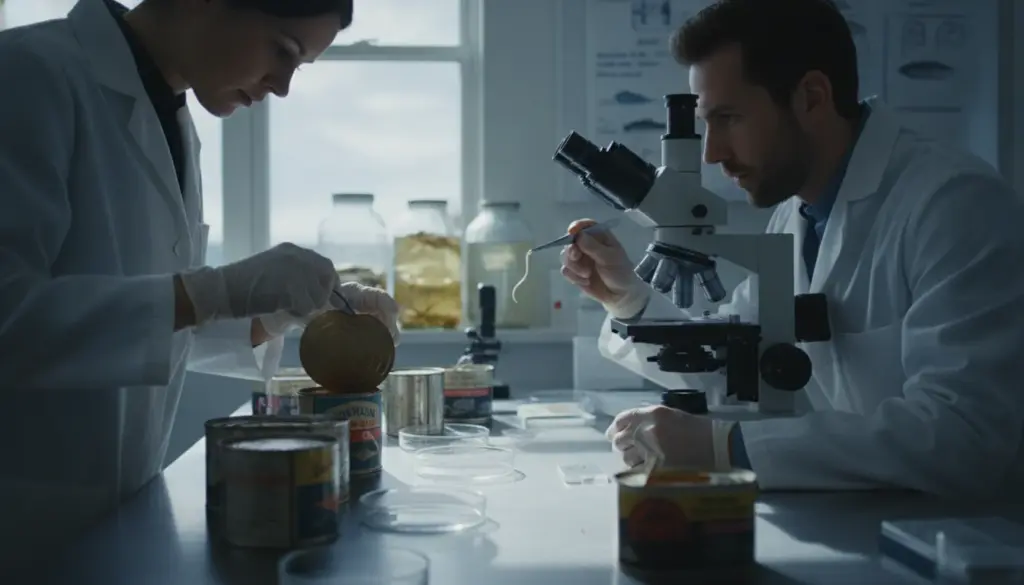
Cracking open decades-old seafood doesn’t sound appetizing, but marine biologists recently did exactly that for a fascinating reason. By examining over 170 cans of preserved salmon dating from 1979 to 2021, they embarked on an unusual scientific mission. The goal wasn’t a vintage taste test, but rather an attempt to decode historical marine conditions. What they uncovered inside these dusty tins revealed an unexpectedly optimistic outlook for the North Pacific ecosystem.
Unexpected Indicators in Vintage Tins
Inside the preserved fish, specialists discovered tiny marine roundworms known as anisakids. While the intense canning process successfully neutralized these parasites, their physical structures remained perfectly intact. For parasitologists analyzing the samples, this microscopic preservation provided an absolute treasure trove of ecological data.
Most consumers would likely be horrified by the thought of worms in their dinner, yet the scientific community views this entirely differently. The presence of these specific organisms actually points toward a highly robust oceanic food web. Because these creatures require a thriving environment to complete their complex biological journey, finding them is a brilliant sign of environmental health.
Ultimately, discovering these microscopic passengers in vintage pantry staples doesn’t indicate a safety hazard, but rather highlights a surprisingly resilient marine habitat.
The Fascinating Journey of Marine Roundworms
To understand why this matters, you have to look at the intricate life stages of these microscopic organisms. They rely on multiple healthy hosts to survive:
- Initial larvae are consumed by tiny crustaceans, such as krill.
- Foraging fish, including salmon, eat the infected krill and absorb the organisms.
- Apex predators like seals and whales eventually consume the fish.
- The parasites finally complete their development inside the digestive tracts of these massive marine mammals.
Should any single link in this predatory chain collapse, the entire biological cycle halts completely. The fact that specialists consistently identified these organisms across four decades of samples strongly suggests that the predator-prey network in the North Pacific has remained incredibly stable and functional.
A Surprising Upward Trend Over Four Decades
While analyzing the chronological data, analysts noticed a rather striking pattern. The more recent tins contained a significantly higher concentration of roundworms compared to the older batches. In fact, the biological count steadily climbed from the late 1970s right up through 2020.
Ecologists suggest several complex factors could be driving this steady increase:
- The successful rebound of marine mammal populations following stricter conservation laws.
- Shifting oceanic temperatures tied to broader climate fluctuations.
- Natural variations in the abundance of krill and similar foundational prey.
- Localized improvements in water quality and reduced aquatic pollution.
Experts caution against oversimplifying this dynamic as a basic equation where higher parasite counts automatically equal a pristine environment. However, this fascinating data firmly proves that despite heavy pollution, rising temperatures, and commercial overfishing, certain oceanic food webs have maintained remarkable ecological resilience.
Transforming Pantry Staples into Time Capsules
Everyday supermarket goods meant for the kitchen cupboard have suddenly transformed into vital scientific archives. The extreme thermal processing used in commercial factories effectively freezes biological structures in place, keeping microscopic details entirely visible generations later. Consequently, each sealed tin serves as a perfect, undisturbed snapshot of a historical habitat.
This revelation effectively unlocks a completely novel avenue for marine biology. Private collections, forgotten corporate inventories, and museum archives might hold previously inaccessible data regarding our historical waters. Each specific batch of commercial seafood provides a distinct, localized cross-section of the food chain at that exact moment in history.
By blending this unique archival strategy with modern monitoring techniques, environmental scientists can build a vastly richer understanding of aquatic fluctuations. It helps pinpoint exactly how quickly habitats degrade, or conversely, how rapidly they manage to bounce back.
Is Vintage Seafood Actually Safe?
Naturally, nobody should attempt to serve a forty-year-old fillet for dinner. However, this rigorous analysis proves that commercial preserves can technically remain viable for astonishingly long periods, provided the metal exterior stays completely undamaged and the initial factory protocols were flawless.
Industrial canning requires extreme heat and immense pressure. This aggressive sterilization eradicates harmful pathogens while meticulously preserving structural proteins. For everyday shoppers, this guarantees a deeply secure meal. For analytical researchers, it ensures that microscopic remnants stay perfectly identifiable for future study.
When Do Aquatic Organisms Pose a Threat?
Consuming a neutralized organism inside a properly sterilized tin presents absolutely zero health risk. However, encountering living specimens in raw or undercooked dishes is an entirely different story. Active anisakids can trigger severe gastrointestinal distress and intense allergic reactions, with symptoms mimicking harsh food poisoning.
To maintain strict kitchen safety, culinary experts strongly advise following these essential preparation guidelines:
- Always cook fresh catches to a minimum internal temperature of 60 degrees Celsius for at least one full minute.
- Thoroughly deep-freeze any ingredients intended for sushi or ceviche for several days prior to consumption.
- Exclusively purchase preserved goods from highly reputable brands with strict quality control standards.
- Immediately discard any dented or compromised tins into the trash bin—never serve them.
Ironically, the exact same commercial sterilization that protects dinner plates today is what allowed specialists to rediscover these organisms decades after they were packaged.
Decoding Our Environmental Future
The intricate data extracted from these vintage tins adds critical depth to ongoing debates regarding oceanic conservation. For decades, environmentalists have sounded alarms regarding microplastics, chemical runoff, and severe overharvesting. Concurrently, global authorities have established protected marine zones and banned destructive hunting practices.
By contrasting the microscopic contents of distinct chronological batches, specialists can accurately gauge how swiftly specific zones recover from human interference. It highlights which protective measures are genuinely working, while exposing regions where ecological stress continues to mount.
Looking ahead, applying this identical methodology to archived sardines, tuna, and other commercial catches will eventually create a massive, interwoven timeline of global aquatic health. This wealth of data will drastically improve predictive models for global warming and biodiversity loss.
For the average shopper, this fascinating journey offers a unique perspective: expiration dates merely indicate culinary quality, not biological value. What society views as expired waste can easily serve as priceless scientific gold. Ultimately, discovering seemingly unpleasant organisms in a vintage tin doesn’t signal an ecological disaster—it proves that our oceans were once bursting with complex life, and parts of that resilient system are still thriving today.