The Spring Baby Boom: High Stress for Local Wildlife
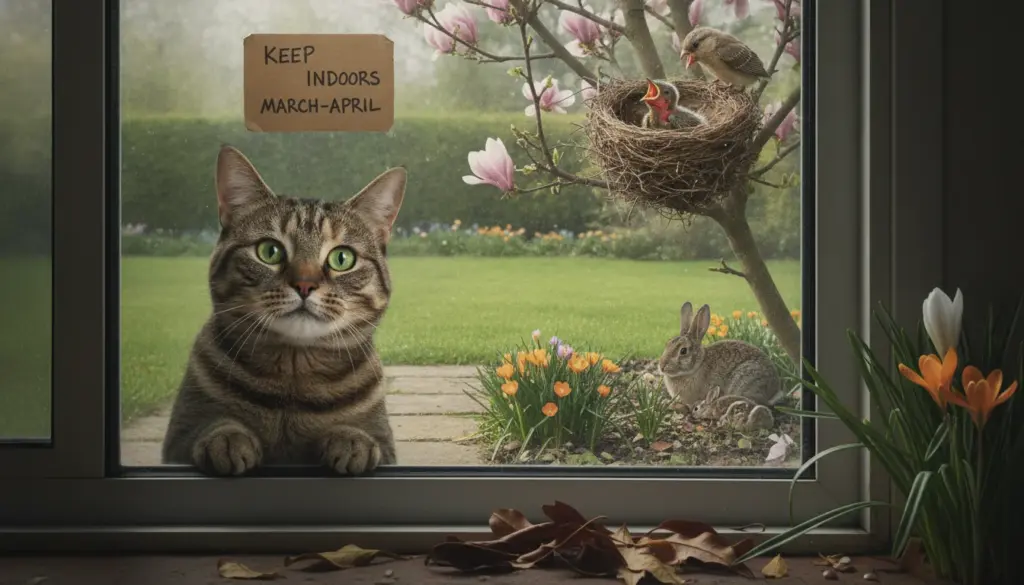
As the early spring weather arrives, veterinary professionals are issuing a familiar warning regarding outdoor felines. During March and April, the breeding season kicks into high gear, transforming ordinary backyards into highly vulnerable nurseries. Because of this delicate ecological shift, animal health experts strongly urge pet owners to keep their cats indoors temporarily, no matter how persuasively they beg at the back door.
Between March and April, countless species of birds and small mammals begin their reproductive cycles. Familiar backyard visitors like robins, wrens, blackbirds, and tits construct hidden nests inside hedges, thick shrubs, and occasionally even balcony planters. These nesting sites are soon filled with fragile eggs or newly hatched fledglings that lack the ability to fly away from danger.
For a domestic feline, these young animals offer an irresistible mix of fluttering movement and high-pitched sounds. A rustling branch, a faint chirp, or a clumsily hopping fledgling instantly activates a deeply ingrained predatory drive. This hunting instinct takes over completely, regardless of whether your pet receives a full bowl of premium kibble every single morning.
Felines hunt because their brains automatically switch into predatory mode the second they detect tiny, erratic movements, not necessarily because they feel hungry. Ecological tracking reveals a troubling pattern across agricultural and rural zones, showing a decades-long decline in numerous bird species. While habitat destruction, chemical pesticides, and road traffic are primary drivers, the added pressure from free-roaming domestic predators significantly worsens the situation. Keeping cats inside during these crucial breeding weeks helps ease that ecological burden. While a single pet might seem inconsequential, a typical suburban neighborhood often hosts dozens of roaming felines that can collectively devastate local nests.
Understanding the Unbreakable Feline Hunting Instinct
Many pet owners assume their furry companions are harmless because they rarely bring “gifts” back to the porch. However, this assumption drastically underestimates their actual outdoor behavior, as many successful catches are simply left behind in the brush.
Domesticated cats are descended from solitary hunters, and their physical anatomy remains perfectly fine-tuned for stealthy ambushes. With their razor-sharp retractable claws, highly flexible spines, exceptional night vision, and ears tuned to the faintest rustle, they are apex micro-predators. Living comfortably in a modern home does absolutely nothing to erase these evolutionary traits.
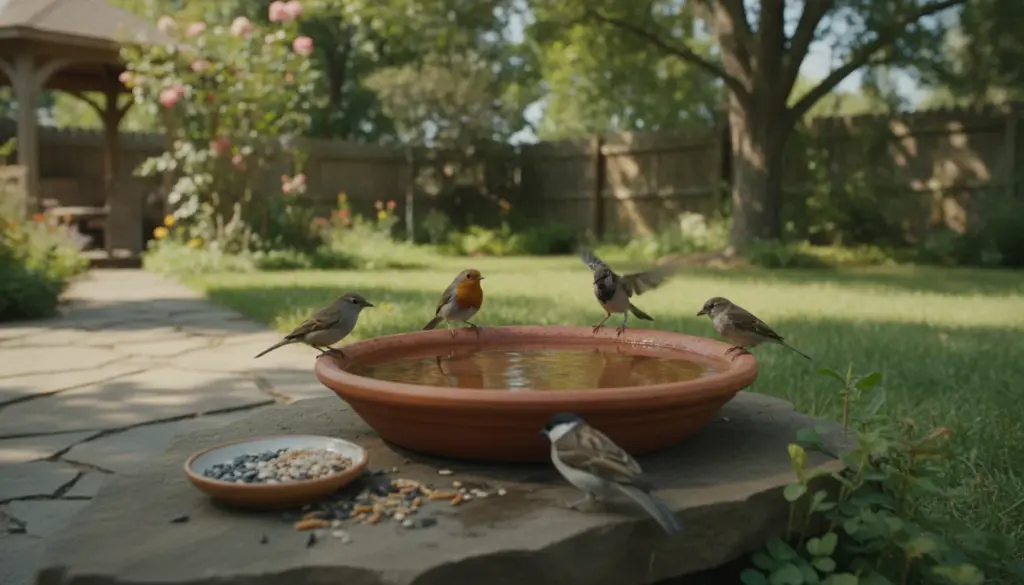
Even the most relaxed, seemingly lazy housecat can instantly transform into an intense predator once they step outside. A typical garden acts as an interactive hunting ground where every shifting leaf represents a potential target. Seed dispensers, suet balls, and ground-level bird baths draw wildlife down to the exact zones where felines prefer to patrol.
- Concentrated feeding stations gather potential prey into small, highly targeted areas.
- Dense garden shrubs provide the ultimate strategic cover for a stalking predator.
- Fledglings and weakened animals possess slower reaction times, making them incredibly easy targets.
- A single roaming feline has the capacity to injure or kill dozens of small animals in just one season.
Furthermore, even if a small bird manages to escape an initial pounce, the shock and minor injuries often lead to fatal consequences shortly after. While owners rarely witness this hidden aftermath, it creates a significant ecological ripple effect.
Springtime Hazards for Outdoor Cats
Restricting outdoor access during the early spring months isn’t exclusively about protecting neighborhood wildlife. The shifting season also introduces a surge of environmental dangers for the cats themselves. As the weather warms up, neighborhoods become much busier with increased vehicle traffic, aggressive landscaping projects, and more people spending time outdoors.
Consequently, veterinary clinics experience a massive spike in trauma cases during this specific time of year. Medical professionals frequently treat felines for painful bite abscesses from territorial disputes, severe eye scratches, and complex bone fractures resulting from vehicular accidents. Keeping your companion safely indoors for a few extra weeks can prevent immense physical suffering and save owners from unexpectedly steep medical bills.
How to Keep an Indoor Cat Mentally Stimulated
A common worry among pet parents is that their cat will become deeply depressed without their daily garden patrol. Fortunately, this rarely happens if you intentionally provide enough mental and physical enrichment indoors. The secret to a contented indoor feline lies in daily variety, interactive play, and a little bit of environmental creativity.
Transforming your living space into an engaging feline playground is remarkably simple:
- Set up a tall scratching post or multi-level cat tree directly next to a window, providing excellent vertical territory and visual stimulation.
- Utilize interactive wand toys and crinkle balls to simulate high-energy, short-burst hunting sequences.
- Hide daily kibble rations inside puzzle feeders or treat-dispensing toys, forcing them to use their brains to earn their meals.
- Leave out empty cardboard boxes, paper delivery bags, and fabric tunnels to serve as exciting ambush hideouts.
Felines do not require exhausting, hour-long exercise routines. Simply engaging them in multiple short play bursts lasting five to ten minutes each will drastically improve their overall mood and behavior.
Managing the Transition from Outdoor to Indoor
Animals accustomed to free-roaming privileges might initially express their frustration by vocalizing loudly, pacing anxiously, or scratching at exterior doors. To make this seasonal lifestyle shift much smoother, consistency is incredibly important.
- Begin gradually reducing their outdoor hours a week or two before the peak breeding season begins.
- Schedule your most intense interactive play sessions right around the time they usually demand to go outside.
- Consider introducing a comfortable harness for closely supervised, short exploratory walks in the backyard.
- Establish incredibly strict daily feeding times to create a strong, comforting sense of routine.
Ultimately, the more predictable a cat’s daily schedule becomes, the faster they will peacefully accept the new temporary household boundaries.
Finding a Practical Balance Between Pets and Wildlife
Balancing a deep love for your feline companion with a desire to protect local wildlife can feel like an impossible tightrope walk, especially during the vibrant spring months. However, making a few strategic lifestyle adjustments can massively reduce environmental damage without completely confining your pet forever.
For those who feel they absolutely cannot keep their pets inside full-time, implementing strict curfews is a great compromise. By completely denying garden access during the early dawn and late dusk hours—when vulnerable fledglings are most active—you instantly lower the risk of predation. Other highly effective solutions include building a fully enclosed patio space or installing specialized feline-proof netting along your existing fence lines.
Interestingly, some regions are testing brightly colored, high-visibility collars designed to visually alert resting birds to an approaching predator. While the ultimate effectiveness of these accessories is still debated among experts, their rising popularity highlights how seriously the global conservation community is treating this issue.
When pet parents look at the broader ecological picture, the choice becomes much clearer. A brief period of indoor restriction, combined with enhanced playtime, causes minimal stress for an adaptable feline. For fragile local bird and mammal populations, however, that exact same timeframe often dictates whether a vulnerable species experiences a successful breeding season or faces another devastating year of loss. Recognizing these natural seasonal rhythms allows owners to make incredibly impactful changes, proving that we can adore our pets while still fiercely protecting the beautiful nature living just outside our doors.