When the brutal heat of summer strikes, a well-placed backyard water source can literally mean the difference between life and death for local wildlife. However, simply setting out a bowl of water is not quite enough; if the location is poorly chosen, your feathered friends will stay far away.
During the warmest months, daily survival becomes a tremendous challenge for wild birds. Natural puddles quickly evaporate, and the baked, sun-hardened soil makes foraging incredibly difficult. By setting up a proper watering hole and offering the appropriate nutrition, you can provide crucial support to these struggling backyard visitors.
Creating the Perfect Backyard Birdbath: Placement and Hygiene Matter
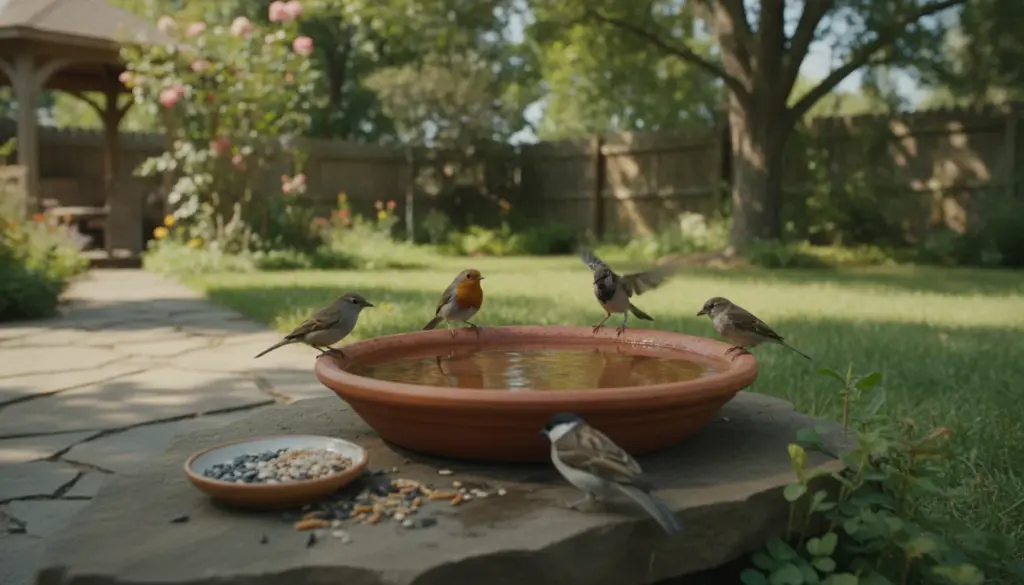
You do not need expensive equipment to get started. A simple, shallow container, like an upcycled terracotta plant saucer or a basic clay dish, works beautifully. If you want the birds to use the spot for bathing as well as drinking, aim for a water depth between 2.5 and 10 centimeters. This specific depth allows them to comfortably splash around, wash their plumage, and significantly lower their body temperature during severe heatwaves.
Yet, the absolute most critical factor is where you position the basin. Avian visitors will only utilize a drinking spot if they feel entirely secure. Bathing requires a lot of their attention, leaving them highly distracted, vulnerable, and easily targeted by stealthy neighborhood cats.
To ensure their safety, always place the water source within close proximity to dense bushes or trees. This gives species like robins and blackbirds a quick, accessible escape route if danger suddenly approaches. Keeping the area clean is also non-negotiable for wildlife health. The water must be replaced every single day, and the dish itself requires a thorough scrub with a brush and boiling water to prevent bacteria buildup. A brilliant maintenance trick is to keep two identical bowls on hand: while one is actively being used in the yard, the other can be left out in direct sunlight. The intense UV rays naturally disinfect the dry, resting bowl.
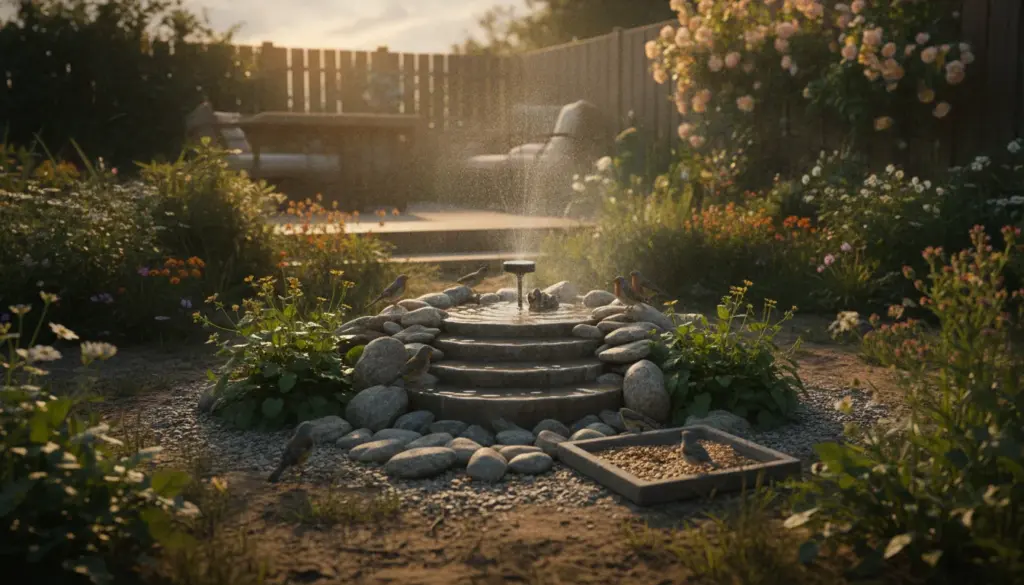
Adding a small drinking station or a miniature pond to your outdoor space guarantees rapid visitors, offering a phenomenal opportunity for backyard birdwatching. It is incredibly rewarding to watch a passing great tit or chaffinch swoop in for a quick sip, or to observe a lively flock of house sparrows and starlings gathering for a communal splash.
Summer Bird Feeding: How to Support Them Correctly
When prolonged dry spells turn the earth to stone, finding juicy earthworms becomes nearly impossible for ground-foraging birds. You can step in to help during the highly demanding breeding and nesting season by offering the right supplemental diet. Focus on providing high-quality, protein-rich options, such as:
- Dried insects
- Small, fat-rich seeds
You must pay strict attention to the size of the provisions you leave out. Nestlings and young fledglings are at a high risk of choking on large whole nuts or peanuts. Furthermore, it is absolutely critical to avoid feeding them human leftovers. Items like bread or heavily salted snacks are completely unsuitable and can cause severe digestive issues.
To stop the rapid spread of avian diseases, consider utilizing enclosed tube feeders instead of traditional open birdhouses or flat trays. These vertical dispensers are vastly superior for sanitation because they prevent bird droppings from contaminating the seed supply. Remember to regularly wash out all feeding columns and only distribute small portions of food at a time, ensuring everything is consumed quickly before it has a chance to spoil.