When the summer sun blazes down, bringing out the mower might seem like the perfect weekend chore. However, landscape professionals actually advise stepping away from the landscaping equipment right now to prevent permanent drought damage.
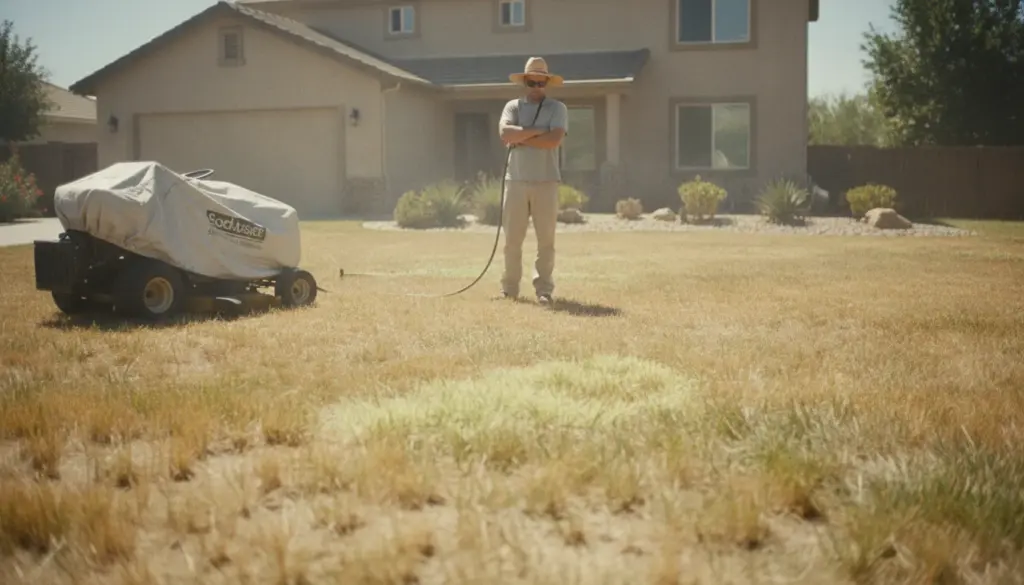
Warmer weather often sparks the desire to achieve a perfectly manicured yard. Yet, trimming your grass under the scorching sun is one of the worst things you can do for your greenery. Instead of fostering a lush, vibrant carpet, cutting during high temperatures practically guarantees the sudden appearance of unsightly brown patches across your property.
Why cutting grass during extreme heat causes severe stress
Intense solar radiation combined with soaring temperatures creates immense physiological strain on your yard. When turf is shortened during a dry spell, the individual blades instantly lose their natural defenses. Removing that protective top layer exposes the delicate lower stems directly to harsh UV rays, while also causing the underlying soil to bake and lose moisture rapidly.
This intense sun exposure quite literally burns the vegetation. Consequently, the yard develops stubborn bald spots and a withered appearance that takes significant effort to repair once the damage is done.
Essential strategies to protect your turf through a heatwave
Should lawn maintenance become absolutely necessary during a hot spell, adapting your technique is crucial for minimizing turf trauma. Horticultural experts suggest shifting to a specialized midsummer care routine to preserve the health of your green spaces.
- Elevate the cutting deck: Never trim the grass shorter than 4 to 5 centimeters. Leaving the blades slightly longer creates a natural canopy of shade over the soil, drastically slowing down moisture evaporation.
- Time your maintenance wisely: Always schedule your yard work for the cooler twilight hours or very early in the morning when temperatures are more forgiving.
- Utilize clippings as natural mulch: Allow the finely chopped trimmings to remain scattered across the yard. This organic layer acts as a free, nutrient-rich fertilizer while locking vital humidity into the earth.
- Optimize your watering routine: Rather than shallow daily sprinkling, saturate the ground deeply just one to two times per week, aiming for about 15 to 25 liters per square meter. Completing this deep hydration before 8 AM yields the most effective results.
- Apply targeted summer nutrition: Administering a potassium-heavy fertilizer fortifies the cellular structure of the grass from the roots up. This specific mineral reinforcement makes the entire lawn significantly more resilient against prolonged dry spells.
- Suspend scarification immediately: Dethatching or scarifying should be entirely paused during the hottest months. The turf is already vulnerable, and this aggressive process would unnecessarily traumatize the fragile root system.
Reviving sun-scorched grass after the heat breaks
Should your yard still develop a few crisp, brown spots despite your best efforts, there is usually no need to panic. In the vast majority of cases, the turf is simply experiencing temporary dormancy due to environmental stress.
The greenery typically bounces back on its own following the next substantial downpour. If natural rainfall isn’t quite enough to trigger a recovery, targeted rehydration and gentle seasonal lawn care will reliably coax your damaged turf back to full health.