What started as a lighthearted stunt to highlight skyrocketing heating costs quickly evolved into a thought-provoking experiment. It ultimately delivered an unsettling message about the current state of both energy prices and global food waste.
When Pastries Become Cheaper Than Wood Pellets
The mastermind behind this unusual stunt is Marek Hoffmann, a Polish content creator known online as “AdBuster.” He set out to demonstrate just how desperate the search for affordable winter warmth has become across Central Europe, where the costs of gas, timber, and pellets continue to climb.
Around a traditional Polish holiday, much like Shrove Tuesday, local supermarkets heavily discount their leftover fried treats. Hoffmann noticed something startling during this seasonal sell-off: these sugary snacks temporarily became significantly cheaper per kilo than standard stove fuel.
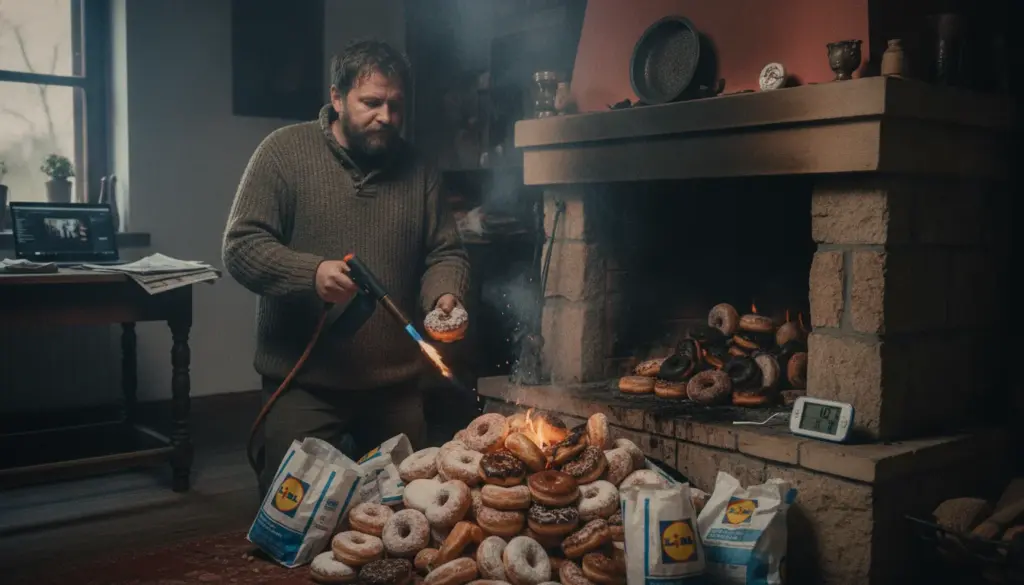
In fact, a standard bag of wood pellets ended up costing him more than an entire crate of pastries, even though both could technically serve the exact same purpose. Eager to test this theory, he visited a local Lidl and purchased a massive haul. He walked away with 133 donuts, weighing a total of 10 kilos, for a mere 2.85 euros. That breaks down to roughly two cents per pastry.
The Surprising Combustibility of a Donut
At their core, these treats are simply a mixture of flour, sugar, and fat. This specific combination surprisingly transforms them into a highly potent fuel source. When ignited, the concentrated fats and sugars release a tremendous amount of thermal energy.
Based on the data Hoffmann gathered for his project, donuts pack around 18.5 megajoules of energy per kilo. To put that in perspective, standard wood briquettes typically offer about 18.27 megajoules per kilo. On paper, these discounted baked goods are practically on par with traditional heating materials.
- Donuts: approximately 18.5 MJ per kilo
- Wood briquettes: approximately 18.27 MJ per kilo
- Wood pellets: similar energy output, but often much pricier by weight
These theoretical numbers held up perfectly in reality. Hoffmann loaded his massive sugary stash into a heavy cast-iron stove, documenting the entire process for his online audience.
Five Hours of Blazing Sugar and Fat
Once lit, the unusual fuel initially began to smolder before erupting into roaring flames. The dense mix of frying oil and refined sugar fueled an intense, enduring fire that pushed the stove’s internal temperature into the hundreds of degrees Celsius.
The most astonishing takeaway was the burn time: the pastry fire lasted for nearly five solid hours. For an improvised heating solution sourced straight from a bakery aisle, that duration is highly impressive. The iron stove radiated a consistent, comforting warmth, requiring zero maintenance or refilling from Hoffmann during the test.
The stove glowed for hours on end, fueled entirely by the cheapest supermarket cookies available.
From a strictly mathematical standpoint, the bizarre method actually works. If you only calculate the sheer volume of heat generated per euro spent, one could cynically argue that discounted baked goods are a highly effective alternative to commercial firewood.
The Moral Dilemma of Burning Edible Goods
Despite the successful burn, the creator felt no sense of victory. Throughout his recording, he openly discusses the deep discomfort of incinerating perfectly edible items while countless families struggle simply to put meals on the table.
He raises several poignant questions that deeply resonated with his viewers:
- Can destroying edible products ever be morally justified, even if they were destined for the dumpster?
- Does this bizarre scenario expose just how drastically distorted our energy and grocery markets have become?
- Will astronomical utility bills force everyday citizens to resort to equally absurd survival tactics?
For Hoffmann, this entire undertaking highlights a deeply broken system. A festive, joyful treat was essentially reduced to emergency kindling simply because the market dictated it was cheaper than basic firewood.
The Harsh Reality of the Energy Crisis
This strange experiment doesn’t exist in a vacuum. Over recent years, the wholesale costs of natural gas, coal, and timber have skyrocketed globally. Because many Polish homes still rely heavily on solid fuel furnaces, desperate residents often push the boundaries of what is safe to burn when their budgets run dry.
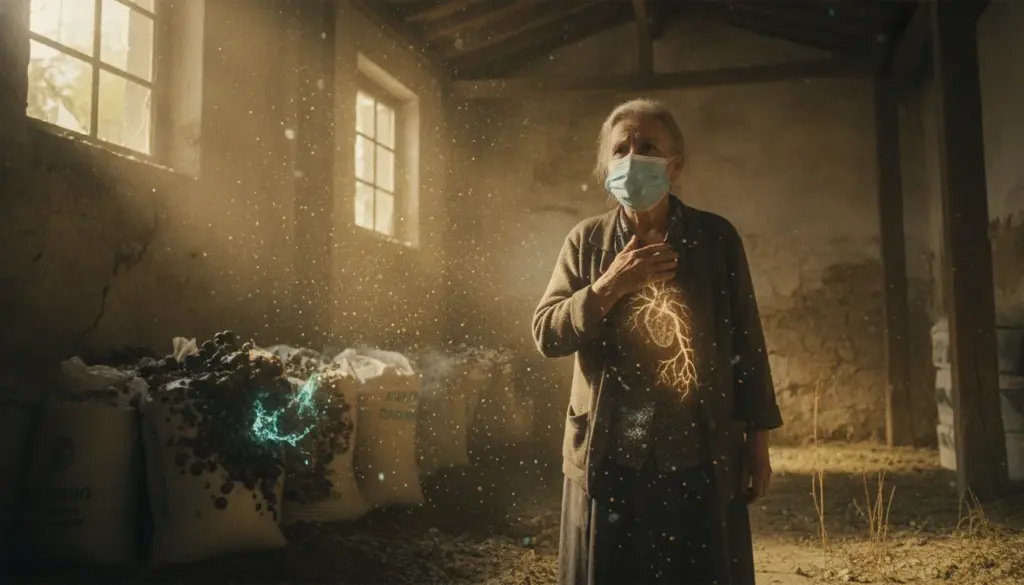
Regional reports indicate that some citizens have tossed everything from raw corn and grain to discarded furniture and household waste into their fireplaces. While this might temporarily ease financial burdens, it drastically increases local air pollution and poses severe health threats.
When communities seriously contemplate burning their dinner or their garbage to prevent freezing, it highlights a catastrophic failure in the energy sector rather than human ingenuity.
For years, local authorities across several Polish municipalities have issued severe smog warnings directly linked to improper domestic heating practices. While tossing pastries into a fire might seem like a harmless joke, consistently relying on inappropriate, cheap waste materials completely devastates urban air quality.
Food Waste Versus Energy Efficiency
This narrative also heavily intersects with the ongoing crisis of commercial food waste. Major grocery chains routinely discard massive quantities of perfectly safe, edible items, particularly in the days following major commercial holidays. Given that wasteful reality, incinerating discounted pastries feels simultaneously outrageous and entirely logical.
Ideally, a more efficient distribution network would swiftly redirect these heavily marked-down perishables to local food banks, community pantries, or charitable initiatives. In that optimal scenario, these items would provide essential nourishment rather than acting as a cheap substitute for kindling.
The Hidden Dangers of Improvised Combustibles
Watching this viral stunt inevitably leads some viewers down a dangerous thought path: if baked goods work this well, what else can I toss into my fireplace? This is where real-world danger enters the equation. Simply because a material catches fire does not mean it belongs inside a residential heating appliance.
Experimenting with unapproved fuels carries several serious consequences:
- The release of toxic airborne chemicals and dangerous particulate matter into your living space.
- Rapid creosote buildup inside the chimney, drastically elevating the risk of a catastrophic house fire.
- Unpredictable, extreme temperature spikes that can permanently warp or crack cast-iron components.
- Erratic combustion patterns that force heavy smoke and rogue sparks back into the room.
Anyone looking to optimize their winter heating should strictly stick to officially regulated products, such as certified timber pellets, inspected briquettes, or properly seasoned firewood. Furthermore, local municipalities frequently offer free consultations on how to heat your property safely and economically.
Reflecting on Our Fragile Energy Dependence
The visual of a cast-iron stove stuffed with sugary treats is both highly amusing and profoundly tragic. On one hand, it showcases the incredible resourcefulness people tap into when household budgets tighten. Conversely, it exposes just how financially fragile many families become the moment utility markets experience sudden volatility.
For government officials, this viral sensation acts as a highly uncomfortable mirror. When a regular citizen logically deduces that buying bulk fried dough is the most cost-effective way to survive winter, it signals a massive structural failure in consumer protection and market pricing.
Ultimately, this bizarre tale should inspire homeowners to fundamentally rethink their overall efficiency. Investing time in proper draft sealing, intelligent ventilation, and strategic room-by-room heating will yield much safer, long-term financial relief than hunting down the cheapest, most questionable things to burn.